To what extent is your chosen text typical of its genre?
This is England is typical of a social realist film as it involves certain conventions that are typical of the social realism genre. For example, the locations used in social realist films are rarely sets that are built for that purpose, they are more likely to be real locations such as council estates and the like. This adds to the films sense of realism as locations used are seen everyday by the British people who will be familiar with it and therefore enforces the 'realism'. This Is England features many shots on council estates, Shaun's house for example is on a council estate. This also adds to the cramped shots when it is filmed indoors. This works in This is England's favour for the most part. The scene in which Combo makes his 'This is England' speech is filmed in his cramped flat which gives the shots a more menacing look as he makes his speech and further emphasises the discomfort of the scene to watch as a viewer. This is emphasised by the point of view shots that are used from the perspective of Woody's gang who are sat low to the floor looking up at Combo.
The non-professional actors used are also a common convention of a social realist film, Shaun is played by Thomas Turgoose for example and this is his debut in acting of any kind. This enhances the realism as he is not an experienced actor and will only be able to act based on his own initiative and with help from the director.
Themes are vital to a social realist film, This is England tackles themes such as masculinity, racism, poverty and independence. As the film follows Shaun's summer holidays we initially see his lack of male role models as his father has died in the Falklands and he has no friends. Woody takes him under his wing and Shaun now has a 'big brother' type to look up to. Racism stems entirely from Combo in this movie. Before his arrival the film features no racist comments or remarks of any kind. Poverty is an underlying theme in this movie, Shaun's lack of a change of clothes in the beginning of the movie illustrates this. Independence is what Shaun is heading towards throughout the movie and is finally illustrated in his discard of the St George of England flag at the end of the feature.
The iconography of the movie must be correct in a social realist film as it must be as authentic as possible, therefore key signifiers of the time it is set must be visible. As this movie is set in the 80's we see iconic objects of the time, the way the skinheads dress for example is one of the most iconic things most people would remember from the 80's therefore their distinctive style must be exact. This is England does look authentic in it's style, from the cars seen in the movie to the shirts worn by the actors.
Showing posts with label George Williams. Show all posts
Showing posts with label George Williams. Show all posts

How conventional is the narrative of This Is England?
As this movie is intended to be over the protagonist (Shaun)'s summer holidays, the narrative must be progressing quickly but in a subtle way to not draw attention to that fact. In terms of time and space the feature does not include that many sets. The majority of the film takes place indoors, with more car scenes than the average film. This reduction in sets leads to a distraction from the progression of the narrative as the amount of conversations are disguised in the casual sets we are familiar with. This is due to the narrative revolving around Shaun, the 12 year old protagonist who features in all but one scene of this film. As he is a 12 year old he is much more constricted in terms of how far he travels from his house, in terms of realism therefore, the sets must be reused as he is in the same neighbourhood for 6 weeks.
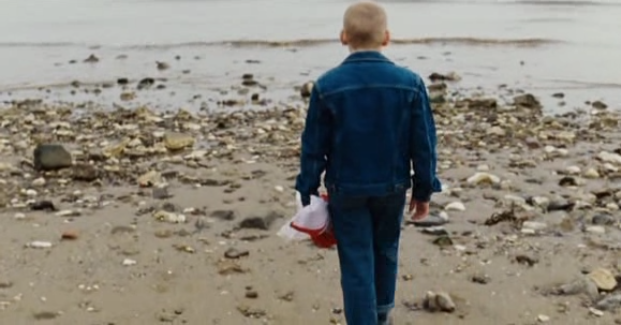
We become aware of time passing as Shaun himself changes. The scene in which he becomes a skinhead progresses the movie onto a new sense of time in the film, when Shaun joins Combo's tirade we progress with him into the next stage of the film, when Shaun is alone on the beach in the final scene we can consider that as the end of his 'coming of age'. The final scene is also symbolised by the discarding of his St. George of England flag, we consider him to have completed his journey as he throws it into the sea.
the structure of this movie is unusual in that if we apply Todorov's theory to it, it will fit however there is two disruptions in the plot which could be considered as creating a parallel narrative. The first disruption is when Shaun first meets Woody, there is an equilibrium however Shaun is unhappy in it. Once being accepted by the gang we could consider that to be a new equilibrium, the protagonist is happy and no problems have been made. The second disruption comes following the introduction of Combo. He offers a choice to join him or leave him on his national front movement. Shaun accepts and the second disruption is completed. The new equilibrium is made when Shaun turns his back on the national front and possibly his nation as a whole by throwing away his St. George of England flag that Combo gave him.
In terms of character development there is a distinctive amount of well developed and rounded characters in this film. Although they have a relatively small screen time in comparison to Shaun, the characters are mostly three dimensional people. Their development is rapid, Combo for example is developed surprisingly fast as he joins exactly half way through the film following his release from prison. His speech sets out his views and his personality in one fell swoop. The development from Shaun is more conventional, his character arc begins with him being a lonely schoolboy who misses his recently deceased father and develops into him making his own decision in the rejection of the national front and everything it represents. This is conventional in that it represents most coming of age films as they show the independence of the protagonist.
We become aware of time passing as Shaun himself changes. The scene in which he becomes a skinhead progresses the movie onto a new sense of time in the film, when Shaun joins Combo's tirade we progress with him into the next stage of the film, when Shaun is alone on the beach in the final scene we can consider that as the end of his 'coming of age'. The final scene is also symbolised by the discarding of his St. George of England flag, we consider him to have completed his journey as he throws it into the sea.
the structure of this movie is unusual in that if we apply Todorov's theory to it, it will fit however there is two disruptions in the plot which could be considered as creating a parallel narrative. The first disruption is when Shaun first meets Woody, there is an equilibrium however Shaun is unhappy in it. Once being accepted by the gang we could consider that to be a new equilibrium, the protagonist is happy and no problems have been made. The second disruption comes following the introduction of Combo. He offers a choice to join him or leave him on his national front movement. Shaun accepts and the second disruption is completed. The new equilibrium is made when Shaun turns his back on the national front and possibly his nation as a whole by throwing away his St. George of England flag that Combo gave him.
In terms of character development there is a distinctive amount of well developed and rounded characters in this film. Although they have a relatively small screen time in comparison to Shaun, the characters are mostly three dimensional people. Their development is rapid, Combo for example is developed surprisingly fast as he joins exactly half way through the film following his release from prison. His speech sets out his views and his personality in one fell swoop. The development from Shaun is more conventional, his character arc begins with him being a lonely schoolboy who misses his recently deceased father and develops into him making his own decision in the rejection of the national front and everything it represents. This is conventional in that it represents most coming of age films as they show the independence of the protagonist.
One Symmetrical Narrative
How does Shane Meadows emphasise this idea of two stories repeating themselves?
This narrative reaches a moment where Todorov's theory of narrative is more difficult to apply as the plot seemingly has two disruptions to the equilibrium. The first being the meeting of Shaun and Woody. The two then bond and Shaun becomes well established in the gang. This then leads to the introduction of Combo and the line he draws on the floor to offer the choice of joining him. The choice Shaun makes is the second disruption. Meadows has emphasised this new disruption by timing the choice that Combo offers to be exactly in the middle of the movie. This essentially gives the movie two narratives as it is split directly in two.
Meadows emphasises the idea of two stories repeating themselves by making some key shots look almost identical. The key differences between the first half and the second is how the second has a darker theme to it as the gang focuses on racial abuse, this is reflected in the style of the shots as they become darker in an almost foreboding way.


Shaun is to the left of both leaders in their gangs. Gadget is also in his same position.
Meadows also uses more subtle indicators to emphasise the idea of a parallel narrative such as similar music being chosen for when Shaun is on his own after violence from the group. The first being when he first encounters Woody's gang and Gadget hits him so he leaves. The second is following Combo's attack on Milky. Both leads to Shaun being on his own at the seaside, in order to emphasise Shaun's 'growing up' the first time he's at the sea he is still a child- eating sweets and playing with his slingshot. The last time he's at the beach he is grown up- the sweets and slingshot are gone as he throws his St George of England flag in the sea.
This narrative reaches a moment where Todorov's theory of narrative is more difficult to apply as the plot seemingly has two disruptions to the equilibrium. The first being the meeting of Shaun and Woody. The two then bond and Shaun becomes well established in the gang. This then leads to the introduction of Combo and the line he draws on the floor to offer the choice of joining him. The choice Shaun makes is the second disruption. Meadows has emphasised this new disruption by timing the choice that Combo offers to be exactly in the middle of the movie. This essentially gives the movie two narratives as it is split directly in two.
Meadows emphasises the idea of two stories repeating themselves by making some key shots look almost identical. The key differences between the first half and the second is how the second has a darker theme to it as the gang focuses on racial abuse, this is reflected in the style of the shots as they become darker in an almost foreboding way.
Shaun is to the left of both leaders in their gangs. Gadget is also in his same position.
Meadows also uses more subtle indicators to emphasise the idea of a parallel narrative such as similar music being chosen for when Shaun is on his own after violence from the group. The first being when he first encounters Woody's gang and Gadget hits him so he leaves. The second is following Combo's attack on Milky. Both leads to Shaun being on his own at the seaside, in order to emphasise Shaun's 'growing up' the first time he's at the sea he is still a child- eating sweets and playing with his slingshot. The last time he's at the beach he is grown up- the sweets and slingshot are gone as he throws his St George of England flag in the sea.
Film Art: An Introduction - Thompson/Bordwell
'Narrative is the fundamental way we make sense of the world'
'Spectators approach a narrative film with definite expectations...We have anticipations that are characteristic of narrative form itself'
'All the components of our definition- causality, time and space- are important tp narratives in most media but causality and time are central. A random string of events is hard to understand as a story.'
'...a narrative may make use of parralelism.. we compare and contrast characters as we draw parrallels... Parrallelism allows the film to become richer and more complex than it might have been had it concentrated on one protagonist.'
'the film's plot may contain material that is extraneous to the story world... plots have added material for comic effect... Story and plot overlap in one respect and diverge in others.... The story goes beyond the plot suggesting some diegetic events that we never witness. The plot goes beyond the story by presenting non diegetic images and sounds that may affect our understanding of the action.'
'If narrative depends so heavily on cause and effect, then what can function as causes in a narrative? Usually, the agents of cause and effect are characters. By triggering and reacting to events, characters play roles within the film's formal system.'
'Causal motivation often involves the planting of information in advance of a scene'
'Most of what has been said about causality pertains to the plot's direct presentation of causes and effects.'
'The plot may also present causes but withold story effects, prompting suspense and uncertainty in the viewer... A plot witholding effects is perhaps the most disruptive end to a film.'
Time
'Temporal Order- We are quite accustomed to seeing films that present events out of story order. A flashback is simply a portion of the story out of it's chronological order... as with flashforward's these portions of the plot recieve an emphasis they wouldn't have had if they had been recieved in chronological order.'
'Spectators approach a narrative film with definite expectations...We have anticipations that are characteristic of narrative form itself'
'All the components of our definition- causality, time and space- are important tp narratives in most media but causality and time are central. A random string of events is hard to understand as a story.'
'...a narrative may make use of parralelism.. we compare and contrast characters as we draw parrallels... Parrallelism allows the film to become richer and more complex than it might have been had it concentrated on one protagonist.'
'the film's plot may contain material that is extraneous to the story world... plots have added material for comic effect... Story and plot overlap in one respect and diverge in others.... The story goes beyond the plot suggesting some diegetic events that we never witness. The plot goes beyond the story by presenting non diegetic images and sounds that may affect our understanding of the action.'
'If narrative depends so heavily on cause and effect, then what can function as causes in a narrative? Usually, the agents of cause and effect are characters. By triggering and reacting to events, characters play roles within the film's formal system.'
'Causal motivation often involves the planting of information in advance of a scene'
'Most of what has been said about causality pertains to the plot's direct presentation of causes and effects.'
'The plot may also present causes but withold story effects, prompting suspense and uncertainty in the viewer... A plot witholding effects is perhaps the most disruptive end to a film.'
Time
'Temporal Order- We are quite accustomed to seeing films that present events out of story order. A flashback is simply a portion of the story out of it's chronological order... as with flashforward's these portions of the plot recieve an emphasis they wouldn't have had if they had been recieved in chronological order.'
Documentary Research- 'A walk on the wild side' by Richard Kilborn
'In today’s heavily commercialised broadcasting environment, wildlife programming – like all other TV genres – has become increasingly subject to the demands of ratings-conscious schedulers.'
'...others have argued that most wildlife filmmakers have mainstream film and television backgrounds, which may partly explain why the genre is so heavily dependent on mainstream film/television conventions'
'Another indication of the changing landscape of wildlife film/program making is provided by the relative decline of "blue chip" programming (Clarke, 2000: 16). (Blue chip refers to the big-budget programs with high production values, perhaps best represented by David Attenborough series such Life on EarthBlue Planet). It is important to add emphasis, however, to the relative nature of the decline, since the big battalions like Discovery and National Geographic and others are still interested in acquiring blue-chip productions.'
'The ever more stringent demands from broadcasters to suppliers concerning the exact type of required product has led to a marked polarisation in the wildlife-for-TV market. This directly results from broadcasting having become an increasingly schedule-led operation.'
'...others have argued that most wildlife filmmakers have mainstream film and television backgrounds, which may partly explain why the genre is so heavily dependent on mainstream film/television conventions'
'Another indication of the changing landscape of wildlife film/program making is provided by the relative decline of "blue chip" programming (Clarke, 2000: 16). (Blue chip refers to the big-budget programs with high production values, perhaps best represented by David Attenborough series such Life on EarthBlue Planet). It is important to add emphasis, however, to the relative nature of the decline, since the big battalions like Discovery and National Geographic and others are still interested in acquiring blue-chip productions.'
'The ever more stringent demands from broadcasters to suppliers concerning the exact type of required product has led to a marked polarisation in the wildlife-for-TV market. This directly results from broadcasting having become an increasingly schedule-led operation.'
Engagement and the Documentary- Anne Fischel
'Documentary films are problematic. They purport to provide information about events, institutions and cultures. They organize that information, integrating and synthesising it into coherent picture of the world.'
'I believe that documentary films provide one of the most powerful means we have to represent communities to one another and to address social issues and problems. Precisely for this reason, film makers continually need to interrogate their own practices, evaluating the appropriateness and integrity of their methods, and the effectiveness and the fidelity of the films those methods produce.'
'But scientific papers and documentary films serve a constitutive, as well as a descriptive, function. They help to construct the social reality of inquiry which, in turn, sets the guidelines for further work. When filmmakers do not integrate their intense subjective involvement in some formal way into the film, then the process of discovery is misrepresented and routinized. Such films communicate a distorted view of what knowledge is and how it is attained.'
'It is more than forty years since John Grierson sought some identifying concepts for the documentary film. Grierson wrote of the importance of using natural material, and filmic situations based on actual environments and events. But he also noted that the array of films which could be labeled "documentary" with such minimal criteria was so large as to make the category almost meaningless. For Grierson the distinction between the documentary and its precursor, the film travelogue, lies in the depth of understanding which is achieved by the filmmaker and revealed in the film. The documentary, in Grierson's words, "must master its material on the spot, and come in intimacy to ordering it."'
'In making documentaries, filmmakers must observe events and make sense out of them. They move from observation — gathering information or data — to description, formulating a coherent narrative structure to convey what they have observed. Different strategies can be used to get from one stage of the process to the other. How these strategies are chosen and implemented depends upon the filmmaker's priorities and point of view.'
'I believe that documentary films provide one of the most powerful means we have to represent communities to one another and to address social issues and problems. Precisely for this reason, film makers continually need to interrogate their own practices, evaluating the appropriateness and integrity of their methods, and the effectiveness and the fidelity of the films those methods produce.'
'But scientific papers and documentary films serve a constitutive, as well as a descriptive, function. They help to construct the social reality of inquiry which, in turn, sets the guidelines for further work. When filmmakers do not integrate their intense subjective involvement in some formal way into the film, then the process of discovery is misrepresented and routinized. Such films communicate a distorted view of what knowledge is and how it is attained.'
'It is more than forty years since John Grierson sought some identifying concepts for the documentary film. Grierson wrote of the importance of using natural material, and filmic situations based on actual environments and events. But he also noted that the array of films which could be labeled "documentary" with such minimal criteria was so large as to make the category almost meaningless. For Grierson the distinction between the documentary and its precursor, the film travelogue, lies in the depth of understanding which is achieved by the filmmaker and revealed in the film. The documentary, in Grierson's words, "must master its material on the spot, and come in intimacy to ordering it."'
'In making documentaries, filmmakers must observe events and make sense out of them. They move from observation — gathering information or data — to description, formulating a coherent narrative structure to convey what they have observed. Different strategies can be used to get from one stage of the process to the other. How these strategies are chosen and implemented depends upon the filmmaker's priorities and point of view.'
Documentary research- Media Magazine article
Reality Bites: Documentary in the 21st Century
Carly Sandy
Media Magazine 2009
'John Grierson in the 1930's coined the term documentary describing it as 'the creative treatment of actuality'
'Documentary form has been tabloidised with a stronger emphasis on sensationalism and voyeurism in order to make them more palatable to the mass audiences.'
'Narrowcasting refers to broadcasting that targets a smaller, more tightly defined audiences... These channels offer advertisers their desired demographic on a plate.'
Example of 'Blood, Sweat and Takeaways' used;
-'Borrowing from the hybrid documentary form of reality TV, participants are clearly selected because of their contrasting backgrounds and attitudes because, like scripted drama, documentary needs opposing characters, tension and a strong sense of narrative.'
-'The dramatic exchanges between characters owes as much to Big Brother as it does to traditional documentary modes of representation.'
-'The voiceover is a key documentary device used to direct audiences towards a preferred reading.'
-'Like any documentary, Blood Sweat and Takeaways contains a point of view and a preferred reading; clearly this series is aiming to raise awareness of economic exploitation amongst an audience not readily drawn to more traditional forms of documentary.'
BBC- 'Takeaways, like the majority of BBC3's factual programming, adopts an informal upbeat mode of address, despite the fact it deals with serious and sensitive issues.. (Jess: My New Face, Jack: A Soldier's Story) Note from the titles of these programmes the way in which they attempt to interweave personal narratives with wider, more political issues and in doing so offer a fresh approach to documentary-making for a generation of viewers often considered switched offer by current affairs'
Ross Kemp on Gangs- 'Like many contemporary documentaries, the series draws upon the 'moral panic' surrounding gun and knife crime which gives it a modern and relevant edge.'
Key Questions:
-Documentaries like any other genre has developed to keep pace with changing audience trends and this has involved 'borrowing' from fiction, particularly narrative techniques, structures and characterisation, leading many to question whether the entertainment values are being pursued over content.
-'Does a factual programme have to be formal and authoritarian in order to be informative?'
-'Does it have to be presented by a middle-aged professor or 'expert' in order to have credibility?'
-'Can any documentary ever really provide us with the unbiased 'truth'?'
Carly Sandy
Media Magazine 2009
'John Grierson in the 1930's coined the term documentary describing it as 'the creative treatment of actuality'
'Documentary form has been tabloidised with a stronger emphasis on sensationalism and voyeurism in order to make them more palatable to the mass audiences.'
'Narrowcasting refers to broadcasting that targets a smaller, more tightly defined audiences... These channels offer advertisers their desired demographic on a plate.'
Example of 'Blood, Sweat and Takeaways' used;
-'Borrowing from the hybrid documentary form of reality TV, participants are clearly selected because of their contrasting backgrounds and attitudes because, like scripted drama, documentary needs opposing characters, tension and a strong sense of narrative.'
-'The dramatic exchanges between characters owes as much to Big Brother as it does to traditional documentary modes of representation.'
-'The voiceover is a key documentary device used to direct audiences towards a preferred reading.'
-'Like any documentary, Blood Sweat and Takeaways contains a point of view and a preferred reading; clearly this series is aiming to raise awareness of economic exploitation amongst an audience not readily drawn to more traditional forms of documentary.'
BBC- 'Takeaways, like the majority of BBC3's factual programming, adopts an informal upbeat mode of address, despite the fact it deals with serious and sensitive issues.. (Jess: My New Face, Jack: A Soldier's Story) Note from the titles of these programmes the way in which they attempt to interweave personal narratives with wider, more political issues and in doing so offer a fresh approach to documentary-making for a generation of viewers often considered switched offer by current affairs'
Ross Kemp on Gangs- 'Like many contemporary documentaries, the series draws upon the 'moral panic' surrounding gun and knife crime which gives it a modern and relevant edge.'
Key Questions:
-Documentaries like any other genre has developed to keep pace with changing audience trends and this has involved 'borrowing' from fiction, particularly narrative techniques, structures and characterisation, leading many to question whether the entertainment values are being pursued over content.
-'Does a factual programme have to be formal and authoritarian in order to be informative?'
-'Does it have to be presented by a middle-aged professor or 'expert' in order to have credibility?'
-'Can any documentary ever really provide us with the unbiased 'truth'?'
Media Evaluation Part 2
Using Young and Rubicam’s 4C’s model I can assume the typical audience member could be classified under the Explorer category. This is due to their nature of searching for new or challenging things. My video is fast paced and almost confusing in its narrative, with flashbacks throughout. This gives the video challenging qualities.
Media evaluation
Media Evaluation
Part one
The research I completed prior to the production of my storyboards assessed the conventions of modern music videos and how they can convey meaning through technical aspects of the shots used.
The ‘Foals’ music video I looked into used a still camera and slow shots in order to create an air of depth and emotion to the music video. Although it was indeed slow moving the video did have a dramatic effect and felt as though the entire video was a visual metaphor for modern life. Shots included a black sea with black ice floating in the waves and a white object which starkly juxtaposes it’s surrounding image. This could be interpreted as a visual metaphor for people, those who stand out and those who ‘fit in’. The use of such a isolated location gives the impression it is reflective of the emotions behind the song and therefore the artist also. A shot which influenced my storyboards would be the extremely long shot at approximately 34 seconds into the video, it shows a figure walk in the distance, contrasting with background the figure is barely noticeable but adds to the effect of the isolation of the figure. I used a similar shot (14) in my storyboards except with the added effect of using an over the shoulder shot from one person with the same style of figure in the distance.
Another video influencing my storyboards is the 'Afterglow' video. Consisting of a large amounts of shots and almost a caption in each of them, the video is fast paced and amusing. It tells the story of a couple and every factor in their relationship. By showing the audience key moments in the relationship the audience is forced to become attached to them, I used this in shot 6 of my story boards by using a girl blowing out the candles on her birthday cake with the boy from shot 4, establishing them as a couple and presenting the enigma of 'where is this girl?'.
In the video for 'Use somebody' a large amount of close up shots are used, this personalises the audience with the artist. This is a typical convention of rock music videos and I used similar techniques in the close ups in my storyboards to give the shots a more personal feel. The narrative of the video shows the band going from concert to concert endlessly, the travelling is emphasised by the city shots flying by underneath the camera and the speed at which the shots jump to one another, this speed is copied in my storyboards as it increases the suspense when the boy is running in search of the girl. This can also be used for dramatic effect if fast shots are mixed with slow motion shots, this adds emphasis to the difference in speed between the shots. The visual style of the Use Somebody video is very cinematic, rarely do we get a clear view of anything in this video without some form of technique being used. The majority of shots of the artist have his face in shade or at a skewed angle, so we only get rare glimpses of his face in clear light. I used this in my storyboards to add mystery to the girls identity, giving the narrative a sense of drama and tension.
In the Otis video by Jay Z & Kanye West low angle shots are used effectively to make the artists look larger and more dominant. I used similarly low angles in shot 14 of my storyboards, this was to make the girl of the video seem more dominant as it is the boy chasing the girl afterall, this low angle reinforces this ideology however. The low angle used also emphasises the size of the sand dune the girl is stood on, making it more of a task for the boy to climb therefore adding to the tension and implying the question, 'Can he actually reach her?'
In the Mad World video the entire video gives the impression it is filmed in one continuous shot, this has the effect of making it interesting to watch however it also makes the video
Another video influencing my storyboards is the 'Afterglow' video. Consisting of a large amounts of shots and almost a caption in each of them, the video is fast paced and amusing. It tells the story of a couple and every factor in their relationship. By showing the audience key moments in the relationship the audience is forced to become attached to them, I used this in shot 6 of my story boards by using a girl blowing out the candles on her birthday cake with the boy from shot 4, establishing them as a couple and presenting the enigma of 'where is this girl?'.
In the video for 'Use somebody' a large amount of close up shots are used, this personalises the audience with the artist. This is a typical convention of rock music videos and I used similar techniques in the close ups in my storyboards to give the shots a more personal feel. The narrative of the video shows the band going from concert to concert endlessly, the travelling is emphasised by the city shots flying by underneath the camera and the speed at which the shots jump to one another, this speed is copied in my storyboards as it increases the suspense when the boy is running in search of the girl. This can also be used for dramatic effect if fast shots are mixed with slow motion shots, this adds emphasis to the difference in speed between the shots. The visual style of the Use Somebody video is very cinematic, rarely do we get a clear view of anything in this video without some form of technique being used. The majority of shots of the artist have his face in shade or at a skewed angle, so we only get rare glimpses of his face in clear light. I used this in my storyboards to add mystery to the girls identity, giving the narrative a sense of drama and tension.
In the Otis video by Jay Z & Kanye West low angle shots are used effectively to make the artists look larger and more dominant. I used similarly low angles in shot 14 of my storyboards, this was to make the girl of the video seem more dominant as it is the boy chasing the girl afterall, this low angle reinforces this ideology however. The low angle used also emphasises the size of the sand dune the girl is stood on, making it more of a task for the boy to climb therefore adding to the tension and implying the question, 'Can he actually reach her?'
In the Mad World video the entire video gives the impression it is filmed in one continuous shot, this has the effect of making it interesting to watch however it also makes the video
a lot slower and at parts it can become dull. It’s for that reason I chose to use jump cuts in my storyboards to keep the narrative exciting and the audience interest. The speed of shots in my storyboards is a key influence to the narrative, by using jump cuts each shots perspective is changed causing the narrative of the plot to become more confusing but significantly quicker. This is necessary to build momentum in the narrative and tension also.
In the No One Knows video the narrative is basic but unconventional, I appreciated how they used the role reversal of deer/man, although this is potentially too far it does stray from the norm of music video narratives. This influenced my decision in making a more unconventional plot to my storyboards.
Representations of Women: Research
Find examples in modern (within the past ten years) advertising and magazines of what we might consider as 'Traditional' representation of women


Post-traditional/anti-traditional representations of women


Film trailers- Male gaze theory
Stock Characters
The dumb blonde
The damsel in distress
Characters with depth
Media Diary 2- Free Choice
For this week I have chosen a movie directed by Edgar Wright and released in July 2013. 'World's End' is a science fiction comedy starring Simon Pegg, Nick Frost, Pierce Brosnan, Martin Freeman and David Bradley. In this movie we see Simon Pegg playing the role of Gary King, a man who refuses to move on from his life as a teenager. The film is central to a pub crawl in King's hometown of Newton Haven. 'The Golden Mile' features 12 pubs and a pint must be consumed in each. King and his friends attempted this in their teens and failed, this prompts King to rally his old friends together to finish what they started. During their pub crawl King starts a fight with a teen in a pub toilets, this leads him to the discovery that everyone in Newton Haven has been replaced by robot clones and so ensues their race to finish the golden mile whilst being attacked by these 'clones'.
The movie seemed promising after the success of 'Shaun of the Dead' and 'Hot Fuzz', even it's nickname as the third in the 'Three Flavours Cornetto trilogy' gives reason that this should be a hit. However the film is more annoying than comical. Pegg's role has it's moments of blunt comedy however the majority of the film his character is irritating. The storyline is a lot less intricate when compared to Hot Fuzz and it mirrors similarities with both films. The mile of the pub crawl to the World's End is easily compared to the Winchester pub featured in Shaun of The Dead. Another comparison could be the simple fact that in Hot Fuzz the majority of the small town of Sandford were in fact part of a cult, this could be compared to the way in which the majority of the small town of New Haven are in fact aliens. These plots worked extremely well in the first two films but when Wright and Pegg just force the two plots together with some twists, the effect could be compared to a stale joke.
I consumed this text at 9.30PM on the 23rd of July on DVD at home. It is of the 'Science Fiction Comedy' genre and it's purpose is to entertain. It was produced under the record label 'ABKCO Records'. The target audience is those in their late teens-early twenties however this movie could appeal to all ages especially those who enjoy science fiction or comedy films. Or both.
The movie seemed promising after the success of 'Shaun of the Dead' and 'Hot Fuzz', even it's nickname as the third in the 'Three Flavours Cornetto trilogy' gives reason that this should be a hit. However the film is more annoying than comical. Pegg's role has it's moments of blunt comedy however the majority of the film his character is irritating. The storyline is a lot less intricate when compared to Hot Fuzz and it mirrors similarities with both films. The mile of the pub crawl to the World's End is easily compared to the Winchester pub featured in Shaun of The Dead. Another comparison could be the simple fact that in Hot Fuzz the majority of the small town of Sandford were in fact part of a cult, this could be compared to the way in which the majority of the small town of New Haven are in fact aliens. These plots worked extremely well in the first two films but when Wright and Pegg just force the two plots together with some twists, the effect could be compared to a stale joke.
I consumed this text at 9.30PM on the 23rd of July on DVD at home. It is of the 'Science Fiction Comedy' genre and it's purpose is to entertain. It was produced under the record label 'ABKCO Records'. The target audience is those in their late teens-early twenties however this movie could appeal to all ages especially those who enjoy science fiction or comedy films. Or both.
Media Diary 1 'Review'
For my review I have chosen a text which sets the bar for the standard of comedy films in the U.K. the box office hit that proved that the acting duo that is Simon Pegg and Nick Frost, were not a one hit wonder with the gruesome comedy 'Shaun of the Dead'.
'Hot Fuzz' is a film which revolves around 'Nicholas Angel' (Simon Pegg) - a hot shot police officer from London who is reassigned to a dreary post in a small town called Sandford. Nicholas attempts to settle down in the quiet life however a series of deaths in the town convinces Nicholas that there is a murderer in Sandford. The entire police department is against him in this, his new colleagues shrug the incidences off as 'accidents' and tell him it's due to him being used to London's busy police role. When the truth finally comes to light Pegg and Frost ensue on the classic police chase and standoffs with comical twists.
This movie is brimming with comedy and impressive special effects. Car chases and explosions all take place in this dreary setting creating the irony of which most the film bases it's comedy on. The cinematography puts emphasis on the drama in parts of the film, the lighting behind Pegg when he assumes his 'hero' role at the end of the film, horse and all. The dark scenes where we see the supposed death of Pegg create a horror effect and reinforce the gruesome scene in which Frost stabs Pegg.
This movie has themes of heroism and sexism, these are evident throughout the movie with the final scene showing Angel on a horse chewing a toothpick, the typical cliche of the hero on the horse. Constant banter between the female police officer and the rest of the force show the sexism as the banter is quite blunt, this reinforces the notion of this town being 'behind the times'.
'Hot Fuzz' is a film which revolves around 'Nicholas Angel' (Simon Pegg) - a hot shot police officer from London who is reassigned to a dreary post in a small town called Sandford. Nicholas attempts to settle down in the quiet life however a series of deaths in the town convinces Nicholas that there is a murderer in Sandford. The entire police department is against him in this, his new colleagues shrug the incidences off as 'accidents' and tell him it's due to him being used to London's busy police role. When the truth finally comes to light Pegg and Frost ensue on the classic police chase and standoffs with comical twists.
This movie is brimming with comedy and impressive special effects. Car chases and explosions all take place in this dreary setting creating the irony of which most the film bases it's comedy on. The cinematography puts emphasis on the drama in parts of the film, the lighting behind Pegg when he assumes his 'hero' role at the end of the film, horse and all. The dark scenes where we see the supposed death of Pegg create a horror effect and reinforce the gruesome scene in which Frost stabs Pegg.
This movie has themes of heroism and sexism, these are evident throughout the movie with the final scene showing Angel on a horse chewing a toothpick, the typical cliche of the hero on the horse. Constant banter between the female police officer and the rest of the force show the sexism as the banter is quite blunt, this reinforces the notion of this town being 'behind the times'.
Homework 2
2a. One theory which considers the general audience to be passive is the 'Innoculation model', this theory connotes that the audience can become numb towards types of media due to being over exposed towards them. This suggests that if a consumer watches enough films of the horror genre the effects of gore and violence are lessened compared to the first time time the consumer saw a horror film. That much we know is true, it is general knowledge that a horror film had more of an effect on us when we had not experienced them before than the effect the same film would have after years of watching horror movies. However, this theory also suggests that the numbing effect of the exposure affects everyday life as well. This implies that other media texts have a lessened effect also such as violent news stories, one of the key reasons this is an important theory is that the fictional horror films are reducing the effects that the real-life news stories should have on us. An example of a movie which shocks the consumer enough to have this desensitizing effect would be 'Saw', gore and violence is central to this movie and this is what gives the consumer the adrenaline rush they seek. The sequels to this movie become more and more gruesome showing how the creators need to increase the goriness due to the desensitization of the consumers, this shows the theory in action as the consumer needs more and more shocking material in the text for it to have the same effect as the first time they consumed it. The cultural effects/cultivation model depicts that the representations we see in the media can affect the consumers attitudes towards ideologies in life. For example, ideologies in media of men is that they should be sporty and muscular as we see in the 'Gillete' adverts where well known sports figures are used. This leans towards the Two Step flow model however the cultivation model is a more general theory used in the majority of media texts. Modelling is transfixed on the ideal man and this is shown by the muscular, slim models used by clothing brands. This effects the consumers views, men want to be more muscular and women want a more muscular partner in turn. These ideologies are shared between all media texts and cover a wide range of things.
3. Active audiences are those who have their own way of thinking, they are free willed and this idea shows that the media must stick to their way of thinking instead of influencing the audience with their own opinions and ideologies. Active audiences are considered by the models; Cultural effects and the Two Step flow. The cultural effects model reinforces consumers ideologies therefore making us believe deeper in what we already believe, this makes it an active model as the consumers existing views are taken into account. Passive audiences are controlled by the media, meaning they tell the consumer what to believe and the consumer follows it. this gives the consumer ideologies rather than reinforcing them as we see in the cultural effects model. Passive audiences are considered in the Hypodermic Syringe model, this depicts that the consumer will act on the media they are exposed to i.e. violent acts after consuming violent media.
4. I believe that the media do effect the views of people however the idea that watching a violent film or numerous violent films will make me aggressive is a unrealistic thought. I have watched films such as Green Street which shows and practically promotes football hooliganism however I have never considered going and looking for a fight after going to a match. That is a vague idea however, a more focused example would be This Is England, I have seen the film yet it has not changed my views on race or religion in any way, I would consider myself an active audience member and it would take real life situations to affect my views rather than influence from a media text.
5.I think active audience theories are more easily received than passive due to the fact that people are generally a lot smarter than the media give them credit for. There are obviously exceptions however the public will not suddenly commit crimes after seeing them in movies/news stories etc. People commit crimes for other reasons which are personal to them, not to what they are shown. Active theories are reinforcing already existing views and this would be a lot more effective than giving the audience new views as the ideologies already exist in the consumers mind, they have most likely believed these ideologies from experience or growing up listening to the ideologies of their elders. These ideologies would be set more firmly in their minds and are therefore more easily reinforced than changed.
6. Top Gear is a show containing most of the uses and gratifications which a text could contain, the escapism element comes from the humour stemming from Jeremy Clarkson's stupidity to James May's wit and offers the reader a well known trio who the consumer can relate to. The three friends we come to know resemble some of our own friends and by using three presenters instead of two or four the consumer could count themselves as the fourth in the group of friends. The escapism could also be reflected in the exotic locations the trio travel to, the majority of the world is covered in their travels and they also offer an adventurous element in the form of the 'challenges' they embark on abroad such as the Top Gear 'Africa' special. The journey they embark on involves the drama, humour and exotic places the consumer needs for escapism.
The show also involves less of it is primarily for; news and information on new cars. However they do offer 10 minutes of each show towards it and this is where the consumer gets their fix of information in the news and facts on new and upcoming cars. The news tends to offer a picture of at least one concept car, an unrealistic look on how future cars will look, these cars are generally over the top and exotic giving the consumer and added sense of escapism.
The personal identity of the show is central to the trio of presenters mentioned before, their attitudes on air represent the average group of friends, 'the idiot', 'the joker', 'the one who knows best', etc. The jokes on air tend to be about each other which offers the consumer an inside feel to the humour. The close up shots of the presenters faces and the way the three always stand close together to give a better angled shot involving the three makes it look like the consumer is standing with their three friends.
The popularity of the show also gives a social interaction gratification to the consumer, it makes the show a popular topic to talk about with friends and family. This is an ideal show for the 'mainstreamers' defined by Young and Rubicam's 4 C's model.
7. This advert has the preferred reading of the consumer accepting and fearing the fact that smoking kills. This ideology is proven and therefore more susceptible to the consumer as it is a fact rather than a unproven concept. The ideologies encoded in this is death, the ash figure reaching out as if in despair/regret symbolizes the end of his life and connotes the end of all cigarette smokers lives. The regret of not quitting is deeply connoted by the hand reaching out for help. The fact the cigarette is dropped on the floor also implies it has been dropped by a smoker and the ash man could mirror the "cigarette dropper's" pose as they die.
Notes: I think I chose a bad advert for question seven as there aren't a variety of ideologies behind it, hence the short answer.
3. Active audiences are those who have their own way of thinking, they are free willed and this idea shows that the media must stick to their way of thinking instead of influencing the audience with their own opinions and ideologies. Active audiences are considered by the models; Cultural effects and the Two Step flow. The cultural effects model reinforces consumers ideologies therefore making us believe deeper in what we already believe, this makes it an active model as the consumers existing views are taken into account. Passive audiences are controlled by the media, meaning they tell the consumer what to believe and the consumer follows it. this gives the consumer ideologies rather than reinforcing them as we see in the cultural effects model. Passive audiences are considered in the Hypodermic Syringe model, this depicts that the consumer will act on the media they are exposed to i.e. violent acts after consuming violent media.
4. I believe that the media do effect the views of people however the idea that watching a violent film or numerous violent films will make me aggressive is a unrealistic thought. I have watched films such as Green Street which shows and practically promotes football hooliganism however I have never considered going and looking for a fight after going to a match. That is a vague idea however, a more focused example would be This Is England, I have seen the film yet it has not changed my views on race or religion in any way, I would consider myself an active audience member and it would take real life situations to affect my views rather than influence from a media text.
5.I think active audience theories are more easily received than passive due to the fact that people are generally a lot smarter than the media give them credit for. There are obviously exceptions however the public will not suddenly commit crimes after seeing them in movies/news stories etc. People commit crimes for other reasons which are personal to them, not to what they are shown. Active theories are reinforcing already existing views and this would be a lot more effective than giving the audience new views as the ideologies already exist in the consumers mind, they have most likely believed these ideologies from experience or growing up listening to the ideologies of their elders. These ideologies would be set more firmly in their minds and are therefore more easily reinforced than changed.
6. Top Gear is a show containing most of the uses and gratifications which a text could contain, the escapism element comes from the humour stemming from Jeremy Clarkson's stupidity to James May's wit and offers the reader a well known trio who the consumer can relate to. The three friends we come to know resemble some of our own friends and by using three presenters instead of two or four the consumer could count themselves as the fourth in the group of friends. The escapism could also be reflected in the exotic locations the trio travel to, the majority of the world is covered in their travels and they also offer an adventurous element in the form of the 'challenges' they embark on abroad such as the Top Gear 'Africa' special. The journey they embark on involves the drama, humour and exotic places the consumer needs for escapism.
The show also involves less of it is primarily for; news and information on new cars. However they do offer 10 minutes of each show towards it and this is where the consumer gets their fix of information in the news and facts on new and upcoming cars. The news tends to offer a picture of at least one concept car, an unrealistic look on how future cars will look, these cars are generally over the top and exotic giving the consumer and added sense of escapism.
The personal identity of the show is central to the trio of presenters mentioned before, their attitudes on air represent the average group of friends, 'the idiot', 'the joker', 'the one who knows best', etc. The jokes on air tend to be about each other which offers the consumer an inside feel to the humour. The close up shots of the presenters faces and the way the three always stand close together to give a better angled shot involving the three makes it look like the consumer is standing with their three friends.
The popularity of the show also gives a social interaction gratification to the consumer, it makes the show a popular topic to talk about with friends and family. This is an ideal show for the 'mainstreamers' defined by Young and Rubicam's 4 C's model.
7.
 This advert has the preferred reading of the consumer accepting and fearing the fact that smoking kills. This ideology is proven and therefore more susceptible to the consumer as it is a fact rather than a unproven concept. The ideologies encoded in this is death, the ash figure reaching out as if in despair/regret symbolizes the end of his life and connotes the end of all cigarette smokers lives. The regret of not quitting is deeply connoted by the hand reaching out for help. The fact the cigarette is dropped on the floor also implies it has been dropped by a smoker and the ash man could mirror the "cigarette dropper's" pose as they die.
Notes: I think I chose a bad advert for question seven as there aren't a variety of ideologies behind it, hence the short answer.
Armani
In this advertisement we see
David and Victoria Beckham lying half naked in a dishevelled bed. Their
attitudes are indifferent to anyone, their expressions seclude them into a more
personal and intimate scene. Just the idea that we are not intended to be
seeing this is enough to keep the audience intrigued and grabs attention. The
black and white advert is intended to create a more sexual scene because it
forces certain features to stand out and creates a dark shadowy effect. The
contrasting effect on their Armani underwear forces the audience to notice
Armani's product and this leaves the audience associating this underwear with
this sexual scene. Sex is part of human nature, those old enough to realise the
messages implied in this advertisement will then associate that underwear with
sex thus wanting to buy Armani's product.
By using two well known figures
such as the Beckhams, Armani are trying to make the audience connect their
product to the Beckham's lifestyle. We hear about high class celebrities such
as these all the time and we want to know more and more about them therefore an
intimate scene such as this gives us a unique view from what the fashion and
celebrity magazines can supply. Those in the audience who are interested in the
Beckham's lifestyle will be left wanting Armani's product purely for the reason
that the Beckhams own it. This kind of intimate product will also give the
owner a more personal product which the Beckhams own as well; this is different
from perhaps buying the same aftershave/perfume they use. This tactic is used
worldwide by all advertisements; careers such as modelling would not exist
without the need for beautiful people to work in advertising. The audience sees
a model wearing clothes and thinks that if they wear the clothes they will be
just as good looking or feel as though they own a part of their idol's
lifestyle. This tactic is used in the Armani advertisement although it is more
so due to the models also being well known celebrities.
The rule of thirds is a
technique used by photographers which implies that the audience is drawn not
just to the centre of the photograph but the points which cross when it is
split into thirds; this leaves the emphasis on the Armani logo on David
Beckham's underwear thus focussing the advertisement on the brand. There are
less obvious techniques used such as the tattoo on David Beckham's back
resembling the Armani logo. Or the light on David Beckham and the shadow on
Victoria just as Beckham wears the white underwear and Victoria wears the dark.
The Emporio Armani logo and
writing is in white which is contrasting and bold standing out from the shadowy
writing of 'David & Victoria Beckham', this could symbolise the brands
purity against their seductiveness and could represent how anyone could have a
seemingly pure exterior against a more sinful inside. We also see this hidden
nature in David and Victoria Beckham's face, Victoria's face is in the light
representing purity, David's face is in the dark, and this contrasts their
underwear representing the mixed personalities of the two.
Audience HW
Audience Questions
The Mainstream is a subgroup of the audience which has a need for security, this means everybody who fits into this category will consume certain media types for the sense of acceptance within their group. As this is the largest subgroup of the audience it means that the majority of people base their media consuming habits on a need for 'fitting in'. Mainstreamers will watch shows such as 'Britains Got Talent' because it will give them a chance to converse with other mainstreamers and will not leave them feeling outcast. As the core of a mainstreamers media consuming habits is based on a sense of security they will often talk as 'we' instead of 'me'. They will stick to well trusted brands and rarely try new options, following trends is a mainstreamers primary concern.
The Succeeder is the most focused and goal orientated subgroup of the audience. They have a strong need for control and would therefore watch shows with more fact than fiction, an example of this would be 'The Apprentice'. They have a business-like attitude and would admire successful entrepreneurs such as Alan Sugar. They would tend to seek the most upper class brands as they feel they deserve it after their hard work has paid off. These people will often occupy positions of power in society
The Aspirer is considered the most materialistic subgroup of the audience, image is everything to them. Others perceptions of them are most important in their lives. The aspirer cares more for an attractive package than a useful one. As they care more for appearance we are led to believe they desire expensive brands because this would add to their huge ego. The aspirers need for status suggests they will consume media texts such as fashion shows so they can learn from other aspirers on what to wear in order to add to their appearance.
The Explorer is the most outgoing subgroup, they seek discovery and will often try new brands and ideas. These are the pioneers of society and are vital to the audience, without explorers news and opinions on new media texts would be a lot slower without explorers trying them out and spreading the word for the mainstreamers to follow. Explorers will often watch new shows of any kind, they are open minded and could watch all genres of media texts.
Personally I think these categories of people are correct as such, however I think that most people will vary through different categories in their lives, I would categorize myself as a mainstreamer however, a year ago I would definitely have fallen under the explorer title. Therefore keeping track of which groups are larger would be a lot harder with peoples core values ever changing.
The Only Way Is Essex is a reality television programme currently popular for the mainstreamers. The show is uneventful and appeals to me in no way whatsoever. The stereoptypical consumer for this text would be anybody not in employment-part time employment, students mostly consume this text. They would most likely be female as one of the key characteristics (ironic because the show has no character) of this programme is relationships. I think this programme appeals mostly for those under the age of 20, it will be of little interest to the middle aged and older generation.
I think cowboys would most likely consume media texts such as Flog It because they like the idea of making money quick and easy. Cynics would stereo-typically enjoy review shows because they enjoy a solid criticism. Drifters and drop outs would most likely watch shows such as Two And a Half Men because there is no need to keep track of the whole series in order to enjoy one episode, rarely do episodes cross reference and there is something in it for everyone. Egoists would most likely watch fashion shows because they have a need to feel better than everyone else in a materialistic sense. Groupies would consume mainstream shows such as The Chase because the vast majority of people have seen it and they would feel more accepted for watching it. Innovators would watch shows such as Dragons Den because entrepreneurship would appeal to them. I have absolutely no idea what a puritan would want to watch, possibly some long endless television series which they would watch from start to finish to feel like they have done their duty and persevered through an endless show such as Lost. Rebels would enjoy a good dosage of Jeremy Kyle because they could relate to those who frequent the show and there 'issues'. Traditionalists would most likely refuse to watch television and would rather sit outside with the radio on some dusty forgotten radio station, possibly BBC radio three. Trendies will watch anything their friends consume, hard to pinpoint what that would be. Utopians enjoy endless hours of the God channel.
The Mainstream is a subgroup of the audience which has a need for security, this means everybody who fits into this category will consume certain media types for the sense of acceptance within their group. As this is the largest subgroup of the audience it means that the majority of people base their media consuming habits on a need for 'fitting in'. Mainstreamers will watch shows such as 'Britains Got Talent' because it will give them a chance to converse with other mainstreamers and will not leave them feeling outcast. As the core of a mainstreamers media consuming habits is based on a sense of security they will often talk as 'we' instead of 'me'. They will stick to well trusted brands and rarely try new options, following trends is a mainstreamers primary concern.
The Succeeder is the most focused and goal orientated subgroup of the audience. They have a strong need for control and would therefore watch shows with more fact than fiction, an example of this would be 'The Apprentice'. They have a business-like attitude and would admire successful entrepreneurs such as Alan Sugar. They would tend to seek the most upper class brands as they feel they deserve it after their hard work has paid off. These people will often occupy positions of power in society
The Aspirer is considered the most materialistic subgroup of the audience, image is everything to them. Others perceptions of them are most important in their lives. The aspirer cares more for an attractive package than a useful one. As they care more for appearance we are led to believe they desire expensive brands because this would add to their huge ego. The aspirers need for status suggests they will consume media texts such as fashion shows so they can learn from other aspirers on what to wear in order to add to their appearance.
The Explorer is the most outgoing subgroup, they seek discovery and will often try new brands and ideas. These are the pioneers of society and are vital to the audience, without explorers news and opinions on new media texts would be a lot slower without explorers trying them out and spreading the word for the mainstreamers to follow. Explorers will often watch new shows of any kind, they are open minded and could watch all genres of media texts.
Personally I think these categories of people are correct as such, however I think that most people will vary through different categories in their lives, I would categorize myself as a mainstreamer however, a year ago I would definitely have fallen under the explorer title. Therefore keeping track of which groups are larger would be a lot harder with peoples core values ever changing.
The Only Way Is Essex is a reality television programme currently popular for the mainstreamers. The show is uneventful and appeals to me in no way whatsoever. The stereoptypical consumer for this text would be anybody not in employment-part time employment, students mostly consume this text. They would most likely be female as one of the key characteristics (ironic because the show has no character) of this programme is relationships. I think this programme appeals mostly for those under the age of 20, it will be of little interest to the middle aged and older generation.
I think cowboys would most likely consume media texts such as Flog It because they like the idea of making money quick and easy. Cynics would stereo-typically enjoy review shows because they enjoy a solid criticism. Drifters and drop outs would most likely watch shows such as Two And a Half Men because there is no need to keep track of the whole series in order to enjoy one episode, rarely do episodes cross reference and there is something in it for everyone. Egoists would most likely watch fashion shows because they have a need to feel better than everyone else in a materialistic sense. Groupies would consume mainstream shows such as The Chase because the vast majority of people have seen it and they would feel more accepted for watching it. Innovators would watch shows such as Dragons Den because entrepreneurship would appeal to them. I have absolutely no idea what a puritan would want to watch, possibly some long endless television series which they would watch from start to finish to feel like they have done their duty and persevered through an endless show such as Lost. Rebels would enjoy a good dosage of Jeremy Kyle because they could relate to those who frequent the show and there 'issues'. Traditionalists would most likely refuse to watch television and would rather sit outside with the radio on some dusty forgotten radio station, possibly BBC radio three. Trendies will watch anything their friends consume, hard to pinpoint what that would be. Utopians enjoy endless hours of the God channel.
Falklands War
 The Falklands have been claimed over the past 300 years by France, Spain, Britain and Argentina. In 1833 Britain returned to the Falklands for a second time to claim it for the next 99 years. Whilst inhabited by 57 British marines and 11 sailors in 1982, Argentina deployed Special Forces to capture the island. This led to Britain deploying 127 ships to reclaim the island. Fighting lasted 10 weeks until Argentina retreated. In this conflict 258 Britons were killed and 777 were wounded, Britain lost 2 destroyers, 2 frigates and 2 auxiliary vessels. Argentina lost 649 soldiers, 1068 were wounded, 11,313 were captured. Argentina's navy lost a submarine, a light cruiser and 75 aircraft. Above; Argentine forces capturing British Marines
 Margaret Thatcher was in power throughout the Falklands war, prior to the conflict she was voted Britain's most unpopular Prime Minister ever, post conflict her popularity soared and she won the following general election by 'a landslide'. In the Falkland Islands there is a holiday in her name and a street named after the former PM.
Left; HMS Sheffield under fire
Below; Argentina's surrendering

In total the Falkland's war cost Britain £2.778 billion but the campaign was considered a great victory for Britain. The victory brought about the 'Falklands Factor' a renewed sense of patriotism which was affected by the economic decline of the 1970's which culminated in the Winter of Discontent. It was this patriotism that the Conservatives thrived off and their dwindling poll rating moved up 10 points following victory which led to her second term. The strength Thatcher gained from the war then led to her confronting the unions which led to a division between Britain as sides were chosen.
 Left; Falklands from space
Subscribe to:
Posts (Atom)