Showing posts with label Leanne Turnbull Lake. Show all posts
KICK ASS
Effective posters
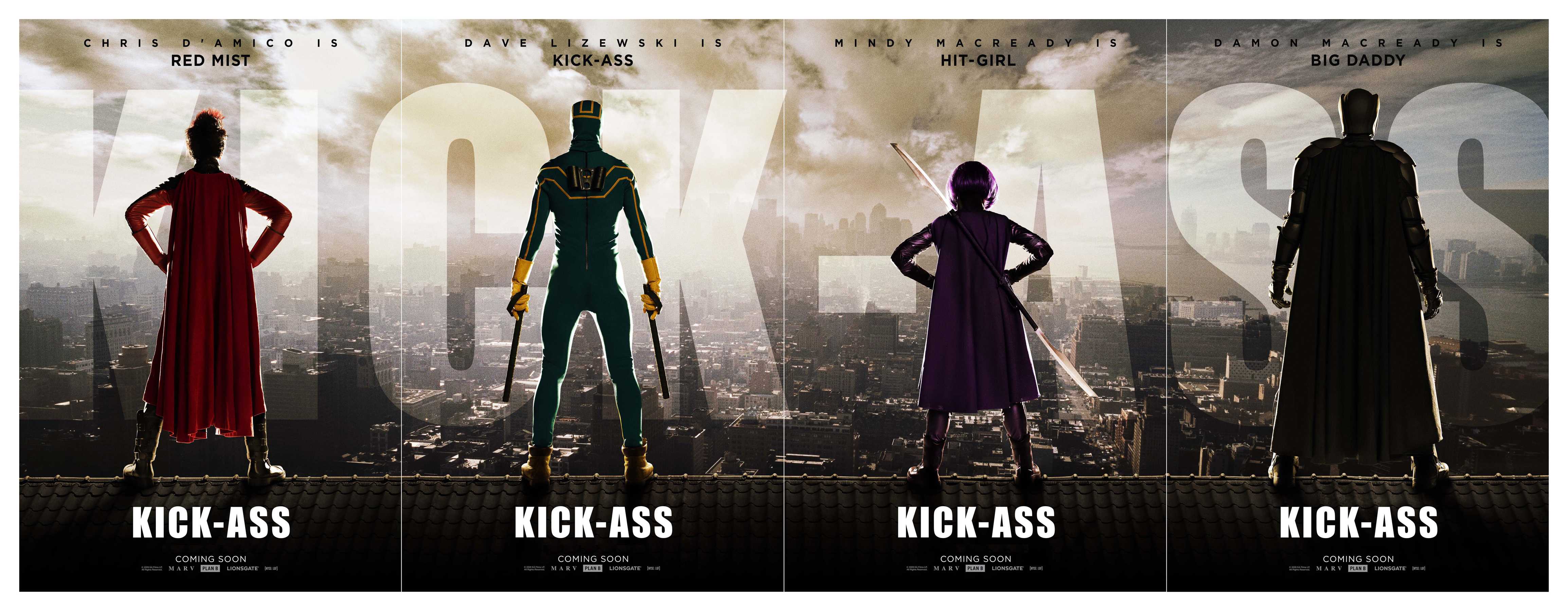
I think this poster is particularly effective as the red splattered blood indicates the violence in the film and sets up the audiences expectations. The fact the main characters is looking directly at the camera feels as though he is staring at the audience ad the caption 'Get ready to kick ass' erectly talk to the audience and again allows personally identify.

To what extent are your chosen texts typical of their genre?
This is England is categorised under a social realist genre. Films in this genre mainly base their conventions round themes and ideologies of the movie, in this case: Racism, masculinity and poverty. Films like this also usually make comments on people and places and in this film Meadows conveys particular ideologies in changing Britain in the 1980s and challenges the audiences, evoking questions as well as answering many.
Being a social realist drama it is important that devices such as the aesthetics get across the sense of reality to the audience and create an atmosphere which can be considered as believable and almost like it can reflect the audiences lives. One way Shane Meadows does this is by casting non professional actors (such as Thomas Turgoose who intact experienced a similar situation to his character Shaun) and no stars. In effect, this is typical of the genre as it makes the audience feel like these characters could just be everyday people and therefore creates a degree of authenticity. Another way this film creates a degree of authenticity is through camera work and editing. In many scenes, handheld shots have been used which gives the scenes a sense of restlessness which reflects the film as well as the unpredictability of the film itself. this idea is reinforced through the improvisation of movement and dialogue throughout the film as it makes the audience feel like it is real and anything could happen at anytime. The fact that there are are no special effects also makes this film typical of a social realist genre as Meadows does not 'Hollywoodise' anything, these people, places and actions are real and this is what Meadows gets across.
The Functions and ideologies utilised throughout this film are also typical of a social realist genre. For instance the film contains social and political views of the 1980s.
How does your chosen text attract their audience?
This is England is a very challenging movie that may appeal to those who want to watch a film that actually makes you think. As a film that touches many audacious issues it is easy to argue that this could in fact make audiences take the oppositional reading however ultimately the target audience take the preferred reading and take it as a gritty, hard hitting and emotional film that asks many questions about society back in the 80s as well as society in the present day.
There are two main target audiences for this film one being those who were the same age as the characters in that era the movie is set in. This is england would appeal to an audience like this from a nostalgic point of view as many of the issues that it touches may have been issues that effected their lives back in that era and taking the uses and gratifications theory, this could therefore allow the audience to personally identify with characters. The other key audience that Meadows discussed targeting are people who are now the same age as the characters in the film to raise issues such as racism and adolescence. This appeal is met through the character of Combo who delivers a speech in a racist way however despite that, the audience understand that this is not path that they should choose and when combo says 'Make a decision' this may appeal to audience as they along with the characters are making a decision and might feel a sense of reward when they choose the right path (anti-racism).
The theme of youth and childhood may also be something an audience of this type can relate. All in all personal identification is key for both of these audiences This is england evokes this in various ways throughout the film.
The themes that are conveyed throughout this film may also appeal to an audience. For instance the theme of community may appeal to mainstreamers. As their main ned os the need of security they may feel like this theme will fulfil that and as this film caused a stir over social network it may appeal to this audience as it is something they can join in and the 'we rather than me' idea then becomes active. However some of the more hard hitting themes and issues such as racism and politics may appeal to other audiences such as the explorer as these themes are something which is hard to tackle, something that is different.
The fact that this film doesn't contain many major stars or actors might appeal to the audience (and explorers) as the focus to detail and attention is more placed on the film rather than the stars themselves and creates a sense of authenticity. It agains allows both target audiences to personally identify with the characters as they feel as though they could just be be anybody. This could be said for the director. Although those who love film may know Shane Meadows those who are not film fanatics may not necessarily know of many other of his works which may appeal to those who want to try something new. However those who do know of Shane Meadows may find this film appealing as it reminds them of his previous works and can then compare other themes and over all film itself to his other films or if they are they are fans of his other films the audience will want to watch this is england.
Represents of Masculinity

In This is England, masculinity is represented in many different ways by various characters.
One of the main character that represent masculinity would be the Character of Woody. Throughout this film it can be said that Woody is seen to a father figure towards Shaun. One way he does this is through the protection he has over Shaun which can be considered as a stereotypical representation of a man. An example from the film being when Gadget is picking on Shaun and later on goes to fight him in the run down building, Woody immediately jumps to Shaun's defence and even then, although not as seriously as other characters would be, turned on Gadget until he apologised. Again Woody's father figure qualities can been conveyed towards Gadget in this scene when gadget expresses his emotions on how he feels in group and Woody then tries to comfort him connoting a gentle nature that a father may have towards his children.
Although Woody doesn't necessarily present the aggressive stereotype that masculinity may hold, he does however possess a post modern ideology of how men can now behave and now carries a more caring figure as man and not as dominant as a man previously was thought to be. For instance, woody has the aptitude to try and makes people happy in this film from Shaun to Milky and even Lol. For instance when he feels although he has done something wrong he immediately apologises which emotionally connotes strength and represents masculinity as being strong as Woody has the ability to admit when he is in the wrong. As well as this he constantly ensures Shaun which reinforces his need to make people happy like when Shaun first has his 'skinhead make over' Woody says to him "honestly mate you look sterling". The use of the worst honestly suggests that Woody would never lie to Shaun as though saying men don't lie and presents men as being truthful. by referring to him as mate can also reassure Shaun that he has a friend and creates a sense of social solidarity as well as reinforcing the father figure representation. Throughout the film, the audience also see woody connecting with characters, especially Shaun, on a comedic level like referring to gadget as 'tubs' to make Shaun laugh which presents men as not taking things as seriously and hold the archetype of the class clown.
Despite Woody not presenting himself as being the most dominant form of masculinity in this film, there are elements to which he does intact hold the stereotypical ideology of a man for instance the way he dresses. Wearing scuffed up jeans represents masculinity as being rugged and rough around the edges however paring it with a shirt and braces hold a degree of smartness and shows men to also want to present themselves smartly. Doc martens that are also a fashion accessory in the skinhead culture are quite big, bulky boots which may suggest that these men want to be noticed by people and commands attention indicated that of male importance.
The character of Combo however contrasts greatly with Woody. Where as Woody uses Comedic quality, gentle nature, and no emotional or physical force to represent masculinity, Combo uses the stereotypes of violence, aggression and his physical build in general to present the stereotype of masulinity and everything he thinks a 'real man' should be.
This Is England
How conventional is the narrative of your chosen text?
It is clear that This Is England does not hold the stereotypical narrative structure that is suggested in Todorov's narrative structure theory due to the two disruptions that are prominent in this story and it could be said that this film is considered as one symmetrical narrative.
Although this film isn completely conventional, It is distinct that the film takes place over a specific period of time, shaun's summer holidays' shown by the caption 'last day day of term'. A specific time this idea is demonstrated is at the beginning of the film and the end of the film when shaun is t the beach. Both of these long shots are the longest shots in the film and positions the audience as though they are with Shaun and reinforces the Shaun' loneliness and how Shaun is in no better position at the beginning of the film than he is at the end. Another narrative device that is utilised is the montage of archive footage that is shown twice throughout the film, this shows therefore sets the era this film is based on, the time of year and even the specific time as a there is a clock that reads 7pm.
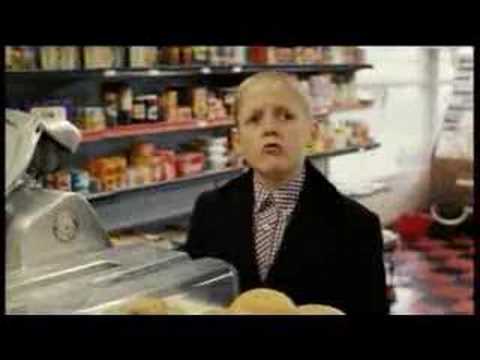
Although some parts of this text are highly conventional of the narrative, there are also more so that can be considered unconventional and one of the most unique parts of the film that demonstrates this is the final shot of the entire film. This particular shot stands out from the rest and as you can see in the picture Shaun, the main protagonist, is shown staring directly in the camera, breaking the fourth wall. In effect, this brings the audience back to reality after the gritty, somewhat real film that they have just watched and reminds them that they are in fact just an audience and are not in fact living alongside these characters.
Narrative
Found this interesting on Narrative in This is England
Applying Narrative Theories - "This Is England"
In the film "This Is England" we can see that generic roles appear which have been stated by Propps who studied hundreds of Russian Folk Tales and noticed patterns that seemed to exist in all of the stories. The roles which occur in "This Is England follow Propps theory of a villian, which in this case i think is Combo, because he seems to be the one that controls everyone but then the hero which could be seen as Woody because he goes against Combo and tries to act like a authoritian figure towards the rest of the group, such as Shuan, the donor who provides something to help the hero in this film he helps Woody by giving Woody the chance to be a father figure to Shaun. There is also the helper which is Lol who acts like Woody girlfriend she helps him and sticks by him through the tough times with Combo. The donor and the helper could be switched either way as they both do the same job. But then Lol could also be seen as the Princess because we soon find out that Lol has had a past with Combo but now realises it was the wrong thing.
In this film "This Is England" shows the idea of Todorov's theory of the story structure which in order to actually be a narrative or a story then all narratives must follow the same basic structure.
Equilibrium - Disruption - Quest to restore Equilibrium - New Equilibrium.
The film shows that ther is a normal life which is pursued by Shaun, He is being bullied by school pupils and is getting annoyed by it he also has no father because he died in the war. This could be seen as the Equilibrium because of it's social realism to society now. But then there is a Disruption when Shaun meets the skin heads in the tunnel and finds Woody who then takes on the role of being a father figure to Shaun. Then we come across a quest to restore the Equilibrium which is when combo comes along with a mission to do with the BNP and restoring English jobs in England and also wants to take revenge for people in the war taking his fathers life. We then end with a new Equilibrium which is when Shaun realises that Combo is abit mentally ill after beating Shauns friend Milky, he then forms a strong bond with his mother after having a disucssion about his father in which we then find out that Milky is going to be ok. This film follows Todorov's structure very well and shows the film has a story to it.
Barthes' theory of Enigma Codes which are puzzles that we have to solve along the way when watching "This Is England". He thought that a key aspect of narrative was the way stories establish a variety of Enigma Codesthat create tension and provide a real picture for the audience. "This Is England" provides a puzzle in the first few scenes of the film in which we do can not figure out if Woody is a nice person or if he was just being nice to bully Shaun, the puzzle was solved by figuring out that Woody just wanted to be Shauns friend. The second puzzle in this film is with Combo in which we don't know if he is mentally ill or just jealous of the fact that Milky has a nice family and Combo doesn't.
In this film "This Is England" shows the idea of Todorov's theory of the story structure which in order to actually be a narrative or a story then all narratives must follow the same basic structure.
Equilibrium - Disruption - Quest to restore Equilibrium - New Equilibrium.
The film shows that ther is a normal life which is pursued by Shaun, He is being bullied by school pupils and is getting annoyed by it he also has no father because he died in the war. This could be seen as the Equilibrium because of it's social realism to society now. But then there is a Disruption when Shaun meets the skin heads in the tunnel and finds Woody who then takes on the role of being a father figure to Shaun. Then we come across a quest to restore the Equilibrium which is when combo comes along with a mission to do with the BNP and restoring English jobs in England and also wants to take revenge for people in the war taking his fathers life. We then end with a new Equilibrium which is when Shaun realises that Combo is abit mentally ill after beating Shauns friend Milky, he then forms a strong bond with his mother after having a disucssion about his father in which we then find out that Milky is going to be ok. This film follows Todorov's structure very well and shows the film has a story to it.
Barthes' theory of Enigma Codes which are puzzles that we have to solve along the way when watching "This Is England". He thought that a key aspect of narrative was the way stories establish a variety of Enigma Codesthat create tension and provide a real picture for the audience. "This Is England" provides a puzzle in the first few scenes of the film in which we do can not figure out if Woody is a nice person or if he was just being nice to bully Shaun, the puzzle was solved by figuring out that Woody just wanted to be Shauns friend. The second puzzle in this film is with Combo in which we don't know if he is mentally ill or just jealous of the fact that Milky has a nice family and Combo doesn't.
This is england
Documentary Realism or stylised set ups
As a social realism film it is important for the director to reflect a large degree of reality towards the audience. This is achieved greatly throughout This is England in many ways.
For instance the idea of documentary realism is conveyed in the film through factors such as the captions "last day of term" This is a factor that is often presented on documentaries to give the audience a degree of realism and sets a time and place for the audience so they feel as though this is real and is happening currently.
Although much of this film does portray a high degree of realism, there are elements of this film which seem to break some of the social realist conventions and remind the audience that this is just a film. One of the most unique part of this film which connotes this is the final shot if the entire film. This particular shot stands out from the rest and as you can see in the picture Shaun, the main protagonist, is shown staring directly in the camera, breaking the fourth wall. In effect, this brings the audience back to reality after the gritty, somewhat real film that they have just watched and reminds them that they are in fact just an audience and are not in fact living alongside these characters.
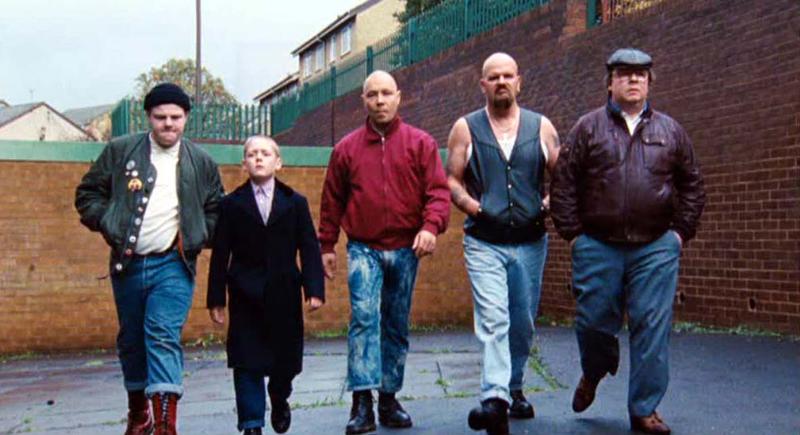
Another stylised set up is when Combo arrives in the film and Shaun makes an ultimate decision of joining combo and following his ideologies due to his undying pride to do good by his deceased father who died in the war. As a result from Combos influence and when we see a massive change in Shaun's development as a character, there is a shot of Shaun and the gang walking towards the camera which is shot in slow motion. This is a shot that separates itself from many others as throughout the film time seems to be moving fast however despite this set up breaking some of the social realist conventions, it is clear Shane Meadows might have done this to emphasise towards the audience the change of Shaun's character as he now not the lonely boy we first saw him to be, but the new 'gangster' Shaun that combo has manipulated him to be.
The use of close ups in This is England can be argued to have been used as a stylised set up to convey some sort of message to the audience or position them in a certain way. For instance when Combo and the gang are being racist towards a could of Indian children in the street, a number of close ups and medium close ups
are used throughout this scene which places the audience in a uncomfortable decision and makes them feel as though they are either the ones being victimised or partaking in the victimising. Overall, it gives a sense that all boundaries of personal space have been overtaken and ignored and the director wants you to feel this way.
Another example is of an extreme close when Shaun and Combo are speaking in his car. Throughout this scene Combo tells shaun that he reminds him of himself when he was younger and vice versa shaun looks up to Combo as the father figure he has always wanted. While this is being discussed the similarities between the two characters become apparent to the audience and each characters seems to reflect 'themselves' at a different life stage.
For instance the idea of documentary realism is conveyed in the film through factors such as the captions "last day of term" This is a factor that is often presented on documentaries to give the audience a degree of realism and sets a time and place for the audience so they feel as though this is real and is happening currently.
Another stylised set up is when Combo arrives in the film and Shaun makes an ultimate decision of joining combo and following his ideologies due to his undying pride to do good by his deceased father who died in the war. As a result from Combos influence and when we see a massive change in Shaun's development as a character, there is a shot of Shaun and the gang walking towards the camera which is shot in slow motion. This is a shot that separates itself from many others as throughout the film time seems to be moving fast however despite this set up breaking some of the social realist conventions, it is clear Shane Meadows might have done this to emphasise towards the audience the change of Shaun's character as he now not the lonely boy we first saw him to be, but the new 'gangster' Shaun that combo has manipulated him to be.
The use of close ups in This is England can be argued to have been used as a stylised set up to convey some sort of message to the audience or position them in a certain way. For instance when Combo and the gang are being racist towards a could of Indian children in the street, a number of close ups and medium close ups
are used throughout this scene which places the audience in a uncomfortable decision and makes them feel as though they are either the ones being victimised or partaking in the victimising. Overall, it gives a sense that all boundaries of personal space have been overtaken and ignored and the director wants you to feel this way.Another example is of an extreme close when Shaun and Combo are speaking in his car. Throughout this scene Combo tells shaun that he reminds him of himself when he was younger and vice versa shaun looks up to Combo as the father figure he has always wanted. While this is being discussed the similarities between the two characters become apparent to the audience and each characters seems to reflect 'themselves' at a different life stage.
Audience Appeals
Audience
Appeals
As Slumdog Millionaire was a hugely successful film drawing in over £377, 000,000 at the box office, there is no
surprise that film appealed to numerous different people, targeted and not, in
many different ways. From the narrative structure, to the director Danny Boyle
and the marketing and promotion of the film itself. All these factors and more
contributing to how this film appeals to an audience.
One of the main attractions to film I believe is the visual styles and
the unusual narrative structure which somewhat breaks the stereotypical
conventions (from Todorov’s theory) that the audience is usually used to. For
instance there are various flashbacks and forwards, and even flashbacks within
flashbacks, which may confuse the audience at first as they are trying to
figure the film out and how it works, making them intrigued. However when they
accomplish this, they will feel rewarded that they have achieved this and this
is what appeals to the audience.
When filming Slumdog Millionaire one of Danny Boyle’s best decision was
changing the classic cameras to more mobile hitec cameras which I believe
appeals to the audience visually especially the scenes where we see the younger
characters running through the slums as it makes the audience feel as though
they are actually running with them and creates a sense of authenticity which
the audience will find appealing.
This Is England: Background and Context
Politics in the 1970's

1970 General Election
The outcome of the 1970 General Election came as a surprise to many. Labour had been in power for six years, following Harold Wilson's victories at the polls in 1964 and 1966 - the second of which had cemented his majority to a reasonably comfortable 97. Opinion polls had Labour more than 12% ahead of their rivals right up to election day, but ultimately Heath's Tories won a 31-seat majority. Some have credited controversial anti-immigration figure Enoch Powell as the reason for the Conservative victory, with the Daily Express claiming in 1972 that he was the " most popular politician in the country ". However, in Government Heath's authority was undermined by a succession of 'u-turns' over the economy, and his inability to deal with the Unions. Europe was also a tricky issue for the Conservatives. Heath chose to take Britain into the European Economic Community, which was unpopular with many MPs and in particular Enoch Powell, who turned against the Tories and advocated a vote for labour.
Harold Wilson Returns to Downing Street
Powell's endorsement of Labour could not have come at a worse time for the Conservatives, timed as it was just days before the February 1974 General Election. Labour just scraped ahead in the vote, beating the Conservatives by a mere four seats. Although they were the largest Party, they did not have a majority and the result was a Hung Parliament. After failed coalition talks between Heath and the Liberal leader Jeremy Thorpe, Wilson decided that Labour would take power as a minority government. Eight months later, in a make-or-break move, Wilson decided to push for an outright majority and called another General Election. This was only the second time that there had been two General Elections in a year, other than those in January and December 1910, and Wilson's gamble paid off. Labour won the October 1974 poll by the narrowest of margins, finishing with a majority of four seats.
Margaret Thatcher
Winter of Discontent
Thatcher was not to do battle with Wilson at the dispatch box for long, however. The Labour leader surprised many by standing aside in favour of James Callaghan in March 1976. By 1977, a succession of by-election defeats had seen Labour's majority eroded back to that of a minority government. With the economy on the slide, in the winter of 1978 there were widespread strikes over Callaghan's plans to impose a public-sector pay freeze to control inflation. This was the Winter of Discontent, and it weakened Callaghan's position to the point that he was defeated ina vote of no confidence by a single vote on March 28, 1979. This forced Callaghan to hold a General Election that May. Margaret Thatcher's Tories gained 63 seats while Labour lost 51, leaving the Conservatives in power with a majority of 44 - the third time in the 1970s that power had changed hands. This was not a trend that would continue, however; Thatcher made herself quite at home in Downing Street, and was not to leave for some 11 years.
Slumdog millionaire
Explore the factors which effected the production of Slumdog Millionaire
The idea for Slumdog Millionaire came about due to a novel which was written by an Indian woman Vikas Swarup called Q&A. From there, screenplay writer Simon Beaufoy wrote the screen play from this novel however removed a few of the stories from the novel as well as changing the characters names, making it completely original and authentic. Director Danny Boyle became interested in this, although at first he was reluctant to read the script however after being encouraged to read it he then decided it would be a great project to direct.
Film 4, the production company, are highly recognized for their 'indie' films which is also why Warner’s Independent play a huge role in the production and distribution of this film as they are also know for their independent films. With this in mind, it was not remote that Slumdog Millionaire would be categorized in this category. The budget to producing this film was a small amount of $15 Million, far from what the film actually made after it was released. Despite the small budget the film was able to focus on more social issues which would have a bigger impact on their audience and did not need big Hollywood stars create this impact.
The casting director Loveleen Tandan faced a lot of difficulties when it came to finding the right cast to play the parts in this film and the process to deciding this was very hard as the film required three peoples in different life stages to play the part of the same main protagonist as he grew up. Therefore all three actors would have to be similar as the audience would have to be able to connect with all of them and believe that it is the same person they are watching as he grows up.
There were also other constraints in making Slumdog millionaire, one being the equipment. Originally, Danny Boyle used standard cameras for shooting however due to shooting on location they found slums to be too narrow and small which made it hard to move the camera and crew around. Danny Boyle in a documentary also said the standard cameras were 'Too static' for some scenes when shooting at certain angles. Therefore it was decided to use more modern, mobile cameras which could improve audience experience as well as making it easier to shoot shots such as the tracking shot.
Although a lot of the scenes were shot in a studio, one of the things Danny Boyle had wanted from the start was to shoot many of the scenes on location in Mumbai as this would create a sense of authenticity and realism to the film. However there were many constraints with shooting on location. As said previously the slums were very narrow making it difficult for crew members to move about despite that filming in these small areas created a sense of togetherness and social solidarity of the endian culture. Danny Boyle also referred to the location as being the see 'always the same but constantly changing’ as the locations used to change a lot. Another problem faced was the crowds when filming as often there were that many people it was hard to shoot a scene without getting a strand person in the shot.
Finally, the Director of this project Danny Boyle was said to have excellent relationships which the cast despite the difference in language however managed to guide and instruct the actors and crew efficiently when shooting each scene. This can be quite rare as a directors main focus is on the story and how it visual looks. However Danny Boyle's main aim was to keep spirits and energies high and says 'the momentum has to keep going in order to finish the film successfully' and it’s no argument that that is exactly what he did.
About the DETECTIVE "Details some forms of our oppression (and self oppression) takes. But all the same, it cannot hemp but reproduce the dominant image of gays"
(From Jump Cut no.18, August 1978, A Review on Contemporary Media 1978,2005)
What this quote suggests initially it how society is often manipulated to make us think the we as a society are taking a step forward in the concept of how homosexuality in films or Tv however are still conveying our stereotypical ideology of gays. Taking the view from my case study of Louis Spence from the programme Pineapple dance studios, although this is a 'reality' show having this grotesque persona as a central 'character' focus' on this particular stereotype making it more noticeable to the audience and reinforcing the ideology that already exists of this. It often paints a positive image of gays seeing Louis Spence as a successful man and how his overly exaggerated gay persona sells to it's audience more than the show and his sexuality itself.
"My dominant concern throughout is with the instrumentality of films for gay liberation"
(Roy Olsen, Jump cut, issue 20, 1979)
This may show how gays are often conveyed as the victim in films or television. Seen as weak or indifferent to the apparently so 'Superior' heterosexuals. For example, characters such as John Paul from the programme Hollyoaks where we see john paul getting physically (and sexually) and Verbally attacked by a character Finn O'connor. who is also implied to be gay however never actually see this character admit it to himself or anybody else. although this representation of John paul shows him as the weaker man, it also has positive aspects as the show developes, the character does simultaneously seeing him stand up for himself after having his once positive gay life being oppressed and therefore represents him as being strong, courageous and equal which is often the journey many tv programmes and films take.
About the film THE DETECTIVE "...the star's unassailable heterosexuality and centrality to the action enforce a narrative function of gay passivity, requiring straight to act for us"
"The gay scene can only legitimately be shown at the points in the plot relating to crime, and so enforces the link between gayness, deviancy and crime. And the actual visualisation of the gay scene can find no way round the impression of the grotesque"
(Jump cut, no.18 , August 1978, pp, 15-16, A review of contemporary media, 2005)
This centrally suggests the state of mind of the person at the time and referring to the word 'Grotesque' which defined as something which is odd or unnatural in shape, appearance, or character creates a binary opposition of 'them and us seeing homosexuality as something bizarre and different from the norm, then are often seen as people who are not ordinary.
http://www.edgeboston.com/index.php?ch=&sc=&sc3=&id=55145&pg=1
"For males, one of the aspects to their sense of humour comes in the form of camp. Campy, is one element of the 'gay sensibility'. camp is self mocking, winking at the audience, and very smart humour. It isn't just dumb put downs, sophisticated gays don't just watch any old bitch fest"
(Padraic Maroney, January 21st 2008, Defining The Gay Sensibility)
I think this basically suggests how the roots of camp are buried in oppression and irony which is expressed through exaggeration and by using this type of comedy makes it easier to make fun of what is going on in normal everyday culture as well as making a political statement.Relating back to 'Bitch fest' emphasises the femininity of gays and showing how a dominant idea of gays are feminine
"It has to be understood as something that has been and is produced and praised in history and culture. It is the specific way we (or rather, a relatively "out" minority) have found of coping with and resisting our oppression and our peculiar situation as "invisible" stigmatises people"
(Jump cut, no. 18, August 1978, Richard Dyer, A review of contemporary Media)
This basically suggests how being open is seen as a positive thing perhaps connotes bravery and strength for being able to actually come out about there sexuality and 'praised in history' suggesting how views have possibly changed. However also suggests how oppressing there sexuality creates a boundary making them feel 'invisible' by there own choice and then it merely provides the conditions in relation to which oppressed people create their own subculture and attendant sensibility.
Textual analysis
Memento - textual analysis practice
Although memento contains many of your stereotypical representations of woman it is clear that that it also challenges many of these representations. Challenging the idea that woman are passive rather than active like the male. The main female character, Natalie is the perfect example and is used as a facilitator to challenge this traditional ideology. As stated
"Representation of 'The more perfect, more complete, more powerful ideal ego' of the ail hero stands in stark opposition to the distorted image of the passive and powerless female character. "
(Laura Mulvey, 1989, p.20, Visual Pleasure And Narrative Cinema)
The scene in particular when we see Natalie manipulate Lennard is a perfect example of how this film challenges the view of Mulvey's. 'Powerless' Mulvey states. Natalie? This scene turns that view completely on it's head showing Natalie to be the complete opposite as she manipulates and takes control of the entire situation and here we then see Natalie as the villain rather than a victim. She clearly holds topic management in this case which again is not stereotypical traditionally for a female to have and also as Lennard is the vulnerable character in this case due to his short term memory condition again shows how typical gender characteristics are challenged.
This film also demonstrates the stereotypical conventions of what a woman is meant to be. Seeing them as the weaker, vulnerable gender; sensitive and with feeling unlike the strong alpha male who often takes control of situation and dominates the screen
"The spectator is actively made to identify with the male rather than the female character in the film" (Laura Mulvey, 1989, p.20, Visual Pleasure And Narrative Cinema)
This reinforces this ideology of how the woman is represented as the weaker sex and the complete opposite to a man. Female characters represent the fear of castration but also symbolise a lack of manhood.
"The sign 'woman' can be analysed as a structure, a code or a convention. it represents the ideological meaning that 'woman' has for men. in relation to herself, she means nothing, Woman are negatively represented as 'not-man'."
(Claire Johnston, 1991, pg.25)
The scene when Natalie enters hysterical having being beat up by 'Dobb' illustrates this as she is overly emotional, something which men aren't considered to be, portraying her as 'Not man'. The fact she is going to Lennard for help signifies how she aware of her female hopelessness as she has gone to a man for help who are often seen as the protectors. It also emphasises the view of female inferior as despite Lennard's disability he is still strong enough to protect her.
Through the many arguments that develop in Laura Mulvey's Male gaze theory, one thing that i agree with is the fact that woman are represented in a way that reminds the male subject of the "lack of penis". This argument in itself may be why woman are often represented as disintegrated and luxated and whilst the analysis of females is i often concerned of the appearance of woman, many believe this deracination extends to woman's voices.
"The female voice is restricted to the realm of the body. This amounts to keeping it outside discourse. The female voice can hardly reach a signifying position in language, meaning or power and is hence all too easily reduced to screams, babble or silence in dominant cinema."
Through the many arguments that develop in Laura Mulvey's Male gaze theory, one thing that i agree with is the fact that woman are represented in a way that reminds the male subject of the "lack of penis". This argument in itself may be why woman are often represented as disintegrated and luxated and whilst the analysis of females is i often concerned of the appearance of woman, many believe this deracination extends to woman's voices.
"The female voice is restricted to the realm of the body. This amounts to keeping it outside discourse. The female voice can hardly reach a signifying position in language, meaning or power and is hence all too easily reduced to screams, babble or silence in dominant cinema."
(Anneke Smelik, Pg.496, The Cinema Book)
looking back at the previous scenes, the first one we see Natalie beaten and apprehensive (which is part of her ploy to manipulate Leonard). Her voice is raised and the cadence of her speech increase so that the words become nothing but a "Babble" and later reduced to a raspy whisper. The scene that closely follows, when then see Natalie scream again as she ridicules Leonard which is one of the ways a woman exerts authority by raising or changing her voice. Further more where Smelik alleged that the woman is "Restricted to the realm of her body" and in the first scene discussion revolves around her being beaten physically and in the scene that follows Natalie's opposition ally used violent language which connotes sexual intercourse, calling Leonard's wife things such as a 'Cunt' and 'Whore' all negative words. All of these components contribute to Smelik's theory and reinforces what she says that the voice can be used to displace woman in film
Research
Research
Luke McNaney: Part of the rock scene. MediaMagazine, 6 September 2003
This article has made the point of how rock 'n' roll has changed over the years. What is real rock music? is one of the subtle questions asked and the opinion of the writer.
Key points:
- What the rock music was, sub genre's such as 'blending pop, RnB and the twangs of country music'
- Rock ruled the 50s
- 'Beatle mania'
- New rock and ways to promote 'The future looks bright for a whole new generation of bands or singer/songwriters'
60s: Original rock -- The Beatles
2010: Conveys how people assume bands are 'Real musicians' just because they play instrument. -- One direction. i disagree with this quotation as I believe you can be just as good as a musician if you didn't play an instrument than those who do. Many pop bands play instruments as they enjoy it not because they want to be rock 'n' roll and one Direction is a great example of this.
- Criticises pop culture using sarcasm 'When it comes to milking the latest trend, for even pop is becoming all grown up - guitars intact! Wow!'
2013: New reformed punk rock bringing back originality what the write describes as 'real music' --sleeping with sirens
- The writer criticises Talent shows for having no 'real' talent but shows how not all of them are like that 'Fame Academy does at least feature contestants who write their own rock songs, which makes a change from the non-entitles featured on that Simon Cowell Show'
This is a clips from John and Edward performance on X-factor which shows that some talent shows are not about talent but entertainment or the likability of the contestants themselves
- This article conveys how sales dropped 'While on the subject of sales, the Uk singles chart is facing it's worst year yet: while the bigwigs might blame piracy websites like Napster for stealing sales' and suggests that it is because of the recent comeback of rock music or sub genres of punk-rock/post hardcore bands that has captured the attention of many of teenagers recently that is what's brought the sales up rapidly.
For instance there was a great rise in sales when post hardcore band sleeping with sirens peaked at number 3 on the US Billboard charts in 2013 with their new album 'Feel' which sold over 60,000 copies in the first week of release. Further more when the release of the first song 'Low' released, the sales tripled, supporting McNaney's point.
- A point made by the article writer of how Rock will never truly disappear 'Bring on the bands and rock on! For now, at least …' is a quote I absolutely agree with as I believe many rock/alternative bands in this day an age often look at the old fashioned 'rockers' who greatly influence their music and style. For instance Arctic Monkey's band member Alex Turner spoke out on an interview in March 2013 in a NME online article that The Beatles and the whole idea of 'Beatle mania' influenced them. So this illustrates how new bands are bringing originality back into the music industry.
Subscribe to:
Comments (Atom)