Showing posts with label Reality Talent Shows. Show all posts
Showing posts with label Reality Talent Shows. Show all posts
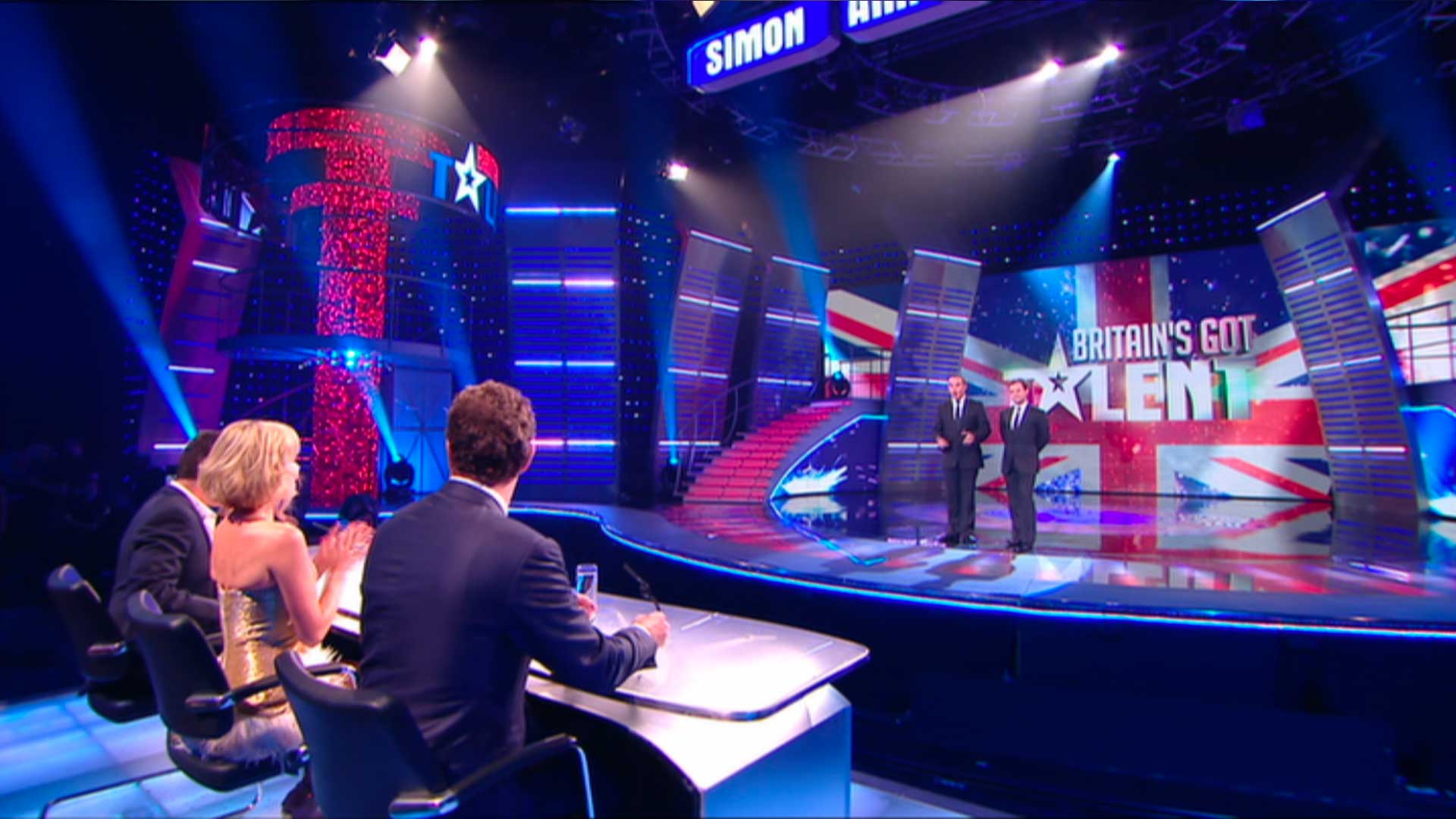
Generic TV talent shows have many conventions. For example, one of the most popular is Britain's Got Talent (BGT) which is filmed weeks apart from October - December and aired late May. They have had a variety of judges throughout the series; David Walliams, Amanda Holden, Simon Cowell, Piers Morgan and Alesha Dixon. They have had a variety of winners including: Pudsy the Dog, Diversity, Paul Potts and George Sampson.
This show definitely applies to the mainstream as it is a generic talent show a part of Saturday Night television and it has mass success with viewing figures. Sometimes the show influences the aspirer to audition but this show definitely targets the mainstreamer. Audiences watch it for entertainment purposes as only a handful of the auditions are classed as talented. One of the reasons it is so successful is due to the humour the abysmal auditions generate. Examples are shown below:
Another reason why this show appeals to the audience is because the contestants are ordinary people just like the people watching it. It is a show for all ages and nationalities which means more people can identify and relate to the people they're watching. Some share the saddest and most heartbreaking moments of their lives that is usually their motivation to audition and succeed in life. Audiences can relate to some situations such as losing a loved one or having a tough childhood because many people in the UK go through similar battles. During these types of audiences, instrumental soundtracks play over their introduction and post audition to magnify the emotion. Artists like The XX and Ludovico Einaudi are frequently used.
Others decide to watch the show as it is so popular therefore it is always a big topic to talk about with others either online or face to face. Many people use the show to socially interact on Facebook and Twitter to share their thoughts. This is usually when an act is very good. The show is set in arenas throughout the country meant for fans of the show to buy tickets and enjoy the experience live together. This show lives off social gathering.
The show has a variety of contests. The bad ones tend to be the most confident thus making their disastrous audition even funnier. Ironically, the talented ones tend to be the most shy thus making them easier to like.
George Sampson, for example, was an extremely gifted and confident dancer. Somehow his confidence made him seem more charismatic.
However, a more recent audition by Jasmine Elcock created a love for a teenage girl due to her modesty and kindness. The fact she didn't realise how great she was and her response to feedback only made the appeal for her grow. People were rooting for her - watching the show just for her - as they wanted a genuine talent to go far and possibly win the show.
From watching the show for all 10 series, I think the funniest auditions are either the angry contestants who are so oblivious to how awful they are or the naive contestants that judges like David Walliams take advantage of to wind others (Simon Cowell) up and put them through to the next stage of the competition just to spite other judges. An example of this is Lorraine Bowen from 2015 who performed her own song about apple crumble that was so bad it caused Simon to buzz almost immediately. However, her positive attitude and will to go on made the audience side with her and encourage her to continue. Seeing Simon's reaction made David encourage her too and he even put her through to the semi finals by pressing his golden buzzer just to spite Simon.
These shows typically run in a series; the regular broadcasting of this genre is Saturday evenings at early peak time, and sometimes Sunday evenings or evenings through the week, too. The shows are more often than not a knock-out competition, running for 12 weeks in the lead up to Christmas, the usual format consisting of; auditions, judges choices, semi-finals and then the finals. In the first few weeks, auditions will be held, then the judges will pick who they believe is best suited for the competition. The selected competitors will then take part in a series of rounds, in which the audience usually has some say by contacting the show and voting for their favoured competitor to advance to the next round. Ultimately - in the final - there will be two competitors and then one will win.
Appeals:
Continuity is an appeal of the genre due to the fact the show will air at the same time and same day each week. This provides the audience with stability due to the fact they are aware of when the show will be on TV, and it can act as an event for that day. Entertainment is an appeal from the Uses and Gratifications model which is present in this genre. The use of elite people is also a common appeal within the genre; the hosts and judges of the show are typically elite people within the industry of talent being assessed within the show. As an example; Nicole Scherzinger is a jude on the X-Factor, which is fitting as she is successful and famous within the signing industry.
Target audience:
Knowing the typical air time of the shows within the genre, the typical target audience will be individuals aged 16-40. In particular, group E from the income status model - unemployed, students, etc.. This is due to the fact they are the most likely group within society to stay in on weekends as a result of little to no income. Parents are also included within the target audience as it is unlikely that they will be going out and, therefore, these shows are able to act as a source of entertainment from home. This genre of TV very much targets the mainstream audience, the continuity appeals to them as they value routine, as well as this, the genre is rather basic - as in there are no sophisticated or challenging elements to it - which will appeal to the mainstream. Furthermore, due to the popularity of the genre, trendies will be included in the target audience; talent shows can be a topic of conversation amongst people and, in the strive to fit in, individuals will watch the show in order to be included in and contribute to the conversation.
Opening sequence:
Reality television shows will typically open their show with an upbeat song; this sets the tone of the show, it is a light-hearted and enjoyable genre focused on entertaining, which is represented with the upbeat music. It is more than likely that solely bright colours will be used within the opening sequence, this is also due to the fact the tone of the show is enjoyable and exciting, which the use of bright colours will reflect. Often, contestants of the show are also featured within the opening sequence, displaying their talent. If this is not the case, snippets that represent the show will be displayed instead. Finally, the title of the show will appear on the screen.
Within the opening sequence of RuPaul's Drag Race, there is upbeat music which is typical of the genre and sets the tone for the entirety of the show; that it will be upbeat and enjoyable. Typical of the genre, contestants of the show are then displayed, with their name appearing in a bright colour. The use of bright colours - which is also typical of the genre - assists in setting the tone of the show, the hot-pink colour implies that the show will be exciting and enjoyable. Challenging the expectations of the genre, the host and head-judge of the show is also featured in the opening sequence. This is not a common feature within reality talent show opening sequences but, in this case, it is acceptable and enjoyable due to the host being an elite person. This helps to attract attention to the show. Alongside this, it seems normal for the host to be included in the opening sequence as the show is named after them.
The opening sequence of Britain's Got Talent differs from that of RuPaul's Drag Race, whilst remaining typical of the genre. Within the BGT opening sequence, an upbeat song is used. As previously stated, this will set the fun tone of the show. Moreover, bright colours are used within the opening sequence, not only does this assist in setting the tone of enjoyment and excitement, but it also presents the show as being patriotic as the colours used are red, white and blue - which are used to represent Britain. Although contestants are not shown in the opening sequence, short scenes are used to display the theme of the show. Silhouettes of possible past or current contestants are shown, which implies the theme of the show to the audience; they are seeing people conduct activities that are linked to being talented and expect similar activities to be present within the show. The use of iconography is also present within this opening sequence, which is not typical of the genre but is acceptable for this particular show as - as the title reveals - it revolves around Britishness, which the iconography helps to support and reinforce.
Setting:
The typical setting of this genre is a room, studio or theatre. This is due to the fact that these are the typical performance areas; and reality talent shows are often based on a persons ability to perform. We usually see the contestants interact with the judges from the stage - the judges will sit behind a desk facing the stage, with the audience behind them.
The Voice UK is set in a theater, which is typical of the genre. This will appeal to the audience as it is familiar and fitting with the genre.
The Great British Bake Off is set in a kitchen, although this is not typical of the genre, it is fitting with the show and if the setting did change to a theater, it would not match the show and would appear strange to the audience. Therefore, the setting of this particular show will remain appealing to the audience, despite differing from the expectations of the genre.
Format
The format of reality talent shows are all more or less the same, for example they take place on a Saturday and Sunday night, usually around 8 to 10 o'clock. The shows that take place on the weekends are typically the main,more important ones, and then throughout the week smaller shows tend to be on. Although a few reality talent shows are on at different times of the year, they usually follow each other, meaning one will finish and then a month or two later another will be on, all lasting about 10-15 weeks.
Appeals
Relating to the uses & gratifications model, the main use of reality talent shows is to entertain the audience, by offering a variety of professional, funny and really bad acts. As well as this, these shows will get the audience to react in an active way by having an opinion on the participants, and more often than not, voting for who they want to see again on the show. Because of this, I would say that social interaction is a key element of reality talent shows. The use of elite persons as judges may also appeal to the audience. For example, a specific audience may be attracted to the use of Simon Cowell as a judge, and another audience may be attracted to the use of Nicole Scherzinger as a judge. I think that X Factor is a conventional reality talent show, because it consists of 4 famous judges, judging a wide variety of the general public, who are clearly a lower class than them.
Target Audience
In relation to the 4Cs model, I would say that reality talent shows would appeal to a mainstreamer, due to the fact that mainstreamers do not like change and like everything to be expected and conventional, so by being on at the same time, same day each week and the content being very typical, the mainstreamers will feel a sense of security and safety. I think that shows like X Factor will appeal to those of the working class, because they could possibly feel as though they relate to many of the working class contestants. Also the show is quite basic, therefore doesn't require a high level of education to understand the narrative.
Opening Sequence
In the opening sequence, we see the letter 'X' going through space. This connotes to the audience that the show is like something we've never seen, as though its unique and special. It acts as if its like a star shooting through space, which again gives the audience an indication that the show its special, and one of a kind. We see the 'X' move to the beat of the music which grabs an audiences attention because it makes us aware of the upbeat atmosphere.
The music in the opening sequence is loud and dominant, again, suggesting to the audience that the show consists of a very upbeat atmosphere and tone. The fact that its quite loud, means that audience can instantly hear it and recognise it, making the X Factor unforgettable and will keep their attention and interest.
The technical codes in the sequence also give us an indication of the tone of the show. For example, the pace is quick which gives off a very busy, yet upbeat and energetic feel. The camera follows the 'X' meaning the audience will also follow the 'X' as if we want to find out whats at the end and it leaves us feeling intrigued.
Setting
The opening sequence for The X Factor shows that the main location is London, as we see a long shot of the famous river thames. Other reality talent shows such as Britains Got Talent are not only based in London, but in other famous cities such as Liverpool and Newcastle. Both reality talent shows are seen to show big British cities, which implies to the audience that reality talent shows are very patriotic and are proud to show off the diverse talents in the country. More or less all reality talent shows are based in a studio. This sort of hints to the audience that maybe aspects are unrealistic and set up, despite the name of the genre.
Technical Codes
Non-digetic music is used quite frequently during this genre. For example, all opening sequences include very upbeat music, and then throughout we often see short clips of either individual contestants or a big group of contestants with non-digetic music playing. The tone of the non-digetic music however, depends on the tone that the encoders want to create. For example, in every reality talent show there is someone auditioning with a sad backstory. To make the audience feel empathetic, the encoders will choose to play slow, intense non-digetic music. This helps the audience feel sad for the participant which then leads to a bigger reaction. On the other hand, if a contestant comes on who shows a really quirky and energetic personality, the non-digetic music will reflect this energy and again make the audience feel the same way.
Whilst the participant is auditioning, the camera tends to quickly switch between the act, and then a close up of all the judges individually. This is to make the audience believe that the way we see the judges during the close up, is their reaction towards the act. In a way it is similar to how the non-digetic music works, because if an act with a sad story comes on, more close ups will be used to try and capture the emotions of the act and the judges. Characters & Representations
Reality Talent Shows:
Typical Examples:
The X Factor
Britain's Got Talent
The Voice
Got to Dance
The Apprentice
Strictly Come Dancing
Dancing on Ice
Format:
The format of Reality Talent Shows usually consists of running for around 8-10 weeks. For example, shows such as Britain's got Talent, The X Factor, The Voice and Got to Dance go through a number of stages throughout the competition to narrow down the numbers before they discover the winner. This includes: auditions, boot camp, battle rounds, live shows etc. These shows usually fill in the gaps of one another, for example the X factor is usually on around autumn/winter whereas Britain's got Talent is then aired not long after during the spring/summer time. As they're the two main talent shows, the others fit around and along with them. Appeals: Reality TV Shows will appeal to different audience types for their own individual reasons Target Audience:
There is a huge variety of Reality Talent shows, some of
these may include:
-Britain’s Got Talent
-The X-Factor
-The Voice
-The Apprentice
-Master-Chef
-American Idol
-Who Wants To Be a Millionaire?
Format
Reality Talents shows typically run in a series however some
are continually broadcasted. The ones that are continually broadcasted are
typically game/quiz shows. These shows are usually aired at the prime time.
This is simply due to the fact that these TV shows are typically for the
mainstreamer and most people are likely to be watching at this time. This time
ranges from 7 o’clock onwards to 10 o’clock due to the fact that at this time
people have gotten home from work or college. Throughout many Reality Talent
shows, we are now presented with a backstory for the favourite contenders. We
see into their past life in order for us to relate to them more. Throughout
these talent shows we see the contestants development as they begin as somebody
who comes from a poorer background but then they end up singing on stage.
Typically coming towards the end of the series we see them go back to their
hometown to show how far they have came along.
Appeals
Usually the mainstreamer would be the one to watch these
kinds of TV shows. This is due to the fact that after they have watched these
shows they are able to go out and talk to their friends and family about the
events that have unfolded on the TV show. But people would also watch these
kinds of TV shows to personally identify with one of the characters. Reality
Talent shows gathers people from across the country so there is likely to be
somebody who is from your hometown competing. This will make want to watch the
show even more due to the fact that you will be more likely to relate to that
person. The production values typically are very high for TV shows of this
genre. This is due to the fact that they can afford high production values due
to the audience that they reel in. You know that they have high production
values due to the venues that everything takes place in and also the typical
judges that take part in the show. These judges will most likely want a high
wage due to the fact that they are mainly big name celebrities.
Target Audience
I believe that this genre of TV show is for the groupies and
for the cynics. I think that it is for groupies due to the fact that people
watch these mainly so they are able to fit in. I believe that it is for the
cynics due to the fact that there is a typical group of people that complain
about the show when it is over, they complain about how the show has been fixed
due to the fact that their favourite contestant didn’t win the whole
competition. I think that people watch this in order to personally identify
with some of the contestants that partake in these TV shows due to the fact
that they come from similar areas or backgrounds.
Opening Sequence
I am going to use X-Factors opening sequence, as it is
arguably the one of the UK’s most popular Reality Talent shows. In this
sequence we see a massive bold “X” floating throughout the galaxy and through
London until it eventually stops with the word “The” appearing above it, and
“Factor” appearing below it. This X floating throughout the galaxy is showing
us that it is searching for somebody or something until it arrives in London.
This is telling us that people in the UK must have “The X – Factor”. The music that is in it has been used for a
long time, it is quite an up-beat soundtrack so it will get the audience in the
mood, this up-beat music sets a pretty light tone for the TV show.
Setting
The settings for all of these TV shows are major performing
buildings. This is so that they can have a cram a huge audience into the
building and have a big stage for the contestant to stand on. In front of the contestant
sits 3 or 4 judges at a table. They are there to judge them on how good they
are. These Reality TV shows only ever visit the most popular cities in the
country due to the fact that they can reel in a bigger amount of contestants. You can see that these talent shows only take place in big named cities and concert hall in images below.
Technical Codes
There are many different camera angles that are used in these kinds of shows. First of all before anything takes place we see establishing shots of the location that the show is going to be set in that week. When everything takes place we usually see everything through the best sort of camera angles. So for example if somebody is performing gymnastics we would see them wide shots due to the fact that we can see everything taking place however if a singer is performing then they will be shot from mainly close ups and medium shots. The editing that has been used in the show also depends on the act. I will use X-Factor as an example. If the person, who is performing, is awful then you should expect there to be jump cuts between them performing and the judging slamming their hands on their buzzers. However if the person ,who is performing, is good then you should expect faded transitions with the camera mainly focusing on them and then the judges staring at them in amazement.
 Others decide to watch the show as it is so popular therefore it is always a big topic to talk about with others either online or face to face. Many people use the show to socially interact on Facebook and Twitter to share their thoughts. This is usually when an act is very good. The show is set in arenas throughout the country meant for fans of the show to buy tickets and enjoy the experience live together. This show lives off social gathering.