Showing posts with label Robson Henry. Show all posts

To what extent are your chosen texts typical of their genre

To what extent are your chosen texts typical of their genre?
or
How do your chosen texts use genre conventions?


‘This is England’ is a Social Realist film and is typical of this genre in many ways. One of these is in its aesthetics. By convention, a social realist film should be set in an urban or suburban working class area. It should also be authentic and filmed on location. This adds realism as it is a real location and not a fabricated set, which is always built bigger so that cameras can move around and have freedom to twist and get into position for particular shots that will be filmed. This means that the camera movement and shots are limited, meaning that it looks less cinematic and more like how we, ourselves, would see it in person. Other conventions, which are met in ‘This is England’ is with its natural lighting and non-known actors. This adds to the realism as we see them as the characters and not as themselves or their earlier works like we would with better-known actors. Thomas Turgoose is a good example of this as he was found in a youth club and has had no other acting experience. He gave the image of raw emotion in his performance as he was almost playing himself, being a preteen boy in a rundown area where violence is rife and where you have to make a name for yourself for respect. Like Shaun, Tom had been put on suspension for fights and troubled acts at school and so could relate in this sense, strengthening the bond between him and his character.

‘This is England’ is also typical of a Social realist film in its function. One of these is to make a statement. This is done well in ‘This is England’ as it makes the point that the racist attitudes, which took place in the 80s, are still applicable today and that we can do something about it and stand up to those who share Combo’s ideologies. This point is made clear by the final shot, which has Shaun breaking the fourth wall and looking directly into the camera. This delivers the message in an immensely powerful way. This film also is relatable to real people and highlights real events and issues as some might face racism in a day-to-day life, not just being on the receiving end, but also actually being on the delivering side.

Although this film has many conventions of the social realist genre many people see ‘This is England’ as more of a Shane Meadows film and view him as an auteur. Many of his common conventions are present in ‘This is England’ like his use of contrasting comedy and seriousness in different parts of the film. This is shown with the comedic and light-hearted scenes in the first half of the film when Shaun first meets Woody and the skinheads and in the second half of the film where Shaun meets Combo and is manipulated into following his ideologies and way of thinking. As seen with ‘A Room For Romeo Brass’ he seems to use regular actors like Vicky McClure, Andrew Shim and Frank Harper (who play Lol, Milky and Lenny in ‘This is England’). His narrative elements are also a part of him being an auteur as he uses them for many of his films. These include the use of a ‘coming of age story’ with children based in a working class English urban or suburban setting. His films also include mostly include family problems or issues, violence, older role-models (normally a surrogate father figure) and use improvisation in the performances. Other things which are present in the film but are not a part of the social realist genre is the use of narrative devices such as montages, slow motion and music. The music in 'This is England' is instrumental and is used for great emotion which is being felt both by the audience and the characters within the movie. These things which take away from the realism do wonders for the film but can be seen as also adding to the auteur theory.


Due to this it is difficult to tell whether ‘This is England’ is a Shane Meadows film or a Social Realist film.

Representation of Women in This is England

In this is England there are only three female characters; Cynthia, Smell and Lol. These women each represent their gender in different ways, each embodying different characteristics that women have.

One representation of women in this is film is that they are 'free'. This is shown in the scene with Combo and Lol in the car. Lol rejects combo and in doing so, represents the choices that other women don't have in film. this scene also shows that women are seen as active characters. Lol rejecting Combo works to drive the narrative as it can be seen as pushing him off the deep end and could act as a catalyst to bring about Combo's attack on Milky.
Lol's power and fearlessness in this scene is also shown through the camera shots as the shot-reverse shot uses the exact same shot types on both of them meaning that Lol and Combo are equals in power and domination.


 When the shots change to big close-ups with a shot of Combo we feel like he is dominating us and Lol as his face crowds the screen leaving almost no free space. However as it cuts to Lol's face we see the exact same big close up, almost as if she is fighting off his dominance with her own.


Quite early on in this scene we can tell that Lol holds the power as Combo acts small and intimate whereas she is closed off and actually tells him off for interrupting her from going to work. This shows her fearlessness and her rebelliousness towards the dominant power.

Women are also shown as motherly and protective of those that they care for. This is shown in both Cynthia and Lol. Cynthia shows her protectiveness best in the cafe scene when she complains about Shaun's hair saying "you will have problems if you touch his hair again." Her protectiveness is effective as the gang are silenced by her stern tone and dominating posture.  Cynthia also appears 'sexless' with her denim attire and enormous glasses. This is because she is meant to be Shaun's mum and that is her only singular role.

Time and Space Constraints - This is England

How Does Shane Meadows represent Time Passing?

Throughout the film we are aware of each time that time passes. this is due to the events which take place along the narrative. Smell's birthday is one of them and follows shortly after the scene with Combo's speech and the parting of the group. The birthday itself shows time moving forward as it is now someone's birthday, meaning that days have passed by since the previous scene. The feeling which greets Shaun and Combo shows that not that much time has passed since there is still animosity and ill feelings towards Combo and his ideas and manipulating of Shaun.


Parallel scene also show us time passing as it makes us recognise how much has changed throughout the film. these scenes include the 'dead-time' on the beaches. these show great contrast between the beginning and end of the film. The first scene on the beach seems to represent his loneliness and solitude. The scene is long, representing the 'Time flies when you're having fun' belief, with fun and happy scenes being quick and fast paced whereas this is slow and dragging. The second scene is also quite long and is there to show how much Shaun has changed throughout the course of the holidays. this brings attention to the change in not only his aesthetic appearance but to the change he has faced inside.


Other scenes such as the party scenes and the montage scenes also draw our attention to the changes which happen between. it shows how tiny changes can create such large affects. The montage is one of the most important as it shows the change from Shaun to a fun-loving skinhead and from a skinhead to a racist. this is the central story of the film, showing the mistakes that shaun has made in order to follow a father figure. Just seeing the people he is with and the clothes he is wearing, you can see the transformation he has undergone. The black coat seems ominous and the change from light colours to the darker ensemble also shows the change in his personality. 


these parallel scenes draw our attention to the time that has passed, and we feel saddened that he has made these mistakes and wish for time to turn back so that he can go back to the way he used to be.


Paragraphs


“No term is more frequent in gay criticism of the cinema than stereotype.”
(Richard Dyer, Gays in film, 2005)

This quote is pointing out that in the majority of gay films the gay characters are simple, base stereotypical characters.  This is both accepted and challenged in the film G.B.F. the character Brent VanCamp, is a clear representation of the representational ‘Sissy’. With his exaggerated fashion sense and limp wrist he embodies the dominant belief of what a gay person should act like.  However, the main character – Tanner Daniels – challenges the feminine stereotype, as, although he has a slight high-pitched voice, he doesn’t like most things that one would deem ‘Gay’. This is shown in the scene when the three ‘Queen Beas’ have coffee with him questioning him on his ‘Fabulousness’ and ‘fierceness’.  The dramatic ‘Queen’, Caprice, asks him whether he is auditioning for the school musical only to have him decline saying that he isn’t interested in drama or dance, leading her to ask him; “You sure you’re a ‘mo.” After this the religious “Queen”, Shley, come to the conclusion that “he’s like Caprice. I mean she’s black but she doesn’t talk like them.” This scene not only adds humour but also brings a sense of realism to the character.

In Gays in Film, Richard Dyer talks about gay sensibility, saying that it is:

"A perception of the world which is coloured, shaped, directed and defined by the fact of one's homosexuality."

This can be shown in the film "G.B.F" in the montage where the recently outed gay kid is taken to a "mall" and tries out a magnitude of clothes, which are overly coloured, bright, sparkly and shiny. This plays on the idea that the "queen B's" think that, as he is a gay, that he should have outstanding fashion and be in line with the gay stereotype.

However some could take this as offensive, as the gay character is shown in a feminine light, fitting the main stereotype of 'The Sissy'.

In the Film, The Celluloid Closet, actor/screenwriter Harvey Fierstein talks about the sissy being offensive and says that his

"Visibility at any cost. I'd rather than have negative than nothing." 

This statement shows a viewpoint that has caused a lot of disputes in the past. This is because many people believe that any publicity is good publicity. However I disagree with this statement, as the problem at hand is that we need to change the majority of the audience's view to 'Pro-Gay'. Although this film doesn't promote a bad representation of homosexuals, the use of the feminine character is probably a far off point than where it is needed to be. The way in which the film challenges the stereotype however is that the main character, Tanner, hates most things gay and has no fashion sense.


Monters in the closet: Homosexuality and the horror film, Harry M. Benshoff

This book was written by Harry M. Benshoff in 1997 and is very interesting and helps with my suggestion that homosexuals in film are portrayed as the "Other".

  
“In a 1984 study of anti-homosexual attitudes, the investigators broke the heterosexuals’ fears of gay and lesbian sexuality into three topic areas:
(1)  Homosexuality as a threat to the individual – that someone you know (or you yourself) might be homosexual
(2)  Homosexuality as a threat to others – homosexuals have been frequently linked in the media to child molestation, rape, and violence
(3)  Homosexuality as a threat to the community and other components of culture – homosexuals supposedly represent the destruction of the procreative nuclear family, traditional gender roles, and (to use a buzz phrase) ‘family values’.”
p. 1

He compares homosexuality to “an evil Mr Hyde, or the Wolfman, a gay or lesbian self inside of you might be striving to get out.” He says that this is the dominant ideology for most of the people in the “English-language culture.”  Saying that they believe homosexuality to be a "Monstrous condition”
p. 1

“Monster is to “normality” as homosexual is to heterosexual”
p. 2

“Gay men are contagions – vampires – who, with a single mingling of blood, can infect a pure and innocent victim, transforming him/her into the living dead”
p. 2

“In the case of monster movies and science fiction films, the narrative elements themselves demand the depiction of alien “Otherness,” which is often coded as lesbian, gay, or otherwise queer.”


p. 6

Gay film work: affecting but too evasive, Roy Olson

This article was written by Roy Olsen in 1979 for the 20th issue of Jump Cut. This article was extremely    important to my research as it directly linked to my aim - "to show that homosexuals, when shown at all, where used for entertainment purposes or to be used as a form of "other" which the other characters compare themselves to. they are also mostly shown as the victim.

"My dominant concern throughout is with the instrumentality of film for gay liberation." - this is good as it cleanly and plainly tells us what the article is about and what issues he will be tackling.

"confessional films, documentaries of gay events or circumstances, and short parodies or satires of straight prejudice and gay stereotypes." 

he says that some films are "educational' films on controversial topics"

"comedy is aimed primarily at gay and sympathetic straight audiences"

Gays in film, Richard Dyer


This article was written by Richard Dyer in 1978 for the 18th edition of Jump Cut. although some of the ideas are outdated, the main message put forward is important as they can still be aligned to gay cinema today.


Gays have "insisted on the centrality of the media as a carrier, reinforcer or shaper of [their] oppression." - this is important as it says that they blame the way in which they are represented and treated by the way in which the media shows and represents gay people. however he disproves this by saying that the media is only "one of the instruments of oppression"

Gay characters and themes have all been formed through straight ideas and ideologies. "without seeing that such ideas and ideals are straight ones" - this is important as it instantly tells us that no matter how "real" a gay film is, it is most likely made through the eyes of a straight person and so only has as much insight as someone who is watching it from the outside.

"gayness should express itself on film." - this is important as again it is saying that gays aren't representing themselves, but are simply being shown as someone who doesnt now us - with their ideologies, and so it isnt a reliable representation.


Jack Babuscio - "gay sensibility" - "a perception of the world which is coloured, shaped, directed and defined by the fact of one's homosexuality" - this is the central convention of gay films - that the whole of the plot and the events which happen to the character are based around the face that he/she is gay.

gay sensibility - "it is the specific way we have found of coping with and resisting our oppression"

"self-oppression" - this says that the gay people also contribute to their oppression

the film THE DETECTIVE "enforces the link between gayness , deviancy and crime." - this tells us of the thoughts and state of mind of the people at the time, as it was made to be the reason why people accepted it - because the gay scene was related to crime and criminal work.

"in every case the film is made within  straight framework" - the film is never representing gay people as they see themselves, only by how others see them - different. they are never "expressing itself."

"a very common stance of straight critics and alas of many within the gay movement, is that film should show that gay people are just ordinary human beings" - this should not be the case as gays are ordinary human beings and, if this is a concern, then something should be done to rid the film of this 'other' nonsense.


he says that it would be impossible to show homosexuals as the same as heterosexuals as "so much in life is relationships and even where no physical expression is given to them, the sexual reality of out lives necessarily informs them"
meaning that "if you are representing sexual and emotional relationships on screen, it does make a difference whether they are gay or straight"- this makes sense as the relationships of the main character/s and how those relationships are important in his life and in leading him to make important decisions.

people want realism in gay films but it is hard to do and not very effective as "realism is only capable of capturing the surface of life"
"it is hard for "realism" to do anything but reproduce dominant ideology" and so "a realist film about gays is unlikely to challenge the assumptions of most of the audience about what gays are like"


"To show gays 'realistically' on the screen means to show them in conventions of the prevailing cinematic realism. This kind of depiction in turn means to show them in conventions of the prevailing cinematic realism. This kind of depiction in turn means to reproduce the ideas and assumptions about how gays really are which prevail in society."

Newspapers

1) Daily Mail
The Daily Mail is a middle-market tabloid newspaper which appeals to many people. by looking at the 4Cs audience classification, one could say that the main audience would be the Mainstreamer. this is because a lot of people read it and it has been in print for a long time, which appeals to the mainstreamer as they appreciate security and staying within their comfort zone. they are also 

Genre Research and Analysis

Examples of Shows

  • New Tricks
  • Doctor Who
  • Merlin
  • Being Human
  • Downton Abbey
  • Sherlock
  • Torchwood
  • Ripper Street
  •  A Touch of Cloth
  • Black Mirror

Format
These sequences, like those of other British Drama shows run in a series. tHIS is typical of British Drama as it keeps the audience hooked at the end of the season and are waiting for the next season next year. 
These programs are generally broadcast around the weekend and are shown in the evening from 7.00pm to 10.00pm. This is because they are generally aimed at families and so are broadcast when it isn't a school night so that the children will be able to stay up and watch it.
With British Drama there are lots of sub-genres that make up the overall genre. There is mini-series e.g. Sherlock, which only broadcast 2-3 episodes a season, One-offs e.g. a touch of cloth and Black Mirror and serials, e.g. Doctor who, New tricks and Merlin. These therefore have different formats when it comes to unfolding stories. With One Offs the story unfolds over the short series and comes to a conclusion at the end of the series. With serials the story normally overlaps the entire series but with seasons having their own smaller inner plots which have a conclusion at the end of the season.

Appeals

The main appeal of British Drama is to Entertain. This is what most audiences want. It doesn’t really Inform or allow the audience to Personally Identify with the characters. But the confusing and intruiging story lines causes the audience to think it over and use their brains to try and work the clues together before the other characters do and so is entertaining as it is mentally challanging.  


Downton Abbey


in the Downton Abbey opening sequence there are many examples of codes.
one example of  these is 'Symbolic Codes'. one of these is the way that each shot is shown in a different place on the property, e.g. the kitchen, the grounds etc. this tells the audience that the show won't only be from one point of view and will take place in many different places. it also shows different people performing different tasks e.g. the maid walking up the stairs, the master/ butler walking the dog across the grounds and a servant setting the table. this also tells the audience that it will be from the different points of view of many different people and will follow the lives of all of the different classes within the house.
Another 'Symbolic code' is that the faces of the people shown are never visible. this allows the opening sequence to be continually used throughout many years even as characters die or leave. this will bring comfortability to the audience as the will grow used to the opening and will instantly recognise it.
another symbolic code is the appearance of the 'Title Card'. the fact that there is a reflection of the house beneath the solid image gives the impression that, like an iceberg, there is much more than meets the eye and that most of the work within the house takes place beneath the surface. this is the main point of the series as it shows the workings of the cooks, servants and matrons who work within the house aswell as the upper class who live there.
another symbolic code is the fact that in every shot the house is visible. this adds to the idea that

Along with symbolic codes there are technical codes. one of these is that the camera is always moving which signifies to the audience that the plot will also follow this constant flow, never going the audience time to catch their breath. however the pace of the editing is slow, showing that although there will be constant plot there it will move at the pace that everyday life moves.
another technical code is that each shot appears to be a POV shot.


Setting


Representation of women


Representation of Women

Over the course of the last 50 years when television and media have become popular and widespread women have been represented in many ways. Some of these ways rely solely on stereotypes in order to get the message across quickly and in order to create a 'shortcut to meaning'. This use of stereotypes can be clearly shown in the Asda Christmas advert. In this advert the mum is shown, through the use of a montage, to be responsible for most of the good things that happen at Christmas, as shown through the shots of her buying presents, getting the tree and hanging up all of the decorations. This also shows women, through stereotyping, as the 'Housewife'. This is shown as there is no man to speak of as she cleans the house, cooks the dinner and organises all of the children's school plays and clothes. The advert also gives supports the ideologies that, although the husband is the one who works to earn the money, the wife is the one who puts the money to good use and uses it to bring the happiness of Christmas into fruition. An archetype used be the Decoders of this advert is 'the Mother'. This is shown through the shots of her taking her children to a school production and the ending shot of her looking on over the family as they relax on Christmas day. However, no media text ever truly reflects a group or event in society as any media text goes through a process of Mediation. This can be seen in this advert. The idea of organisation can be seen as they have shown only events which show the mother to be working hard rather than while asleep or in the bath relaxing. It also shows the shots in a fast paced order, showing that this mother's life is also fast paced and that all of her time is taken up with ensuring that her family have the best Christmas. This helps with the 'Focusing' aspect of mediation which comes together to show the audience that the main points of the advert is to see that mothers and wives are the heart and soul of Christmas. This is also backed up with the tag-line of the advert; “behind every Christmas, there is a mum.”

Another representation of women is Abigail Whistler from Blade: Trinity who could be fixed to the archetype of the 'Tom-Boy fighter'. At the beginning of her introduction scene she is shown as a woman with shopping bags and a baby strapped to her chest. This seems to give off the idea of women as housewives and mothers. However as the scene progresses and the vampires attack she sheds her 'disguise' to reveal herself in a tight-fitting top and combat pants wielding a blade of UV light. This instantly becomes an alternative representation as it goes against the traditional representation of women being emotional and being in need of a man to save her. The use of her expert fighting style also goes against the traditional representation of women as they are not normally shown to be fighters, and if they do they are normally amateurish at best. The encoders have also shown her 'alternate' style through her clothes and hair. Although she doesn't look horrible, her clothes are certainly not meant to be used to attract a mate, being more practical for the type of activities she intends to take part in – vanquishing vampires. However the 'Male Gaze' theory can also be applied. Though her clothes are not particularly tight-fitting, her shirt allows some cleavage to be seen which is clearly visible during the slow-motion shot of her fighting. This has been used in order for the audience to have more time to look at her. The actress herself, Jessica Biel, is known to be attractive and known for her looks which is possibly part of the reason why she was chosen for this part. This attribute to her – being seen as an object for men to observe – makes it seem as though she could also fit into the idea of traditional representations.

The third representation of women is Katy Perry in her video 'Part of Me'. In this music video she is shown to, like Abigail, go against the norm for women representations. The first event which makes her seem different is her decision to leave her cheating boyfriend. This already goes against the norm as women are normally represented to rely sole heartedly on men whereas in this video Katy is shown to cut all ties with him to go out on her own. The second event is her deciding to join the marines. In doing so she cuts off her hair and dons jeans, a hoody and bandages about her chest. this contrasts greatly with the outfit she wore earlier; a peach dress and denim jacket. in this moment she sheds her old life to start anew in the marines. this goes against the norm as in most forms of the media women are represented as obsessed with their looks and appearance, normally moving towards a more girly or sexy look with a tight or revealing dress. Then the montage of her time training for the army also contrasts the traditional representation of women as it shows Katy and her comrades to be doing a lot of physical work and activities. However some details remain incredibly feminine as she puts on her 'war-paint' with a compact, showing that she still takes pride in her appearance no matter where she goes. With all of this, Katy's character could be attributed to the 'independent feminist' archetype who believe that anything a man can do, a woman can do better without any testosterone input.

representation of women - research

Representation of Women: Research

Traditional Representation


This christmas Asda advert represents women as traditional as it shows them as the housewife. this is shown through the mum in the advert doing most of the work e.g. cooking the roast dinner and cleaning the house.
   It also represents mums as being responsible for the joys and good things that christmas brings, implying that the father is the one who works and brings the money in whereas the wife is the person who puts the money to good use and is the one who turns the money into happiness for the family.

This magazine cover clearly represents women as traditional as even though they do not clearly state that this is a woman's magazine about running a household the colours of pink and purple connote femininity  the picture of the woman, Julianna Margulies, also connotes that this magazines is a woman's magazine as it is a woman who is informing other women on being a 'Good Wife'.
Having it in mind that this magazine is aimed at women instantly changes the meaning that the main cover lines convey.
Since it is now depicted as a woman's magazine the copy seems to show women as housewives who's main priority is her house and making it look not only nice, but BETTER than other woman's homes. This is shown with the cover line 'organised and elegant: a prettier home in 3 hours'. this shows that it is easy but also that the woman reading would instantly think that three hours is worth it in order to get a prettier and better home. This is extremely stereotypical as most magazines feature women as being in constant competition with other women over weight, youthfulness or even the look and feel of their homes.
the cover line '25 kitchen timesavers' seems to signify that women 'belong in the kitchen'. although it does not specifically state this, it is connoted by the fact that is is te largest of the main cover lines and so seems to be of most importance and priority. the fact that this is in a well known woman's magazine seems to show that these are tips that are only for women and that only they are privy to the secret.
The fact that the cover line talking about how to be healthier and how to look after your health 'Allergy Relief' is the last and smallest of the cover lines seems to connote that to a woman health falls to second most important after working on her home and cooking in the kitchen. this too is stereotypical as most women would regard their health as a bigger priority than the look and taste of one's home and food.


Post-traditional/Anti-traditional


This music video represents women as post-traditional or anti-traditional. this is shown clearly through the events of the story.
the first event is her decision to leave her cheating boyfriend. this already goes against the norm as women are normally represented to rely sole heartedly on men whereas in this video Katy is shown to cut all ties with him to go out on her own.
the second event is her deciding to join the marines. in doing so she cuts off her hair and dons jeans, a hoody and bandages about her chest. this contrasts greatly with the outfit she wore earlier; a peach dress and denim jacket. in this moment she sheds her old life to start anew in the marines. this goes against the norm as in most forms of the media women are represented as a


Film Trailers with Male Gaze


Archetype: Dumb Blonde


Penny - The Big Bang Theory


Cindy - Scary Movie Franchise


Cliché-avoiding stereotypes

Alice - Luther

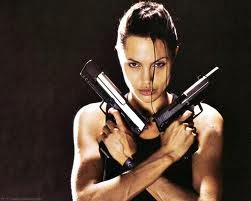
Lara Croft - Tomb Raider


News Stories which negatively Stereotype Women


Representation of Britain


Media: The Big Question
Representation of Britain.


In the hovis advert Britain is represented as a country and nation which is able to get through any hardships and come out on top. The advert follows a boy buying bread and then travelling through hundreds of years of historic events in order to bring bread home for his mum. The message of that advert is that even thought the times may change the idea that is Britain and the ideologies that we hold dear will remain. One of the ideologies that the advert shows is that family is very important. This is shown when the boy gets home in the modern day and it appears that he had bought the bread for his mum. Throughout this advert many historic events are shown, both dark and light. One of the dark events is the blitz which took place during world war 2. but even though it shows the devastation it has a clip from Churchill's speech to the people playing over the scene showing that even in the darkest times we have hope. The two theories of representation which I believe are most prominent in this advert are the Mediation theory and the Constructionist Approach theory. The selection portion of the mediation theory is strong in this is when the encoders decided which parts if history they wanted to put in and what they wanted to exclude. This is incredibly important as if they had chosen different events then the message would have been different. This also ties in with organisation as if the encoders had put the clips in a different order or put another event in between then the effect and overall message given by the advert could be changed or taken in a different way.

The programme 'The Good Life' represents Britain in two different ways. These representations are shown through the main characters Tom and Barbara Good who represent the rural and hard working part of British society and their neighbours Jerry and Margot Leadbetter who represent the higher ups and more conservative part of British society. Stereotyping is heavily present in 'The Good Life' as the Leadbetter family (Margot especially) are shown to live in a very clean house with prestigious artwork and pottery found across the house along with very fancy furniture. This shows them as upper class. The accent that the Leadbetter's have is also a stereotype of the upper-middle classes of England where it is believed that they all have posh accents and over enunciate words – speaking the Queen's English. This family is highly contrasted by the Good family. To begin with they were a normal middle class people until Tom decides to be self sufficient and so they make their back garden a farm. Their accent is also far less posh than either Margot's or Jerry's and care far less what people think of them.

The music video for the Blur song 'Parklife' represented the appearance of Britain to be quite rural. It also included plenty of British iconography including red double-decker buses, zebra crossings and red letter boxes. The use of archetypes showed us exactly who the two salesmen were. The archetypes where the cheap suits and the briefcase. The accent also seemed to convey untrustworthiness as it was just a common cockney accent meaning that it could be anyone selling anything rather than someone selling something authentic and worth the money. These charterers on their own seem to give the representation of Britain to be untrustworthy and common. This, to the modern British audience, would be seen as comical and entertaining as they would recognise the over exaggerated characters and iconography, however to others it would appear boring and just the same as any other music video as they would not get the humour.

Genre Essay: Fantasy

Genre Essay: Fantasy


In the Fantasy genre there are many conventions, which are typically used throughout their films.

One of the most prevalent conventions that take place in fantasy films is the use of ‘Good vs. Evil’. This is shown in the trailer for ‘Chronicles of Narnia: The Lion, the Witch and the Wardrobe’ when it introduces the character of the White Witch and the trailer seems to move into a darker tone with shadows and fire. It introduces the idea of danger in Narnia and something evil that is trying to take over. The words “A destiny will be fulfilled” and the shot of the male lead character, Peter, unsheathing a sword connotes that he will lead a fight to stop the evil witch. This enforces the idea of ‘Good vs. Evil’ and ‘Freedom vs. Domination’ which takes place in so many other fantasy films like Harry Potter and The Lord of the Rings.
Another convention that is used in the plot is the idea of the ‘Underdog vs. The Aggressor’. This is shown in the trailer for ‘Chronicles of Narnia: The Lion, the Witch and the Wardrobe’ when it shows the battle against the white witch when the children are forced to lead a battle against her.
Another convention commonly used in films belonging to the Fantasy genre is the use of magic. The magic element is shown through the characters of Aslan, the lion and The White Witch. Magic in fantasy is used to show contrast between the ‘magical’ world and the ‘real’ world.
In most fantasy films the setting is that of a lush, green countryside reminiscent of that of the English country. This has been used as early as the Lord of the Rings, which has cast many of its places of importance in valleys of rolling green such as the shire. This setting is also used in films such as Eragon and The Hobbit.
A medieval setting is also a common convention used in fantasy films. It is shown in this trailer when the battle takes place and all of the weaponry looks similar to those used by the Saxons. This is used throughout the range of fantasy films as it created a larger gap between the magical and real worlds.  It is also linked back to the tolkienesque literature, which drew on the old English mythology and legends of the Vikings and the Saxons. It creates a contrast to the vast technological advancements of the modern day.

Another frequent convention used in fantasy films is the presence of an old advisor. This old soothsayer character is mostly used to guide the young hot-headed character to be more wise and to think about his actions before he makes a move. Most of the time this old man will be in the form of a wizard. This trope has been used throughout the vast collection of fantasy films. Gandalf in the Lord of the Rings, Dumbledore in Harry Potter. In this trailer the wise character seems to be in the form of Aslan the lion.