Showing posts with label Mark Sarsero. Show all posts

Representations in Pride

Representation of Women

In the film multiple female characters are involved, the character of Sian represents how women are traditionally expected to be a housewife and forced to be of lower status in terms of society in comparison to men. In the scene where Sian is cooking in the kitchen and being told off by her husband, highlights how women are ordered around and controlled by their husbands and are archaically expected to complete certain jobs that are deemed womanly, for example cooking, cleaning and bearing children.
 

Her appearance is old fashioned to reflect the old fashioned values she holds. Her body is completely covered in clothing, her clothing is inconspicuous and muted due to the dark and grim colours of her clothing, this is a common clothing theme for women throughout the film. However the muted colour scheme could be a means of representing the fact Sian is, at the beginning of the film, almost forbidden from expressing herself and her opinions on the gays.

In the first scene that Sian really comes out of her shell is when she speaks out in front of the community board, she says;

"I’m sorry, but everyone’s saying they don’t have a problem. Good. They’ve raised the most money so - Invite them."

She breaks character in this scene and we as the audience get the impression that she's never spoken out before in front of these people. This is indicated by Hefina's reaction, who asks

"And who the bloody hell are you?"

Hefina's reaction suggests she holds a figure of authority in the community, or, as Sian refers to her, being the "head honcho".


Research Log 9: 'Theory of Narrative'

By Nick Lacey

"Annette Kuhn has summarised the conventions of 'classical' narrative mode of the twentieth century as:
"1. Linearity of cause-and-effect within an overall trajectory of resolution.
"2. A high degree of narrative closure.
"3. A fictional world governed by spatial and temporal verisimilitude.
"4. Centrality of the narrative agency of psychologically rounded characters."

"[narrative needs] at least two connected events."

"narrative is a way of organising spatial and temporal data into a cause-and-effect chain of events with a beginning, middle and end."

Research Log 8: 'Film Art'

By David Bordwell & Christen Thompson

"We can consider narrative to be a chain of events in cause-effect relationship."

"In any narrative film, characters create causes and register effects."

"Mainstream films may also use science fiction or fantasy premises to present alternate futures, often called "what if?" narratives." The writers then goes on to discuss the film, 'Sliding Doors'.

"Although temporal scrambling and "what if?" premises make it more difficult for us to piece stories together, filmmakers usually give us enough clues along the way."

"Most classical narrative films display a strong sense of closure at the end. Leaving few loose ends unresolved, these films seek to complete their casual chains with a final effect."

"Our experience of a film depends heavily on the expectation we bring into it."

Research Log 7: Narrative Theory Slideshow

http://www.slideshare.net/guest9e3b3b/narrative-theory-2104298

Slideshow designed for AS Media Studies students.

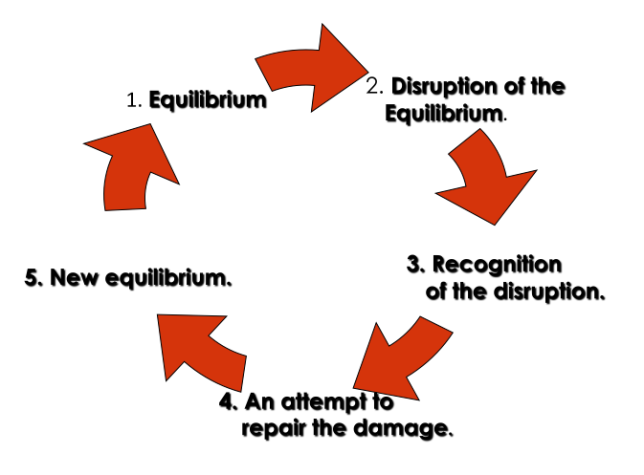
"Equilibrium -> Disequilibrium -> New Equilibrium"

Also includes outline of narrative theories by Propp, Todorov, Barthes and Levi-Strauss.

Research Log 6: Todorov's Theory of Narrative


Research Log 5: OVERVIEW Tzvetan Todorov

http://www.oxfordreference.com/view/10.1093/oi/authority.20110803104812859

"Todorov's principal interest in his early work was in the formal properties of narrative (his work is in this regard congruent to that of Genette and Greimas), specifically its syntax, or the rules of combination."

"He distinguished between propositions and sequences, showing that for every proposition (an action performed by an agent, e.g. the hero goes on a quest) there is a limited number of things that can happen (either the hero succeeds or he doesn't). These propositions are the basic building blocks of all narrative, as most creative writing schools now instruct. "

Some information about the theorist, Tzvetan Todorov who stated what a narrative should consist of (to be shown in subsequent post). The source is reliable and is run by experts on different subjects. 

Research Log 4: 'Non-linear Narratives: The Ultimate in Time Travel'

http://www.plotsinc.com/sitenew/column_art_02.html

Written by Linda Cowgill
Published on Plots Inc. Productions


"When a nonlinear film explores a character, theme relates to the protagonist's inner need and emotional life. The organization of out-of-order sequences illustrates the connection between the character's actions and his need, and this must be shown through directed action. The sequences built in the plot are founded on the same principles of action in linear, goal-driven films."


"Don't confuse nonlinear films with ones using flashbacks. Many films open on a situation in the present and then flash back to the story, and at the end return to the opening situation."


"Nonlinear films use a specific action to frame the plot. This framing action creates continuity in the structure and establishes a context in which to tell the story. As the separate episodes shatter normal (sequential) time by intercutting the past, present and future, the framing action produces a unified flow in a specific plot. This allows viewers to orient themselves in the story. Whenever the film cuts back to the current task, the audience understands where the characters are in relation to that task and the plot."

"Controlling Theme Or Idea
Because action does not direct the plot in a nonlinear film, theme takes on even greater importance. Theme defines what a film experience is about. The more diverse and out of sequence the incidents, the more we need theme to hold the segments together. At the end, each scene and sequence contributes to the ultimate discovery of what the film is about."


A lot of useful information on this source, including many references to films that could be used as case studies. I believe the source to be reliable as the writer has had several books published.

Research Log 3: 'Navigating the Fourth Dimension: Nonlinear Narratives in Film, Literature, and Television'

http://digitalcommons.uri.edu/cgi/viewcontent.cgi?article=1231&context=srhonorsprog

Essay written by Jason R. Boulanger in 2011

"Next we’re going to turn our attention to how film can illustrate these same sort of time
shifts using techniques, which are related to, but are different from those used in novels.
The film, Memento, is about a man names Leonard, who’s perception of time is skewed
by a mental disorder which prohibits him from forming new memories. Leonard is on a
mission to find the man who both killed his wife and caused his mental disorder."

"The plot of the film unfolds in two separate alternating narratives. One of the narratives is
told in chronological order and the other in reverse chronological order."

"The main plot of the film is the one that occurs in reverse chronological order; that which
you just saw in color. The idea behind this representation is that with each new scene the
audience is unaware of what actually preceded it. Representing it in this way, the
audience gets to perceive the world in the manner which Leonard perceives it. Since he
cannot create new memories he is constantly forgetting events he had just experienced,
so, as you just saw, he is constantly in a state of confusion and disorientation. A state
which the director, Chris Nolan, hoped to recreate for the viewing audience."

"Another aspect about this clip that I found particularly relevant was the use of color vs. black and
white to help the viewer distinguish between the two concurrent narratives"

The essay covers novels, films and TV; the above quotes are specifically from the film section. I think this source is useful as it analyses the way in which 'Memento' has been constructed and the different techniques used to convey the narrative. As it is a university essay I would consider it to be a valid source of information.

Research Log 2: 'Out of Order: A Discussion of Nonlinear Narrative Structure'

https://litreactor.com/columns/out-of-order-a-discussion-of-nonlinear-narrative-structure

Written by Taylor Houston
Published on Litreactor.com on the 25th October 2011

"A linear narrative starts at the beginning and reveals each detail as it each occurs in space and time.

A happened, then B, then C, and finally D.

Nonlinear narratives don’t follow rules of space and time. They can start and end at anytime in the trajectory of the plotline.

C is described first, followed by A, B, and then D.
-or-
D starts, followed by A, then jumps back to C, and ends with B."

"Nonlinear narratives often use flashbacks or flash forwards in which past or future events are revealed through memory or other methods during exposition of a current event."

Some useful quotes from this article, though important to bear in mind the article is more a discussion of narrative in books rather than on film. A good source with some examples in user comments and in the article of nonlinear narratives.

Research Log 1: 'Backwards and flash-forwards'

https://www.englishandmedia.co.uk/media-magazine/articles/16394

Written by Emma-Louise Howard
Published on MediaMagazine 33, September 2010

"But what if we know the end right from the beginning? Can there be any sense of ambiguity or intrigue? If anything, certain films have proved there can be more, heightening the impact on the viewer."

The manipulation of time and alteration of conventional linearity are creative narrative devices; a means of keeping the audience intrigued, and confounding their expectations via the disruption of traditional structures. Attracting, engaging and retaining an audience is paramount, particularly with so many media choices nowadays, and chronological play offers a sense of ambiguity and intrigue."

"Linearity: the behaviour of a 'conventional' story - a discernable beginning, middle and end"

"The butterfly effect: the idea that in time travel, sensitive dependence on initial conditions exists; small differences can produce larger variations, e.g. stepping on a single butterfly in the prehistoric era could change evolution"

The article includes many quotes which convey the importance of alternate narratives in cinema. At the bottom of the article is a glossary which includes some useful terminology, two of which are displayed above. Also included are a list of many films that could be used as case studies.

Psycho – Evaluation of the Overall Visual Impact of the Film

‘Psycho’ (1960)
Directed by:       Alfred Hitchcock
Starring:               Anthony Perkins
                                Janet Leigh
                                John Gavin
                                Vera Miles


The film opens with a caption that is superimposed over an image of the city. We see the text, "Phoenix, Arizona", followed by "Friday, December the Eleventh" and finally "Two forty-three P.M." This helps in establishing the equilibrium of the film, presenting us with the place in which all events will transpire. However, what this caption also does is give the illusion of everyday life going on - the calm before the storm as it were. The city is depicted in broad daylight, with nothing remotely out-of-the-ordinary to be seen. This sense of familiarity ensures that the initial scenes of the film are relatable to the viewer, and that we identify with the characters that we come to meet as.

Behind the text is the image of Phoenix, Arizona; we see numerous buildings and tower blocks, not dissimilar to any other city. The camera begins to track towards one particular block, and it is at this point that the viewer gets an indication of where our story begins. Once the camera is focused on this particular block, it tracks forward and enters a bedroom. Once again, the illusion of everyday life is presented to the viewer; the notion that the characters we meet are going about their everyday business. We are presented with a couple, Marion Crane (Janet Leigh) and her partner, Sam Loomis (John Gavin). The director, Alfred Hitchcock, is keen to establish that these are characters that the audience should identify with, and from this point forth the film focuses solely on Marion, up until her untimely death. It is established that Marion and Sam are having an affair, but do not wish for anybody else to know yet. From learning these characters' individual motivations - Marion wanting to be with Sam for longer than one-off romantic meetings; Sam wanting to pay off his debts - we become emotionally invested in them, and the director's intention being that we root for them, and hope they end up together.

As Marion and Sam create a plan to get married, the audience becomes captivated by their story, and the director inserts what is known as a red herring: we believe at this point that the film will tell the story of their romance, with the question being "Will they end up together, or will they be forced apart?" We subsequently see Marion at work, and we meet her colleagues and clients. This connotes everyday life to the viewer, suggesting that at some point in the film something will shatter this illusion. When Marion is requested to put $40,000 in the safe, she seizes the opportunity to take the money, and allow Sam to pay off his debts and pay for their imminent wedding. Although this is effectively stealing, due to the director's portrayal of Marion - appearing in every scene prior to her death - and her motivations, the audience can't help but identify with her.

As Marion takes the money and proceeds to leave Phoenix, Hitchcock employs a technique known as restricted narration, in which the audience only knows as much as Marion. For example, as Marion is driving in the car, we see out of the window screen just as she does, suggesting that we are seeing her point of view. When Marion is driving through the rain, we struggle to see just as she does; this manipulation of the camera not only disorientates the viewer but forces us to identify with her perspective. One method of relating to Marion that Hitchcock employs is the use of frequent extreme close-ups of her face. Due to Janet Leigh's striking eyes - used to convey emotion throughout the film, such as when she is driving, her eyes are wide as she is tense and glancing around anxiously - we are able to see a great deal of emotion in her face. The extreme close-up is also useful for portraying her facial expressions, without distractions from the background or objects around her.

At the Bates Motel, we see Marion resolve to return the $40,000 she stole back to her client in Phoenix - this is an example of a red herring in 'Psycho', as even at this late stage in the film, the audience is still under the impression that the film is telling the story of Marion and her act of stealing money for her boyfriend. Seeing her decision to return the money reflects her sense of morals, which reinforces the fact that she is a good-natured, respectable person worthy of the audience's emotional investment.

It is at this point that the film begins to deviate from what was established in the equilibrium. Marion decides to take a shower, washing her troubles away as it were. The camera uses a medium close-up to show Marion in the shower, not revealing too much of her body, but enough to see her gestures and facial expressions. She appears happy, and at this point the shower scene can only be described as something from our everyday life. Hitchcock subsequently employs shock tactics; as Marion is in the shower, we see the silhouette of a person approach the shower curtain. While Marion is unaware of this, Hitchcock has intended this to shock the audience, and to make us question "Who is this?" This is an example of an enigma code, something which draws the audience's attention in, making us question what we see. For the first time in the film, the camera tracks in relation to a character other than Marion - this perhaps serves as an indicator as to who the figure is, and who we will soon identify with. As the shower curtain is pulled back, the silhouetted figure begins to stab Marion, which is conveyed to the audience through a series of jump cuts, focusing on the different parts of her body being stabbed. This is a horrific scene, and now one of the most iconic in film history. Hitchcock employs a visual metaphor during this scene - as the Marion's blood pours down the plughole, Marion falls to the floor, dying. The blood draining away could be interpreted as a metaphor for the life leaving Marion's body, and in this scene there is a graphic match between the plug hole and Marion's lifeless eye (a stark contrast to her emotive eyes earlier in the film).

Marion's death goes against established film conventions, and forces us to identify with another character after her death, Norman Bates (Anthony Perkins), the owner of the Bates Motel. Believing his mother to be the one who killed Marion, Norman goes to extreme lengths in order to ensure that her brutal crime isn't discovered. Hitchcock places the audience in an exceptional position - although we disagree with the actions of Norman, we are forced to identify with him as he is now the focal point of the movie. It is also at this point that the viewer learns the true meaning of the film's title, the "psycho" being the murderer of Marion and Arbogast.

The use of black-and-white in this film is perhaps another visual metaphor, reflecting the inner turmoil of Norman Bates. Although Norman is in actuality the murderer of the film, the crimes he commits are under the alias of his mother, whom he believes he actually is. Norman's split personality is reflected in the black-and-white tone of the film - two contrasting colours, opposite to eachother. The white represents Norman, the seemingly kind, somewhat insecure owner of the Bates Motel, and black represents his mother, casting a shadow over his life after her death, with memories that he can't suppress. Although never seen to be any more than a decaying corpse, Norman's mother has a great impact on the events of 'Psycho', influencing Norman's actions, through his lack of acceptance that she is dead, to the fact that he carries out crimes believing that it is what she would have wanted.

Genre Essay


The trailer I have chosen to analyse the genre of is for 'Man of Steel', directed by Zack Snyder and starring Henry Cavill. The genre for this trailer is superhero, though it also encompasses elements of science-fiction, through its depiction of Krypton and means of space travel.

The trailer opens on the image of a dystopian Krypton; the camera tracks across the terrain of the planet, giving the audience an insight into what the planet looks like. The lighting comes predominantly from explosions in the background, however the use of lens flares amplify the light, making it somewhat brighter in appearance. Furthermore, in the background we can make out the shape of spaceships in the sky. This gives the audience the immediate impression that the trailer is for a science-fiction film, and the use of missiles suggests that the film is also action-oriented, with danger and peril for the main characters. In the foreground we can see Jor-El, portrayed by Russell Crowe, watching the chaos unfold. The use of Russell Crowe in this trailer is an example of how recognisable actors are used to attract an audience; Crowe is known to many for his roles in films such as 'Gladiator' and 'A Beautiful Mind', and has a large number of fans around the world. Including him in the initial moments of the trailer encourages the audience to keep watching. The camera, focusing on Crowe, tracks forward, going from a medium shot to a medium close-up. This is so that the audience is drawn to Jor-El's elaborate Kryptonian attire - typical of a science-fiction movie, as it is ornate and otherworldly - eventually focusing on the character's facial expressions. This allows the audience to connect with the character, as we can see his response to the events ensuing around him.

We subsequently see the baby Kal-El, being cradled by his parents in an over-the-shoulder shot. This suggests to the audience that this is an intimate moment shared by a parent and their child, and that the audience should feel fortunate to see such a moment. The lighting for this scene is dark, with the only discernible elements being Kal-El and his parent. This suggests that the planet itself is dying, as black connotes death and bereavement. Using a subdued colour palette is typical of the science-fiction genre, as it gives an eerie, unearthly feel to it, much unlike Earth itself.

Subsequently, we see a montage of clips to depict the young Clark Kent's life in Smallville. Initially, we see the Kents' house in a low angle shot, with the house being out-of-focus, and the grass in the foreground being clearer. This suggests a rural environment, with the colour palette including many greens (grass, trees) and yellows (sunset). We then see a child's toy lying in the grass; this allows the audience to personally identify with the protagonist, with the audience have played with toys too as a child. This image fades to an image of a butterfly on the chain of a swing. The use of a butterfly connotes nature and the countryside, emphasising the fact that this is not within a built-up environment.

As this montage is playing, we hear the voice of Costner, stating, "What if a child had dreamed of becoming something other than what society had intended? What if a child aspired to something greater?" This quote is taken out of its original context, and in the trailer it is used to directly address the audience. One of the predominant themes of this movie is society and the modern world, and this quote epitomises one of the film's ideologies - to have great aspirations, and a wish to achieve something great.

An example of iconography present within this trailer is the use of a red cape. This has been associated with Superman since his first appearance in 1938, and in this trailer we first see the young Clark Kent as the first to wear it. A long shot from a low-angle is used to create atmosphere; the audience can the cape tucked into the child's shirt, as it waves in the wind. Furthermore, this short segment of the montage mirrors Superman's first appearance later in the trailer, starting off with a low-angle shot, showing the cape, eventually showing his face. This gives the trailer a sense of continuity, suggesting that the adult Superman is not unlike the child he once was. This allows many audience members - particularly children - to personally identify with the character, having played with a cape, pretending to be a superhero. The image of the cape fluttering in the wind is in itself iconic, as it has often been used to emphasise Superman's unique style of clothing. An example of a binary opposition in this trailer is good and evil. This is typical of many superhero films, as without an evil the good is rendered useless. The villain of 'Man of Steel' is General Zod, portrayed by Michael Shannon. This is a further example of an actor being used to help attract an audience. Shannon is known to many for his roles in 'Revolutionary Road' and 'Take Shelter', and has gained a large amount of fans across the globe.

The director of this film is Zack Snyder, who gained critical acclaim for his work on '300' and 'Watchmen'. This is a director renowned for his work in the science-fiction/superhero genre, and is an example of a director working closely within a particular genre of film. In addition to this, the music for the trailer was created by Hans Zimmer, a renowned film composer. The music is primarily orchestral, with a piano leitmotif emphasising the pathos in Clark's life, struggling to cope with the loss of his father and coming to terms with his abilities. Hans Zimmer is an example of an acclaimed musician attracting people to watch this trailer; his previous work has included 'The Dark Knight' and 'The Lion King'.

Media Diary Week 6


For this week's Media Diary, the programme I have chosen to discuss is the soap, 'Emmerdale'. While I will happily admit to watch 'EastEnders’ regularly, one soap I don't tend to own up to watching is 'Emmerdale'. While I view it as a great piece of entertainment, it's not a media text that I would say is directed at teenagers, unlike soaps such as 'Hollyoaks', so therefore it isn't something I have readily discussed with my friends. However, for this blog post I will discuss the show's appeal to me and to other audiences.

'Emmerdale' is a soap which has been on our TV screens for over 40 years. It was originally broadcast under the title, 'Emmerdale Farm', though for the last 25 years it has been known simply as 'Emmerdale'. The soap centres around the lives of the residents of Emmerdale Village. As with most soaps, it's a blend of fiction and reality; while many of the occurrences in the show (e.g. murders, explosions, floods) are true to life, for so many to happen to one village over the course of a few years is extremely bad luck. Not unlike 'Coronation Street' and 'EastEnders', 'Emmerdale' has its own pub in the form of The Woolpack, and it serves of the focal point of the community, being used for parties, announcements, and the like.

I will now attempt to define who the target audience is for this media text using Audience Profiling. Firstly, I think a soap such as 'Emmerdale' would most likely appeal more to a female audience. This is due to the fact that the show features many female characters, whom the audience may personally identify with; furthermore, soaps tend to appeal more to women than they do to men. I think the age group for the majority of 'Emmerdale' viewers will be mid-thirties onwards. This is on account of the fact that many people of this age will relate to the characters in the programme. The show doesn't feature a large amount of children, teenagers or young adults, and very rarely are they given headlining stories. For this reason, I think the show appeals to an older audience that may personally identify with the issues those characters face (e.g. money troubles, jobs, domestic arguments). Additionally, 'Emmerdale' features large families, a notable example being the Dingles, and so it's reasonable to assume that man y of the audience who watch the show also come from large families, possibly with lots of siblings, and children/grandchildren.

Due to the image built up using the Audience Profiling system, I don't feel 'Emmerdale' is targeted at my age group, which is part of the reason why I consider it to be a guilty pleasure of mine, however I feel I enjoy the text just as much as someone would who does fit into the aforementioned categories. As a teenager, I feel a soap that is directed more towards my audience is ‘Hollyoaks’, which features characters that people of my age would personally identify with. The texts I consume on a day-to-day basis are generally of the sci-fi or fantasy genre, so it's surprising to think I would be attracted to a show such as 'Emmerdale', a soap. However, I find myself intrigued by the storylines it has, and the characters are relatable to the extent that I can become emotionally invested in the programme. 

In my personal opinion, I consume the preferred reading of the text. 'Emmerdale' has approached many difficult subjects over the years, such as murder, kidnap and bereavement. But above all, I think the core ideology of the programme is that friendship is important, and that we should appreciate those around us and those who love us. When the village faces trying times, they pull together, showing the bonds that have developed, and this representation of friendship is one that I find to be both accurate and heart-warming. In addition to this, many characters on the show have had to battle with serious illness; however those characters have shown great willpower and strength to overcome their problems, coming to terms with what may be life changing illness. The ideology presented by the show here is that we shouldn't give up in the face of opposition, and this is an idea I approve of wholeheartedly. It sends out a positive message to viewers who may be in a similar situation.

There are several appeals of this media text to me. I will explain these using the Uses & Gratifications system. Firstly, I think 'Emmerdale' fulfils my need for entertainment/escapism. The rural landscape of the show is not one I have experienced in real life, the 1800s brick houses surrounded by countryside is picturesque, and somewhere I would love to live. For that reason, I find the show to be a great form of escapism. Aside from its environment, the show provides a lot of entertainment. The characters in the show are as comical as they are serious, and it's this blend that has ensured the show's success for so many years. The Woolpack is the hub for village gossip, and it's often where arguments and fights will occur - I don't mind admitting that I enjoy watching such scenes, as they are excellently staged and are an example of the great directing present on the show. In addition to this, the show fulfils my need for Personal Identity. Although many of the characters are much older than me, I can personally identify with many of the issues they face, and especially with the younger characters who cope with exams and other teenage problems. It's interesting to observe how other characters approach similar problems I have faced, and I can see whether their response is similar or different to my own. Lastly, I think 'Emmerdale' fulfils my need for social interaction. Although I do not discuss the soap with my friends, it is something I talk about with my family. If there has been a controversial scenario, often we discuss our opinions on why it's happened, which characters we side with and where we think the story will go next. Having characters we are emotionally invested in helps us enjoy the storylines, and I think 'Emmerdale' succeeds more so than 'EastEnders' in creating likable characters who you genuinely love/hate.


Media Diary Week 5 - Uses & Gratifications


For this week’s Media Diary, I have chosen to discuss BBC’s ‘EastEnders’,  a soap opera set in the fictional Albert Square. I have also chosen to discuss ITV’s ‘The Chase’, a game show in which contestants must compete against The Chaser, a quiz mastermind who has competed in the World Quizzing Championship. I have chosen to discuss the Uses and Gratifications of these shows as they are both very different, and should hopefully provide results that are not like one another.

‘The Chase’

One example of Uses & Gratifications that ‘The Chase’ may provide is Personal Identification. This is due to the fact that viewers of the show may relate to the contestants who participate. The contestants aren’t quizmasters, and often the greatest incentive to come on the show is the large amount of money that can be won (thousands of pounds). Each contestant must work alongside their team members, and many audience members may identify with this aspect of the programme, asking themselves “What would I do in this situation?” The team members often advise the current participant to go for a higher amount of money, or likewise to go for a lower, more achievable amount. Audience members who identify with the contestants may ask themselves “Would I listen the team’s advice?” Viewers will very often become emotionally invested, rooting for certain contestants who they may share something in common with (e.g. birthplace, job, age).

A further example of Uses & Gratifications that ‘The Chase’ may provide is Information. The questions that are featured on the show cover sports, history, politics, geography and fiction. Audience members who enjoy learning about any of these areas may tune into the show in the hopes of learning something new. Often, once the question has been answered, The Chaser will explain why they chose it, giving some background on the subject in question.

Another example of Uses & Gratifications that ‘The Chase’ may fulfil is Social Interaction. ‘The Chase’ is a popular show on UK TV, at one point receiving 5.1 million views in 2013. ‘The Chase’ is a show that can be enjoyed by all the family; even if you may not know several answers, the show allows you to compete with those around you. Families that watch the show can test their quiz knowledge, to see who is the most intelligent. More recently, the show has been adapted to work as an app for the iPhone and iPad; this further increases the social interaction that can be derived from the programme. Friends and family can compete as if they are actually participating to win a large amount of money; it may be competitive but it is also a pleasant and enjoyable activity.

‘EastEnders’

One example of Uses & Gratifications that ‘EastEnders’ fulfils is Personal Identity. ‘EastEnders’ is a show that features a wide range of characters of different ethnic origins and backgrounds. The show features characters that are both young and old; this allows people of different ages to identify with different characters. Many characters in the show have suffered from money problems such as debt, which is a reflection on today’s society when many people are struggling to find employment. In addition to this, the show occasionally features quite serious issues such as rape and abuse. Victims of assault may find some comfort in knowing that the subject is being properly represented on a flagship TV show. Many viewers often praise the programme for their depiction of such stories, and they state how they have found the courage from watching it to move on, which often means coming to terms with what may have happened. The show has also featured many storylines involving gay children opening up to their parents (one example being Ben Mitchell in 2011); such storylines have often been said to help encourage people of that age in a similar situation to come out to their parents. In this way, I think audience members to personally identify with many of the characters in ‘EastEnders’.

In addition to this, I think many people watch ‘EastEnders’ for Entertainment/Escapism. ‘EastEnders’ has often been regarded as one of the most popular shows on British TV, and one of the reasons for this is the storylines that it provides, often spanning for months at a time. A current example of this would be the “Who killed Lucy Beale?” storyline, which begun at Easter and is intended to run up until the 30th anniversary of the show in February 2015. Having continuous plot lines such as this allows the viewer to become invested in the programme, tuning in for each episode to try and work out who may be the killer. With clues and hints being revealed over the course of the storyline (i.e. each character’s whereabouts on the night of the murder) viewers are encouraged not to miss an episode in case of a game-changing revelation. Viewers may also watch the show as a form of escapism. Although ‘EastEnders’ is a soap opera, the stories that it features are often identified as being unlikely or far-fetched. Every so often the show will feature episodes with huge explosions and fires. A recent example would be the Moons’ house exploding in September, or the Queen Vic fire in 2010. These scenes require a great amount of precision and safety in order to produce, and are enjoyable to watch as they are sites we are unlikely to see in real life. For these reasons, I think ‘EastEnders’ fulfils the audience’s need for entertainment and escapism.

Furthermore, I think a Use & Gratification that ‘EastEnders’ fulfils is social interaction. One example of how this can be done is through social media covering the audience reception to a particular episode. Viewers are encouraged to send in their thoughts, also generating discussion on online forums (such as Digital Spy) as well as between friends and family in real life. Very often the show will attempt a controversial storyline, a recent example being Linda Carter’s rape; whether or not these storylines are well received or not, they encourage people to discuss the show, and it very often will make the newspaper headlines. Colleagues, friends and family may have differing views on how the story was portrayed, and whether or not it is a poor reflection on reality. For these reasons, I think ‘EastEnders’ fulfils the Social Interaction aspect of the Uses & Gratifications model.

Media Diary Week 4 - The Text that Changed My Life


Media Diary Week 4 – The Text that Changed My Life

For this week’s media diary, I have chosen ‘Lois & Clark: The New Adventures of Superman’ as the text that changed my life. I first watched this show in 2005, when I was aged seven. Prior to this point I had no particular interest in superheroes; I enjoyed watching Christopher Reeve as Superman, but the films were only something I would watch on occasion. However, watching ‘Lois & Clark’ was what inspired my interest in Superman, and superheroes in general. What I found interesting about this show at the time was the line-up of characters, characters that I had known on film for so long, but played by different actors. I had no idea at the time of how old the series was, having run for four seasons between 1993 and 1997, to me it was completely new and modern in contrast to the Superman movies of the ‘80s. The pilot in itself is a new Superman movie, combining comedy and peril along with some “super” acting from Dean Cain as Clark Kent/Superman, and Teri Hatcher as Lois Lane. This is the show that would go on to fuel my love of sci-fi and superheroes, which I continue to take pleasure from today.

When I first watched ‘Lois & Clark’ back in 2005, the aspect of it I took the most enjoyment from was its humour. It was unlike that of any TV show I had seen before, the jokes were witty and on occasion over-the-top, but as a child this was something that I enjoyed watching. The jokes that this show featured appeal to both children and adults – the show did occasionally venture into more adult humour. I had never before associated superheroes with humour, however watching only the first few episodes changed my perspective on that. Combining comedy with danger proved to be a successful format for this series, and Season One in particular shows the audience a whole new take on a classic tale.

In addition to this, the Clark-centric approach to the series was something I also noticed at the time. Unlike with Richard Donner’s ‘Superman’, Clark’s background was not explained within the first episode, before him subsequently becoming Superman – in fact, he has little idea of his origin in the first few episodes! ‘Lois & Clark’ focused on Clark being the true identity, whilst Superman was the disguise. This was important as I think it helped me relate to the character more; he wasn’t so much an alien pretending to be a man, but a man who discovered he was an alien.

When I return to ‘Lois & Clark’ now and re-watch it, it tends to elicit an emotional reaction from me. I feel an overwhelming sense of nostalgia in watching the show. I recall the jokes I once found funny (and still do) and remember what it was about the show that made me come to this genre of film and TV. The slapstick humour that the show features is still something I enjoy, and I now have a greater understanding of some of the issues that the show tackles (e.g. sex, terrorism, nuclear arms, suicide). It did not occur to me at the time I first watched them how the show was making serious issues palatable to a prime-time audience; something in retrospect I find very impressive.

‘Lois & Clark’ has been relatively well-received over the last 20 years. It has been given overwhelmingly positive appraisals due its modern ambience; however it has being slated by critics for venturing into soap opera/romantic comedy territory over the course of its final season (the wedding of Lois and Clark being a big factor in this). With regards to how individuals other than me may interpret the series, I think it ultimately depends on your viewing tastes. Lovers of comedy, such as the Batman serials of the 1960s would enjoy this series, as the humour it employs is not unlike that. There’s much in the way of slapstick comedy, but also drama and suspense. However, lovers of serious sci-fi shows (such as ‘Star Trek’) may not be as enthusiastic about it. Although the show has gone so far as to have episodes focused on time travel, travel between dimensions, cloning and resurrection, the topics are not tackled with great scientific accuracy, often resorting to the use of sci-fi jargon. Fans of the more recent ‘Man of Steel’ and ‘Smallville’ may find this interpretation to be too tongue-in-cheek, developed to work well as a prime-time show, but with fewer adherences to comic book lore.

‘Lois & Clark’ is a show that did go on to change my media consumption. I would describe it as the most mature TV series I had watched to that point in my life, and it has since inspired me to watch other superhero TV programmes, such as ‘Smallville’ and the ‘Batman’ TV serials starring Adam West. As recently as this year, I went to see ‘Guardians of the Galaxy’, a superhero film that employed comedy in its storytelling, and it reminded me how much I enjoyed this style of narrative, utilising comedy as a means of defusing a situation younger viewers may find scary or unsuitable. It means that the text can be enjoyed by both the young and the old, which is why I think ‘Lois & Clark’ works so well.

Media Diary Week 3 – Audience Classification

For my media diary this week, the programme I have chosen to analyse is ‘EastEnders’. The reason I have chosen this is due to the fact that it is a show that I will watch every week, and I feel that I will be able to successfully define who the audience is for this particular text.

The Income/Status Model

With regards to the Income/Status Model, I believe that the primary audience for ‘EastEnders’ would be D, the Working Class and E, People at the lowest level of income. I have chosen these two categories as I feel that these particular types of people would relate to characters on the show, unlike A, Upper Middle Class, who may not have much in common with the residents of Albert Square. A large majority of the people in ‘EastEnders’ are working class, working in local shops or in the local pub, the Queen “Vic” Victoria. Quite often the characters struggle with financial problems such as debt, which class E and D may also have faced at some point, so they may find it easy to draw parallels between them and the characters on the show. However, this is not to say that the Upper Middle Class would not enjoy watching the show, as it is an entertaining drama.

Audience Profiling

In order to work out the target audience of ‘EastEnders’ according to the Audience Profiling system, we must create a fictional audience member using the various categories of the system. Firstly, I think the gender of the audience member will be female, as a large majority of the people who watch soaps are female. Secondly, I think the woman will be in her late twenties to early thirties; I think this because somebody of that age is likely to relate to most of the characters in the show, whereas there are fewer characters for older viewers to relate to. The characters in ‘EastEnders’ are all part of large families, with multiple generations being in the show at any one time; it is likely that our fictional audience member may also have a large family, and identifies with the family relationships that occur within the soap. With regards to politics, I think that our fictional audience member will be left-wing, on account of the fact that it is likely that they are of the working class, and may be more inclined to vote for a party that has the working class’s interests at heart.

Young & Rubicam’s ‘4Cs’

In my opinion, I think that ‘EastEnders’ is watched largely by a Mainstream audience. I think this because it is a popular show nationwide which attracts seven million viewers on average. The choices made by the Mainstream audience are often likely to be influenced by those around them, and it is my opinion that many people may watch the show so as to use it as a discussion point with their friends/colleagues. In addition to this, I think ‘EastEnders’ may also be of interest to the Aspirers, whose actions are driven by a want for respect from their elders. Although the Aspirer may not necessarily enjoy the media text they are watching, they consume it knowing that it will gain them respect from those around them. An example of audience I do not think ‘EastEnders’ would appeal to is the Explorer. This is on account of the fact that Explorers are motivated by a need for new challenges and experiences, and I do not feel that they would find this in watching ‘EastEnders’ as it is not a new format or style of TV, but one that most people are accustomed to. Soaps are tremendously popular in the United Kingdom, and have been for many decades. Before ‘EastEnders’ even came onto our screens audiences were watching the likes of ‘Coronation Street’, ‘Crossroads’ and ‘Emmerdale Farm’, so I do not think that an Explorer would be satisfied with a show that is already so embedded in our culture.

Lifestyle Categories

When it comes to the Lifestyle Categories, I think that various audiences may derive something different from the media text. Cynics, for example, may watch the show in order to nitpick and criticise. Soaps are often criticised by critics for not being true to real life and a Cynic may also use this as a form of criticism towards the programme. Furthermore, I think Groupies may also watch ‘EastEnders’ frequently as it gives them something to converse about. Groupies are people who wish to be accepted by those around them, and watching a show that they know their friends watch could be considered a good way to earn their respect. Trendies, who want the admiration of their peers may also watch ‘EastEnders’, knowing that it is a popular show that will gain them the admiration of their peers. In addition to this, Drifters may also watch ‘EastEnders’, if they are unsure of what programme to watch at a particular time, but are aware that it is a popular soap that many rate highly. Drifters aren’t sure of what they want, so it is possible they may be encouraged to watch it.
Media Diary – The-X-Factor

The name of the media text I have chosen to discuss in this media diary is The-X-Factor. For me and for many other people, it has become an important part of my Saturday night viewing entertainment, and the show has recently returned to our screens for its eleventh series. The format has remained largely unchanged for the last decade, albeit the introduction of audience auditions several years ago. This year has seen a number of changes to the show, the most notable being the return of Simon Cowell, the show’s creator and head judge. Known for his candid comments towards contestants, his return to the panel is hopefully going to enhance ratings this year. 

The-X-Factor is primetime Saturday night entertainment, with most shows airing at 20:00. The show is also broadcast on Sundays – the purpose of the Sunday show being to evict one of the contestants. This series is the first to see a Friday night slot added to the programme’s schedule; whether this will prove successful or not is yet to be seen. The show is broadcast on ITV, and repeated on ITV+1 one hour later. The-X-Factor is produced by several institutions, including Thames, FreemantleMedia and Syco Entertainment. 

The-X-Factor encompasses a variety of genres, and it is likely this is why the programme has endured for so long, as it caters to a variety of tastes. Primarily, the show is a talent show, looking for aspiring musicians who want to make a name for themselves. In addition to this, it is a reality show, with personality often being valued over any aptitude for singing. The show is also what we call an interactive show, due to the public taking part in the voting process every week. This involves the audience and gives them a sense of empowerment, as the contestants’ fates lie in their hands. Due to the nature of show evicting contestants, it is also considered to be a game show, a popular format for primetime entertainment. 

The target audience of the text is likely to be the mainstream audience, as it is a much talked about programme in social circles, and it is accepted that most people watch the show as their Saturday night entertainment. Groupies, who wish to be accepted by those around them, may watch the show in order to be respected by their friends. They may also watch the show so that they can participate in discussions about the text, giving their own informed view. 

The contestants have been fairly mixed this year, and I’m unsure at this point of who will make it to the live shows. Often there will be standout acts in the audition stages, but this year I haven’t felt that there have been any. It’s more than likely that several future finalists have been seen on the show by now, but it’s hard to guess who they will be. 

Furthermore, I much prefer the auditions which take place in the small room, rather than with the audience, so I was glad that that aspect of the show was retained for this year. I enjoy them because it means that the panel is not influenced by the audience’s actions (cheering/chanting). Often I think the judges’ overall decision is swayed too much by the audience, meaning that acts with less talent may go through, while more talented acts may not. 

An aspect of The-X-Factor I’ve never been particularly fond of is the sob stories many contestants bring with them. Although they are now considered a big part of TV talent shows, they often influence the judging panel’s views on acts, putting through people who may not be particularly
talented because they feel sympathy for them. Having said that, the current series seems to have featured significantly less sob stories than previous years, which is something I am pleased about.  
In my opinion, people watch The-X-Factor to satisfy their desire for Saturday night entertainment. It is a show that offers humour (from the bad acts and judges’ antics), controversy (acts that should have gone through, judges disagreeing with eachother), and allows people to make a judgment on somebody else’s talent (which could be considered empowering).

The performances on the show tend to incite different reactions from different audience members. Talent is subjective and while one person may find an act to have talent, another may not. The-X-Factor, although predominantly a music show, focuses on the personalities and attitudes of different contestants. 

Sob-stories have been known to generate sympathy, however this isn’t always the case, as to many people they are unnecessary and influence the judges too much. Furthermore, individual audience members may have different views on each of the judges – e.g. admiring them, disliking them – and this may influence their opinions on the show. 

'Man of Steel' Media Review


Director:  Zack Snyder
Screenplay:  David S. Goyer
Starring:  Henry Cavill, Amy Adams, Michael Shannon, Lawrence Fishburne, Russell Crowe
Music:  Hans Zimmer
Distributor:  Warner Bros. Pictures


It’s fair to say that ‘Man of Steel’ is a film with high expectations. After the nostalgic romp that was ‘Superman Returns’, many enthusiasts were left underwhelmed by the lack of action from Superman. After grappling with Zod and brawling with Nuclear Man, it seemed that the Man of Steel had less to contend with in the 21st century, aside from an overzealous Lex Luthor and his less-than-competent henchmen. So... what does ‘Man of Steel’ bring to the table? Does it have action? Does it have romance? 

The short answer to those would be “yes”, but perhaps the question we should be asking is “is it the film we (the fans) have been waiting for?” Read on...

‘Man of Steel’ follows the basic premise of most introductory Superman stories, though there are ample twists and turns to satisfy viewers wanting something different to Richard Donner’s ‘Superman’ (1978). The film opens on a dystopian Krypton, rich in plants and animals – a far cry from the crystal monoliths of 1978. As Krypton’s natural resources are exhausted by the government, the planet grows unstable, so scientist Jor-El (Russell Crowe) and his wife Lara (Diane Lane) place their infant son, Kal in a ship and launch him to Earth. On Earth, the young child is raised by the Kent family, instilling their morals and principles in him, so that when danger - in the form of Kryptonian renegade, General Zod (Michael Shannon) - arrives, he’ll know what to do. Not unlike ‘Batman Begins’, the film employs a non-linear narrative, so that we (the viewer) learn of this man’s origin through flashbacks occurring throughout his life. It transpires that Clark’s upbringing was not an easy one, coping with bullies and isolation, and the path he takes to become Superman is perhaps the most elaborate yet. 

What this film exceeds in is reinventing the Superman mythos. Kudos to Snyder and Goyer for not being tied down by Superman lore, instead using it as a springboard to create a new tale almost completely. I was astounded by the number of changes and alterations they had made, and I mean that in a very, very positive manner of speaking.

Something most ardent Superman fans will be curious about is Henry Cavill, the Man of Steel. Having auditioned for the leading role in ‘Superman Returns’, Bryan Singer felt he was too young for the role (21). But now he’s landed the role, just how super is he? The answer to that would be... very. Cavill excels in the role, appearing physically strong but emotionally vulnerable on account of his childhood experiences. At this stage there isn’t a clear difference between Clark Kent and Superman, though there are some enticing hints along the way of what is to come. Physically, he’s reminiscent of the late Christopher Reeve, but his performance is new and profound. 

Amy Adams portrays a striking Lois Lane, determined to uncover the truth behind this mysterious hero. It’s clear from the outset that Adams was the perfect choice for the role, portraying her as both resolute but not without moments of compassion. Adams’ chemistry with Cavill is truly super, reminding me personally of Dean Cain and Teri Hatcher’s chemistry in ‘The New Adventures of
Superman’ (1993-1997). I would go so far as to say that it even surpasses that of the Reeve/Kidder dynamic. 

Michael Shannon portrays a nefarious General Zod, the villain of the film. As my favourite villain in the Superman franchise, I was keen that Shannon did the role justice. And so he did. As wicked as Terence Stamp’s depiction, Zod now seeks to destroy Superman to ensure the survival of Krypton. A truly terrifying performance, though alas, no “Kneel before Zod” this time. 
Another highlight of this splendid cast is Russell Crowe, who reinvents the character of Jor-El. I was especially enthused to see Jor-El enter combat with Zod – something Marlon Brando’s Jor-El would never have done – and it’s clear his natural will for good lives on in his son. I hope his character is expanded on in subsequent films, as he’s just about the only positive representation of Krypton to Kal-El. 

‘Man of Steel’ further removes itself from its predecessors in that it takes on a new musical tone. Gone is John Williams’ orchestral Superman march, replaced with a somewhat sombre piano leitmotif played throughout the film. Hans Zimmer admittedly left me underwhelmed by this score; I felt it was too similar to his work in ‘Batman Begins’, and since hearing Zimmer’s score for ‘The Amazing Spider-Man 2’ I fully believe he is capable of creating an iconic superhero theme. 

On a more positive note, it is worth noting that the cinematography in this film is absolutely stunning. Emphasising the darker tone to this tale, the film doesn’t use the bright blues, yellows and reds you would associate with Superman, instead taking on a more subdued, darker tone. The CGI is also first-rate, with particular reference to the Kryptonian landscape we see in the first few minutes of the film. Later on you can look forward to explosions, energy beams and toppling skyscrapers. 

Verdict: To answer my own question, “is it the film we’ve been waiting for?” the answer would have to be a resounding “no”. But that’s because I don’t think anybody anticipated a Superman film like this. Just like when Richard Donner gave us ‘Superman’, after years of associating superheroes with comedy serials, we finally had a serious feature film. I’m fairly certain that this film will be a trend-setter for all the right reasons. The standard has been set, and the bar is astronomically high. 


Rating: 4.5/5 


Theatrical Trailer:

https://www.youtube.com/watch?v=KVu3gS7iJu4

Test

This is a test.