Showing posts with label Stephen Bell. Show all posts

Interesting Facts About Slumdog Millionaire


Production and Budget

Slumdog, a film with no A-list stars, was almost never released in American theaters. Time Warner decided in 2008 to shut down its indy division, which owned the rights, and the movie would have been dumped directly to DVD if Fox Searchlight hadn’t decided to step in and release the $15 million film (£7 million). It ended up getting backed by british film producers Film4.

Inspiration

    Q & A, the novel on which the film is based, is centered around a fictional game show; Slumdog, however, moved into the realm of the real Millionaire show once Celador, the owner of Millionaire, signed on as one of the film’s producers. The book was by Indian Ambassador Vikas Swarup.

    Crew

    Director: Danny Boyle
    Main Actor: Dev Patel (first film)
    Writing credit: Simon Beaufoy 
    Producer: Christian Colson
    Composer: A.R. Rahman

    Problems While Filming

    Following its release in India, the film faced criticism from various members of the public alleging that the film fuels Western stereotypes about poverty in India and that it peddles "poverty porn". Tapeshwar Vishwakarma, a representative of a slum-dwellers' welfare group, filed a defamation lawsuit against the film's music composer A.R. Rahman and actor Anil Kapoor, alleging that grim depiction of slum dwellers violated their human rights.


    All quotes (So Far)


    A: Martin Scorsese interview

    1. "Narrative film making is a pre-scripted movie with actors, documentary film making is capturing reality."
    2. "To record is documentary to interpret is dramatic fiction."
    3. In relation to previous quote, "Sometimes, you do both."

    B: Anne Fischel: engagement in documentary

    1. "Documentaries awaken desires not just for information but for insight, understanding and intimacy,"
    2. "You photograph the natural life, but you also, by your own juxtaposition of detail, create an interpretation of it."
    3. "The documentary film maker is defined as an outsider, a stranger seeking entry into someone else's world"
    4. "In making documentaries, film makers must observe events and make some sense of of them. they move from observation (gathering information or data) to description, formulating a coherent narrative structure to convey what they have observed.
    5. They organize that information, integrating and synthesising it into a coherent picture of the world.

    C: John Grierson: Principles o documentary

    1. "Documentaries are "the creative view of actuality."
    2. "However it be shot through vigour of lawrencian poetry, it must always fail to develop a form adequate to the more immediate material of the modern world."
    3. "they describe, and even expose, but, in any aesthetic sense, only rarely reveal.
    4. Documentaries use "Natural material," nothing like "fake backgrounds," but they rely more on the natural aesthetic of life.

    D: Bill Nichols: Introduction to documentary

    1.  "Documentaries are about real people who do not play or perform their roles."
    2.  "Documentaries tell us how things change and who produces these changes."

    E: David Bordwell: narrative as a formal system

    1. "Narrative forms is most common in fictional films, but it can appear in all other basic types. For instance, Documentaries often employ a narrative form."
    2. "Narrative is the way humans make sense of the world."

    F: Sheila Curran Bernard: Documentary story telling: the drama of      real life

    1. "You might set up a camera to record a "day in the life" of a local barbershop and end up with some interesting footage, but until it's been shaped and given meaning by the filmmaker - until it tells a story in some form - it's not a documentary." 
    2. "You cant combine the facts, to create something that's false" (I can go on to talk about mediation)
    3. "If you give away too much information too soon, important details will be lost or their significance missed." (Spinal tap, stone henge scene) 
    4. "Allowing the viewer the satisfaction of "getting it" and enjoying what's known as an "aha!" moment" (Spinal tap, stone henge scene)
    5. "In documentary as in drama, you need to collapse real time into its essence."
    6. "The amount of time you give to a scene is also important."

    22 Quotes


    Documentary story telling: the drama of real life

    by Sheila Curran Bernard

    Quotes!

    • You might set up a camera to record a "day in the life" of a local barbershop and end up with some interesting footage, but until it's been shaped and given meaning by the filmmaker - until it tells a story in some form - it's not a documentary. 
    • You cant combine the facts, to create something that's false (I can go on to talk about mediation)
    • If you give away too much information too soon, important details will be lost or their significance missed. (Spinal tap, stone henge scene) 
    • allowing the viewer the satisfaction of "getting it" and enjoying what's known as an "aha!" moment (Spinal tap, stone henge scene)
    • In documentary as in drama, you need to collapse real time into its essence.
    • The amount of time you give to a scene is also important.

    John Grierson: First principles of documentary


    Quotes!

    • Documentaries are "the creative view of actuality."
    • "However it be shot through vigour of lawrencian poetry, it must always fail to develop a form adequate to the more immediate material of the modern world." - basically no matter how a documentary is filmed, it must always show information of the modern world, or time in which the documentary was made. (or based on, like if it's a documentary on Vikings, it's got to show "immediate information" of the Vikings)
    • "they describe, and even expose, but, in any aesthetic sense, only rarely reveal.
    • Documentaries use "Natural material," nothing like "fake backgrounds," but they rely more on the natural aesthetic of life.


    Bill Nichols: Introduction to Documentary


    Quotes!

    • "Documentaries are about real people who do not play or perform their roles."
    • "Documentaries tell us how things change and who produces these changes."


    David Bordwell: Narrative as a formal System


    Quotes!

    • Narrative forms is most common in fictional films, but it can appear in all other basic types. For instance, Documentaries often employ a narrative form.
    • Narrative is the way humans make sense of the world.


    Engagement and the Documentary By Anne Fischel


    "Documentaries awaken desires not just for information but for insight, understanding and intimacy," - this quote is perfect, and a perfect example of this that i will look at is the US office, as we get insight and understanding into the lives off every individual in he office, and we also share the intimacy that they share with one another and associate with the characters more than just a normal T.V show. this is through the use off documentary conventions, that gives it reality, and makes the actors feel as though they are actual people like us.

    "You photograph the natural life, but you also, by your own juxtaposition of detail, create an interpretation of it." - this is alot like the quote that Scorsece made in my previous post, but shorter and sweeter. basically this is mediation! you try to keep it to the truth, but you always in the end make your own interpretation of a certain topic or person. Example I shall use for this is spinal tap.

    "The documentary film maker is is defined as an outsider, a stranger seeking entry into someone else's world" - just thought it was an interesting quote, and it's self explanatory.

    "In making documentaries, film makers must observe events and make some sense of of them. they move from observation (gathering information or data) to description, formulating a coherent narrative structure to convey what they have observed. - This is very useful, and that last couple of words round up what a documentary is perfectly. she is basically stating that even a documentary, something which is used mainly for information, has to have narrative to make sense.

    They organize that information, integrating and synthesising it into a coherent picture of the world.


    Martin Scorcese, Documentary vs. Narrative


    "Very simply stated, narrative filmmaking is a pre-scripted movie with actors.
    Documentary filmmaking is capturing reality in some way with the script often written AFTER the shooting has begun.
    With narrative, the story and script are crafted in the beginning and with documentary, the story (often) unfolds as it happens." - not from Scorsese, but from a short article on the argument, Narrative vs. Documentary.

    This statement is partly true, as for realism, documentaries need to be shot in reality. however, the exception being quality acting, like in Spinal Tap. The film This Is Spinal Tap is entirely scripted, and is a comedy movie, though this film seems so real, and that we are actually watching the lives of idiots, it is scripted and completely fake. It only looks real, as it uses the conventions of a documentary, using certain modes that i have stated in an earlier blog post.

    "Some people think that to record it is documentary, to interpret it is dramatic fiction." - Scorcese.
    This is a perfect quote, as it can be taken in different ways. To record things without the backstory, or any relevance, is a documentary, as you can mediate it, and say whatever you want about it, which is also interpretation; for example, you can randomly film a man getting punched in the face on a street corner, put it in a documentary titled "abuse on the street," and theres your story for the footage, however the real story could be something completely different, like the man insulted someones wife, you don't know. all i'm saying is that, documentary isn't just record as Scorcese says some people say, documentary is also interpreted. an this is what Scorcese goes on to say. "I think it's the same, i don't see the difference."-Scorcese.

    "I'm constantly going between that urge to record something, so that we can share it with others... or to interpret it, and sometimes you do both." - Scorcese.
    This quote is perfect as it reinforces the statement i made earlier, that documentaries and narrative dramatic fiction, are that of the same thing, and you actually do both.

    Bill Nichols: introduction to Documentary


    Conventions and expectations 

    of a Documentary


    • Non Fiction.
    • Un-staged.
    • Based on observation.
    • Interviews.
    • Educational.
    • Focus on a certain topic.
    • In a documentary movie, it is scripted.

    There are different ways to acquire these conventions, and that is through different modes of filming documentaries. 

    Expository Mode

    Documentary that exposes a person or topic. conventional of this mode is voice overs.

    Poetic Mode

    Mode of documentary that tends toward subjective interpretations of it's subject.

    Participatory Mode

    Employs interviews as testimony's from documentary subjects.

    Observational Mode

    Follow the characters around, like the backstage scene in  "Spinal Tap"

    Reflexiv Mode

    In a reflexive documentary, the film maker acknowledges their presence in front of the Camera and provides a narrative to the documentary.

    Performative Mode 

    Documentary Maker interacts with subject. comments on process of making the documentary.


    Serious Comic Books Part 1, Neil Paddison.

    I chose this article, because I am a big fan of comic books, and the article title intrigued me.

    Neil Paddison considers the radical tradition of political cartooning, and in this article and the follow-up in MM18 takes a look at five comic books which address important contemporary issues.

    "The rise of one medium does not automatically spell the wane of another..., but at the very least it meant that there were more leisure options for people to choose from." -  I agree with this statement as the rise in television, does not necessarily mean that comic books are dying off.

    The main points of his article are that comics aren't only used for fun, or as a means of escape. it is used for political reasons and even more so, propaganda - "With its historical documentary style, Maus tells the true story of Spiegelman's father's life as a Jew in Nazi Germany, and it uses the comic book form to represent different nationalities as different animals: Jews drawn as mice, Germans as cats, and Poles as pigs. The simplicity of the idea underscores the simple horror of the Nazis' plans for the Jews"

    "The relative freedom of expression generally enjoyed by comic book artists would perhaps explain a renewed interest in political cartoon books," - I agree with this statement, as some artists can place their own ideologies into comics, and create their own characters to represent these ideologies; for example, in the film "Mall Rats" by Kevin Smith, stan lee states that most of his characters are representations of the emotions he felt at the time of creating the character, so he put his own emotional ideologies into the characters.

    My overall opinion of the article, is a positive. The title suggested to me that he was gonna slander comic books, but in fact he praised them, and said that they are not just for fun but to attach your own ideologies on and that comic books have a deeper meaning. So overall the article was informative and useful.

    Narrative Devices in Hitchcock's: Psycho


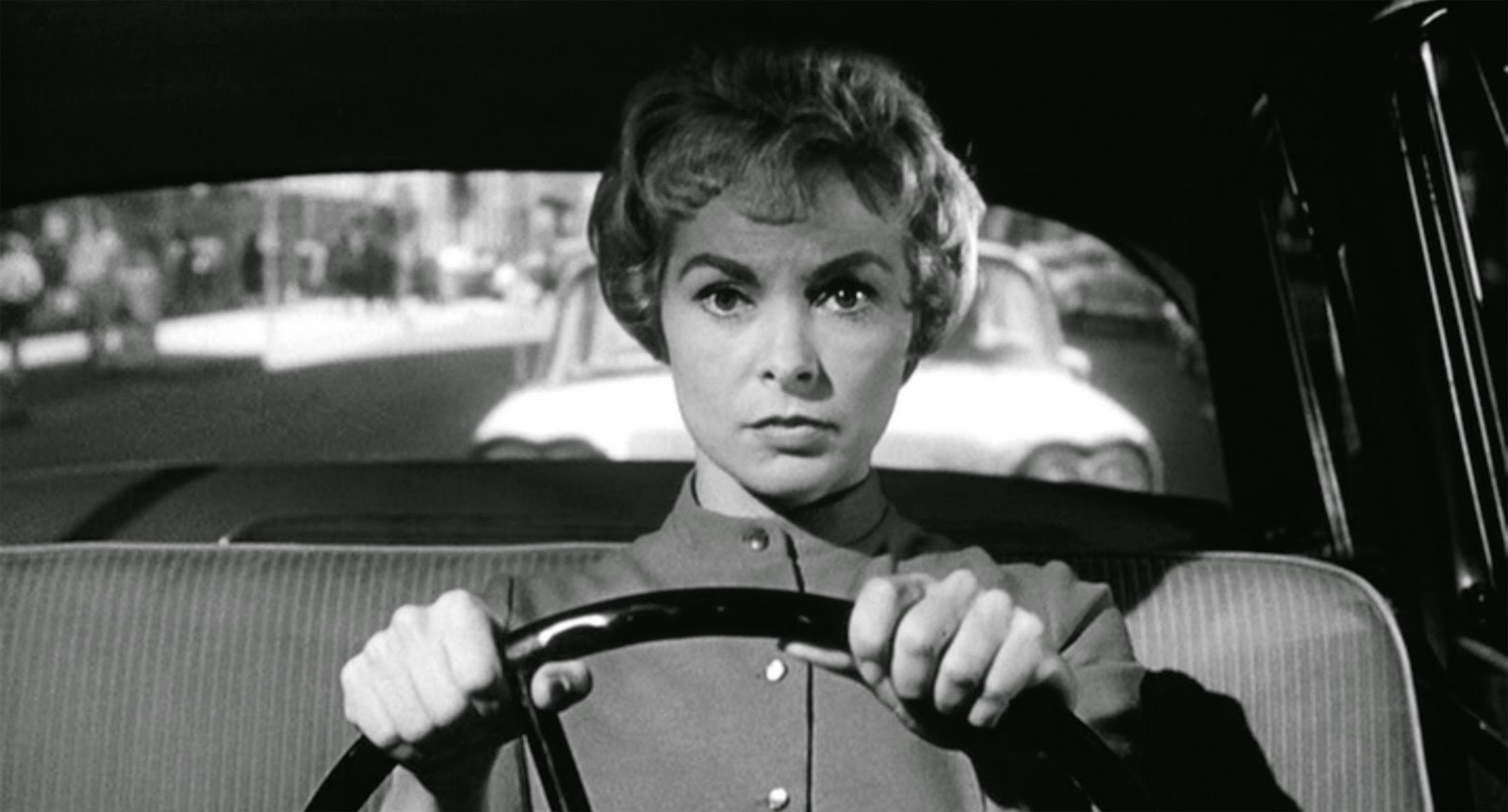
    In the movie Psycho, we see the character Marion Crane (Janet Leigh) plan to run away with her boyfriend Sam Loomis (John Gavin) and get married, but her John is in debt, due to a divorce, and his fathers death has left him with a large amount of debt. Later on we then see Marion steal $40,000, so her and her boyfriend can get married; this is an action code as it sets the story in motion, it also helps the audience identify with her because , in typical movies the man would have been the hero and stole the money for the binary code, love conquers all, however this is not the case, this time it is a female.
    Later on see Marion in every frame, she never leaves, this helps us identify with her even more. we also see her at a medium close up, center frame, every time she is driving. this is so we can see her panic, and the use of the fast pace high pitched music helps reinforce the fact that she is panicked.

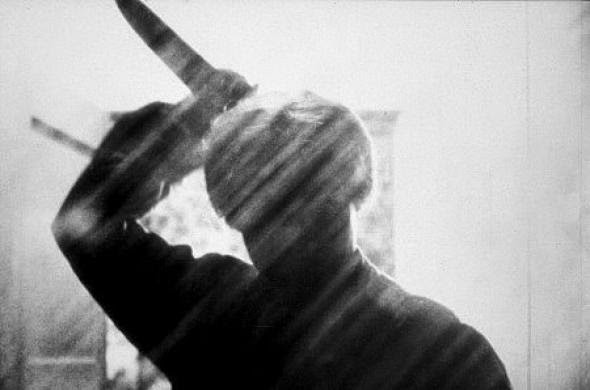
    After all this identification, we are suddenly cut loose from Marion, as she is murdered and leaves the audience in a state of disbelief. The murder itself disorientates the audience, as every shot is random and fast cut. there are actually 52 shots in a sequence that only lasts 3 minutes. every shot makes the audience confused as they don't know what is happening, and when we find that Marion is dead, the audience finds it quite hard to comprehend and needs a new character to identify with. So after this we desperately need a character to identify with, so Norman Bates (Anthony Perkins) comes into the scene, and we see him disposing of a body for quite a long time, and we begin to feel sorry for him. But he is not the character we identify with. The whole shower scene is an enigma code, as we don't really know who murdered Marion; we are led to believe that it is Normans Mother.
    So this scene is an action code, as it pushes he story forward to find out who the murderer is. up until this point the narrative has been restricted to Marion, as we only see what Marion is doing, after she is killed, it is omniscient as we see a detective try to solve the case, as he thinks that Marion has ran away and doesn't know about her death, but the audience do as well as Norman.

    After the disposing of the boy, we begin to identify with the special detective Milton Arborgast (Martin Balsam) as he attempts to solve the case of Marion's disappearance. but once again our identification is cut short, which disorientates the audience even more, because every one the audience identifies with gets murdered. which once again is an action code, because we see Sam and Marion's sister Lila Crane (Vera Miles) try to find out what happened to Arborgast. We are finally shown the murderer to be Norman, dressed us as his mother. which doesn't meet our expectations, in fact this challenges our expectations with a red herring, as we thought it was either Norman or Normans mother, not both.

    Hitchcock chose to shoot the movie in black and white, to easily show the difference between the good and the bad characters, and to darken the face of the killer in the shower scene, to resemble the enigma code, who is the Killer?
    The shower scene is actually part of Todorov's five stages of narrative. The equilibrium being Marion taking the money, disruption of equilibrium being the shower scene, recognition of disruption being people noticing that Marion has disappeared, the attempt to repair the damage is Arborgast tying to find her and the new equilibrium being his death.

    The main Binary opposition of the movie is predator vs prey. Norman's hobby is taxidermy, and he only does this with birds, Marion's last name is crane, and he only ever stuffs birds. "I don't stuff beasts, only, birds look better stuffed," doesn't kill men only women. The camera is also used to position an eagle, bird of prey behind him, to resemble him as the predator, the lighting in the parlor scene also show him in the darkness and Marion in the light, to resemble a Binary code of good vs evil.
     
    John Carpenter’s 
    The Thing Trailer (1982)

    John Carpenter’s The Thing is a hybrid genre that consists of Horror and Sci-Fi. John Carpenter is associated with the Horror and Sci-Fi Genre, so we know that this will be a movie of both Genres.

    The setting of the movie is in a snowy secluded area, shown by establishing shots. Secluded areas, such as cabins in the woods are very much associated with horror. Also, throughout the trailer we see a lot of close ups, which are strongly associated with the horror genre as it shows the characters fear. Once again, another thing that associates with horror is the tracking shots, which is affiliated with someone being chased, which is what always happens in horror films. The Film deals with the themes of fear, trust and the unknown, which are all main themes of the Horror genre.
    A technical signifier in the trailer is the lighting, every time we see a character it is dark, there is always dark lighting everywhere the characters go. Darkness and shadow are associated with horror but are also associated with the unknown.

    The plot of the Movie is very typical of the Sci-Fi genre. Alien or aliens, come to Earth and either want to annihilate or enslave all humans. So the Antarctic base is regarded as a microcosm to the men, and the alien wants to take it over or kill all of the men.
    Claude Levi-Strauss’ Binary oppositions throughout this trailer are, Trust vs. betrayal (they trust each other not to be the Thing) and Predator vs. Prey (The Thing is the predator, humans are the prey). Both of these binary oppositions associate with the horror Genre.

    At the beginning of the trailer we hear static from a radio frequency, we then begin to hear a man say, “We found something in the Ice.” the word “something” indicates the horror genre, as it represents the unknown, and all human fear the unknown. The camera then zooms out so show the audience the word, “Thing;” this is the title of the movie, but it also indicates horror as “thing” resembles a monster.
    After this there is a fade to white, then an immediate shot of a helicopter that flies to an Antarctic base. We then cut to a shot of a UFO, which is iconography of the Sci-Fi genre, as aliens are associated with Sci-Fi.    

    Then the non-diegetic sound of a voice over then activates, the voice is ominous and begins to describe the plot. The voice over is omniscient, as he tells us things that the characters don’t know, “for one hundred thousand years, it was buried beneath the ice.”  Behind the voice over there is eerie, low pitch music which is used to build tension, and resemble mystery. Once the voice over stops we hear Kurt Russell explaining what the “Thing” is and what it does, this is an action code, because this moves the trailer on. We know this to be true because the music builds up and we begin to finally see the thing.
    The unsettling music signifies paranoia; as the little montage at the end of the trailer shows people running. And Kurt Russell has explained that the thing could be anyone of them, and that leaves the characters and the audience wondering who; this is also an enigma code, as it raises the question to who’s the Thing? We also hear the “Things” famous blood curdling scream at the end, which signifies pain. Blood curdling screams also resemble horror.

    The main character of the film is R.J. Macready, and is stereo typical of the main character in a horror or Sci-Fi film, as he is the first person to know what is happening and is the character who takes charge. We know this to be true, because in the trailer he is the one who explains what the “Thing” is to the other characters and the audience. All the other characters in the trailer seem to be stock characters, as throughout the trailer all they seem to do is challenge the character, like the betraying best friend, or follow the main character like the trusting best friend.

    In the film there is a character called, “Mac,” and “Windows.” The film was made in 1982, so this could be coincidental or it was used to resemble the rise of technology in the 80’s. This has nothing to do with genre; I just thought it was a cool fact to add.


    Media Diary Week 5

    Ghost busters: 3/4 uses and gratifications

    Personal Identity: I have grown up with this movie.I first saw it when i was 6 years old and my brothers associate with it alot. all three of us make movie quotes referring to it,when they are necessary of course. I associate with the character Peter Venkman, as he is like me in many ways.I also like the soundtrack to the movie as well, as the movie is set in the 80's and most of the music i like is from the 80's.

    Entertainment/escapism: Movies are escape for me personally, and the film is very entertaining through the use of humor, the acting and more importantly the plot; because you can't have a good movie without a good plot.

    Social Interaction: I am able to tell people who have not seen the film, about the film. This is very fun for me as i get to show off my knowledge of the film to others. However, if i am talking to people who have seen the film also we get to have a great conversation, and sometimes it is a very good conversation starter.

    The Evil Within: 3/4 uses and gratifications

    Personal Identity: I have been playing this game with my eldest brother, and it is a very good bonding experience as there are some puzzles in the game that we can both help each other with, and there are alot of jump scares throughout the game, that we both get scared by, but we both laugh it off in the end.

    Entertainment/escapism: You can really get lost in the story of this game, which is good for the jump scares as you can never tell when there coming and as you forget and get immersed in the game, they get you even worse. Video games are another escape for me 

    Social Interaction: like I've said, i play this game with my brother which in itself is a social interaction, but i can also tell people who have not played the game about the game, and can talk to people who have played the game about it, like if i am stuck on a level i can ask someone who knows how to get past it i can ask the for help.


    Media Diary Week 4

    This was the first comic book I ever bought in 2012. Before this I had always been into comic books, and i had read them online and did my research about lots of heroes. but this comic book influenced m into buying comic books, instead of just reading them online. I liked the feel of comic books and loved the feeling of being eager, unable to wait until i got home to read them, which is a lot better than reading them on a laptop. 
    Plus this peaked my interest in the anti-hero Deadpool. I already liked him anyway but after reading this i began to read more Deadpool comics. It also made me read a lot more different comics and now i'm a collector and have lots of comics. 
    The Deadpool comic was hilarious and can always make me laugh. The main reason that he is funny is that he is the only comic book character ever to be self aware that he is in a comic book. He constantly breaks the fourth wall and always makes movie quotes and references. He is known as the "Merc with the Mouth," because he doesn't shut up, and is always cracking jokes. It once again is funny because he is one of the only comic book characters who is insane, other that the Joker which is also hilarious and psycho.
    This comic definitely changed my opinion on Comics, I now not only read the mainstream super hero comics, such as Batman and Spider-man, I also read obscure comics such as planet hulk, which many people have not heard of, but if it is made into a movie it will be phenomenal.
    I think that this comic will influence people who aren't into comic books, or comic book heroes, to read more and maybe even change their opinion on comic books.

    So in conclusion, this comic changed my media habits, it changed my opinion and challenged my emotionally, by making me eager to read more.

    Media Diary Week 3

    Media Text: The Mighty Boosh

    Income/status model: B middle class. The reason for this being that the A class are lawyers and doctors, which many people don't associate with the weird and wonderful which is The Mighty Boosh, however the B class are teachers and the creative types, such as artists and graphic designers, which you would expect to watch The Mighty Boosh.

    Young & Rubicam's 4cs model: The Mighty boosh is a British comedy T.V show, that would appeal to the explorer. This sitcom is a very extraordinary show that challenges the norm. it is very experimental in it's humor and therefor attracts people who like new and strange things, such as the explorer. This show definitely challenges the expectations of an audience who like normal sitcoms.

    Audience Profiling: Hartley (1982): Male, 15-25, has a girlfriend, teacher, B, White British.                                                  Fiske (1987): A-levels, Atheist, Labour, lives in Britain.

    Lifestyle Categories: Drifters. The Mighty Boosh would appeal to Drifters because they don't know what they want. They have probably been watching normal sitcoms such as Friends and The Big Bang Theory and probably want a change, but don't know what type of change. The Mighty Boosh will appeal to then as it is a big change. It is crazy and randomly jumps into musical numbers and is hilarious, so that is probably the change they will be looking for. 


    Media Diary Week 2

    This is a poster for the Movie star trek into darkness, i watched this on DVD, at 14:15 on 26 October 2014. The Genre is Scifi and Fantasy, and the purpose of this movie is to attract fans of the classic T.V show and to attract a new audience to the Star trek Franchise, and perhaps persuade them to go and watch the classic show. 

    Written, produced and Directed by J.J.Abrams

    The Target audience would be the mainstreamers and the Explorers, because the mainstreamers like whatever anyone else likes, therefor like scifi and fantasy, and the explorers like to try new things, so they will be happy to go and see a new take on the classic show.
    I really liked the Movie, it really gave me the feeling to go and watch the classic show, and the classic movie wrath of Kahn, as this movie, is basically a remake, however it is set in a different time zone, which gives the movie a few differences, and left me very excited to see what would happen differently.

    People would consume the text because it is very entertaining, it is also nostalgic to the older audience who are fans of the classic show, and who used to watch it when they where younger.

     Some people may react differently to the text if they are not fans. Some people who never really liked the classic show will definitely not like the reboot in movies, however some people might like to give it a try and realize that they actually like the movie, and don't know why they didn't like the show. Other people might absolutely love the film and the show, whereas other might love the show and hate the movies. 

    Death proof Movie review


    Death Poof Movie Poster
    Death proof is an original grindhouse movie, made by Quentin Tarantino and Robert Rodriguez. It was made in 2007 but was set in the 70's. And it is about a posse of women taking revenge on a murderous, misogynist stunt-driver called Mike, played by Kurt Russell.

     Death proof is an exhilarating, bloodbath of a movie which will be Shure to have you on the edge of your seat. Originally released into theatres on a double bill with Robert Rodriguez's Planet Terror under the Grindhouse banner, Death Proof is one of the original Grindhouse movies. Grindhouse films characteristically contain large amounts of sex, violence or bizarre subject matter. One genre of film featured were "roughies" or sexploitation, a mix of sex, violence and sadism. Quality varied, but low budget production values and poor print quality were common. Critical opinions varied regarding typical grindhouse fare, but many films acquired cult following and critical praise.
     
    The movie was shot by only Quentin Tarantino himself for the first time in his career, and in my opinion he did it justice. He also never used CGI in his film!
    The fact that Stunt man Mike is a stuntman is important; it's another ode on Tarantino's part to the days of practical movie magic. Most modern movies involving car chases and crashes are performed digitally by computers. In the film Stuntman Mike has a conversation with his first victim, Pam (Rose McGowan). Mike says he belongs to that great old tradition where "anyone fool enough to throw himself down a flight of stairs" could "usually find someone to pay him for it." And Tarantino is clearly in awe of that old brotherhood, and he elevates Mike to the status of a near-immortal. In that death-proof car of his, Mike is literally untouchable.

    In fact, the only person tough enough and cool enough to kill Stuntman Mike is another stuntman -- or stuntwoman, in this case. Zoe Bell doubled for Uma Thurman in Tarantino's "Kill Bill" and here he gives her a showcase all her own. The remarkable final car chase includes a lengthy sequence, shot practically, where Bell hangs on to the hood of a speeding car as Stuntman Mike crashes into it in his own death-proof vehicle.
     
     Empire magazine gave the film four out of five stars and a mostly positive review, describing the film as "Tarantino driving wildly under the influence" and "seriously entertaining". The BBC's Anna Smith said that while there was "fun to be had" with the film, "its imitation of a defunct, low-budget style of movie-making is perhaps too accurate when it comes to the genre's flaws". and gave the film three out of five stars. Roger Ebert gave Grindhouse 2.5 out of 4 stars, arguing that while Death Proof was the more enjoyable half of the bill, it was still marred by overlong scenes of expository dialogue. On the more negative end of the scale, The Guardian's Peter Bradshaw expressed admiration for the car crash scene, describing it as "a lethal roar of entertainment", but said that the film was padded with "long, long, long stretches of bizarrely inconsequential conversation which are a big comedown from the glorious riffs from Reservoir Dogs and Pulp Fiction", and that overall "Tarantino's twisted genius is there for all to see but, it must now be admitted, all too briefly".

    Photographic composition


    Photographic composition

    Sunset Bicycle
    This image is an example of a Rule of Thirds. The bike is near or on an intersection. I chose this image, not because of the bike but because of the background. The sunset creates a great atmosphere of calmness. the background reminds me of crosby beach, mainly the path and the pear. The lines on the buildings in the background work well with the image, they're not to definitive, and it doesn't take any attention away from the main object which is the bike.

    Cropped Owl
    Skewed River
    This is a good example of  cropped image. you can tell it is cropped because, most people couldn't get up close to an owl like this image, so you would have to take the photograph from far away, and crop it to get the full effect o the owls face. Another way we can tell it is cropped is by the fact its head doesn't fit the frame. I chose this image because i found it funny and I like owls. The image helps you understand how the owl feels; if it wasn't cropped you wouldn't see the owls emotion. The owl is shocked but if it wasn't cropped we'd just see an owl, from a distance looking at us. 

    This is a great example of a skewed image. The image is shot from an unusual angle. The light and shade in this image sets a calm atmosphere.

    Test Post

    This Is A Test Post